
How Much Are Pilates Classes? (2026 Updated Guide)
Pilates pricing in NYC has become surprisingly difficult to decode. Two studios can charge nearly the same amount while offering completely different experiences - different equipment, instructor training, class sizes, correction quality, and progression.
Whether you're brand new to Pilates or returning after a break, you’re probably noticing that Pilates sessions aren’t cheap.
Since 2020, Pilates pricing has shifted significantly. With prices that can vary wildly depending on where you live, who’s teaching, and what kind of class you're taking, it’s easy to feel unsure about what’s normal or worth paying for.
Here’s what we’re seeing across NYC.
| Group reformer Pilates classes | Typically range from about $40 to $75 per class in NYC, with many boutique studios averaging around $50 per session. |
| Megaformer / Lagree classes | Usually start around $42 and go up to about $46+ per class, depending on the studio and time slot. |
| Group mat Pilates classes | Typically range from about $25 to $50 depending on the format, studio, and whether the class is classical, contemporary, heated, or sculpt-focused. |
| Private Pilates sessions | Generally range from about $125 to $375 depending on instructor experience, studio model, and session structure. |
How Much Are Pilates Classes?
The cost of Pilates varies depending on the format, frequency, and how sessions are purchased.
Private Sessions, where it’s you and the instructor working 1-on-1, are higher in price because of the personal training component and the cost of the Instructor’s time, so this would be the highest cost (we’d argue highest value, but we’ll get back to that).
Duet and Trio Sessions are slightly more affordable as it’s 2-3 people per instructor, so the costs are split between the 3 participants. This doesn’t have as much customization as the Private Sessions but does allow for more attention and value than a typical group class.
Group Class Sessions have anywhere from 4 to 45 people in attendance. This highly varies depending on the studio location, style of Pilates, and whether it’s a Mat, Reformer, or other apparatus class. Group Classes are all about keeping the group moving, so while you won’t get a customized program, you can get an excellent general workout.
Lastly, Virtual Offerings i.e., Pilates Anytime and YouTube Instructors. These are your most affordable and accessible classes - you complete them from home with your own equipment, but they can be perfect for someone looking to start Pilates on a budget.
How Much Are Pilates Classes in New York? (2026 Updated Guide)
If you are looking at Pilates prices in Manhattan or New York City, the cost is definitely higher than it’s ever been.
Pilates equipment, instructor training, insurance, and studio overhead have all increased significantly in recent years, and studios across NYC have adjusted pricing accordingly.
Smaller classes and private sessions also cost more because they provide more direct feedback, more programming specificity, and a more controlled training environment.
Pricing can vary dramatically depending on the class format, studio model, instructor experience, and location. In general, Manhattan studios tend to sit at the higher end of the market, especially for reformer and private training.
| Format | Typical NYC Price | Experience + Best Fit |
|---|---|---|
| Group reformer class |
$40 to $75 Typically around $50/class at boutique studios |
Equipment-based Pilates in a group setting, usually 45 to 60 minutes. The experience varies significantly depending on instructor quality and attention to form. Great for people who want reformer access without private-session pricing. |
| Megaformer / Lagree-inspired class |
$42 to $46+ Some studios offer lower off-peak pricing |
A high-intensity, fitness-focused workout using the Megaformer. You get the challenge of specialized equipment, but not necessarily the Pilates method itself. Best for people looking for a sweaty, athletic workout experience. |
| Group mat Pilates class |
$32 to $50 Heated and sculpt formats usually cost more |
Ranges from classical Pilates mat to contemporary and sculpt-inspired formats. Some classes focus heavily on Pilates technique, while others lean more fitness-oriented. Great for consistency, core strength, and lower-cost training. |
| Private Pilates session |
$125 to $375 Experienced and referral-only teachers can sit higher |
One-on-one programming with individualized coaching, form correction, equipment access, and long-term progression. Best for beginners, injuries, prenatal/postnatal work, or clients wanting faster and more specific results. |
|
Private Pilates Pricing at The Pilates Circuit Introductory first session: $125 10-pack: $150 per session / $1,500 total Single private session: $175 90 Day Challenge: $130 per session |
||
At TPC, we offer our Intro Session at $125, 10 Packs at $1500, and Single Sessions at $175.
For clients looking for longer-term consistency, our 90 Day Private Pilates Membership brings sessions down to $130/session.
Single Sessions, Packages, and Membership Options
Studios typically offer flexible pricing through individual sessions, multi-class packages, and monthly memberships. Each option is designed to meet different schedules and financial preferences. Memberships often provide the best value.
Single sessions are ideal for those trying out a new studio or maintaining a flexible schedule. They generally cost more per class but offer the freedom to attend without commitment.
Package deals provide a lower per-class rate by bundling multiple sessions. These often come in 5, 10, or 20-class increments. The more you purchase upfront, the more you save per class. But, definitely watch those expiration dates! The discount disappears if you let even 1 class expire, so consider the expiration date when making your decision.
Monthly memberships offer the best value for those attending regularly. These can include unlimited classes, priority booking, and sometimes added perks like guest passes or free workshops.
When choosing between these options, consider how often you'll attend, your personal goals, and how much flexibility you need. Plan for your bare minimum instead of your best day. We recommend 4x/month and 8x/month packages in NYC, as they often are great value and ensure weekly consistency.
Private vs Group Pilates: Cost Breakdown
Private sessions focus entirely on your specific needs and goals. These are more expensive, usually ranging from $125 to $375 per hour. The price reflects the personalized attention, customized programming, and often deeper progress tracking.
Group classes are far more affordable, usually between $32 and $75 per session. They provide guided instruction in a communal setting, ideal for those who enjoy motivation and energy from others.
Private instruction is best for beginners, those with injuries, or anyone seeking focused progression. Group classes are better suited for general fitness, accountability, and a lower-cost way to practice consistently.
The difference in price reflects the difference in structure and outcome. Both formats have value—it just depends on what you're looking to get out of your Pilates practice.
Is Pilates Expensive?
Whether Pilates feels expensive depends on your expectations, goals, and what you compare it to. It’s often priced higher than a basic gym membership, but the structure and experience are entirely different.
The cost reflects more than just the class time; it includes specialized instruction, small group settings, and, in many cases, access to high-quality equipment. When done consistently, Pilates can prevent injury, improve long-term physical function, and reduce the need for other fitness services or physical therapy.
For many, the price becomes reasonable when weighed against the quality of results and ongoing benefits. The real question isn't just what it costs, but what it's worth to you.
What Do Pilates Classes Actually Entail?
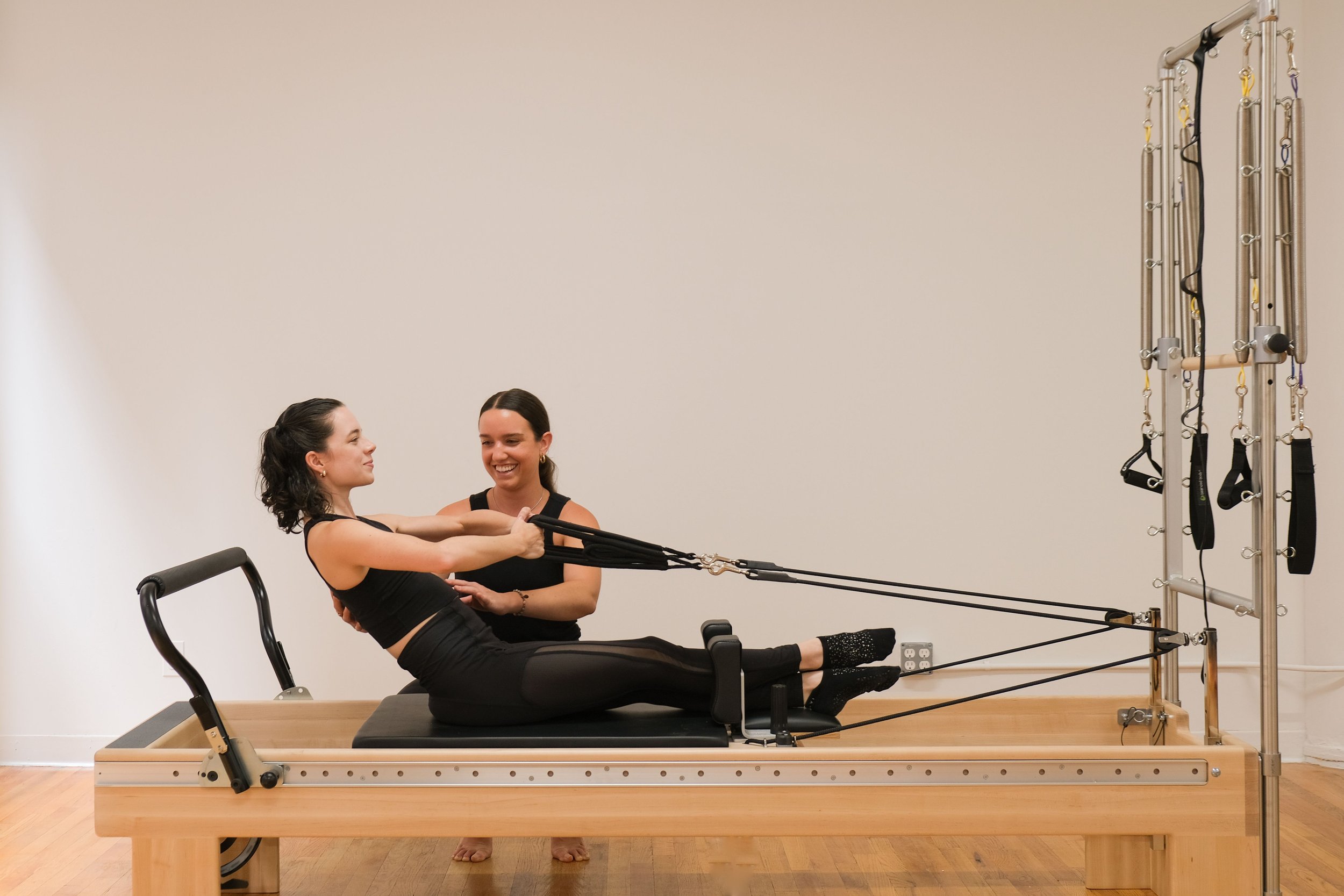
A typical Pilates session is centered around controlled, low-impact movements that target deep muscle engagement. Classes focus on building strength, improving posture, increasing flexibility, and enhancing core stability- all without placing strain on joints.
The structure varies by class type. Mat sessions use bodyweight exercises and small props like rings or resistance bands. Reformer classes incorporate a spring-loaded machine to introduce adjustable resistance and guided movement patterns.
Expect clear instruction, slow and precise pacing, and an emphasis on breath-to-movement connection. The controlled format is beginner-friendly but easily scaled for more advanced fitness levels.
Each class is designed to train both the body and the mind—requiring focus, alignment, and awareness from start to finish.
Factors Influencing the Cost of Pilates Classes
Pilates pricing varies widely, and it’s not arbitrary. There are specific, consistent factors that directly affect what studios charge. Understanding these can help you assess whether the cost reflects the value.
Class Type: Mat classes are usually more affordable due to minimal equipment and larger group sizes. Reformer or equipment-based sessions require costly machines, limit class capacity, and often involve more hands-on instruction—all of which raise the price.
Instructor Experience and Certification: Instructors with more training, advanced certifications, or specialized knowledge in rehab or biomechanics tend to charge more. Their expertise often results in better cueing, safer programming, and a more effective session overall.
Location: Studios in city centers or high-rent areas typically have higher pricing to cover overhead. Local demand also plays a role—more competitive or affluent markets tend to support higher rates.
Studio Amenities: Added features like changing rooms, showers, towel service, boutique spaces, and complimentary props can all raise pricing. Studios that offer a premium environment usually price accordingly to reflect the experience.

Mat vs Reformer Pilates Pricing
Mat-based classes are often the most budget-friendly option available. These sessions use minimal equipment, typically just a mat and small props like bands or rings. As a result, the overhead for studios is low, and class sizes can be larger, which helps keep prices down.
Typical mat classes range from $25 to $45 per session, depending on the studio and location. Reformer classes, by contrast, usually cost between $42 and $75 or more.
These sessions involve more setup and specialized instruction, which contributes to the higher price.
For those new to Pilates or looking for a lower-cost way to get started, mat classes are often the first step. However, the unique features of reformer training can offer a more challenging experience, reflected in the pricing.
Why Reformer Pilates Usually Costs More
The Reformer machine is a significant investment for studios. It requires regular maintenance, takes up more space, and limits class size. Fewer people per session means a higher cost per participant to make the class viable.
Instructors who teach Pilates Reformer classes also complete additional training and certifications. These programs are more intensive and expensive, covering machine mechanics, safety, and tailored instruction methods. That added expertise raises the baseline cost of running a Pilates Reformer session.
Class formats tend to be more hands-on and personalized. Instructors often adjust form, spring tension, and exercise progression based on individual needs. That level of focus and equipment complexity justifies the increased pricing.
The higher cost reflects not just the machinery, but the expertise, space, and personal attention built into every session.
Choosing The Right Type Of Pilates In NYC
Private Pilates Usually Makes Sense If You:
- Want highly individualized instruction and feedback
- Are recovering from injuries or managing chronic tension
- Need help building stability, posture, or movement awareness
- Prefer a quieter, more focused training environment
- Want faster progression with direct coaching
- Value accountability and consistency
In many cases, the value of private Pilates comes less from the equipment itself and more from having an experienced instructor continuously adjusting movement in real time.
Group Pilates Classes Usually Work Best If You:
- Want a lower-cost way to practice consistently
- Enjoy a higher-energy class environment
- Already feel relatively comfortable with Pilates foundations
- Like the structure and motivation of group fitness
- Plan to attend multiple classes per week
The experience can vary dramatically between studios. Smaller classes and highly trained instructors generally create a more personalized experience, while larger fast-paced classes often prioritize flow and intensity over detailed correction.
The Benefits of Investing in Pilates Classes
Pilates offers wide-ranging benefits that support both physical wellness and mental clarity. It's a practice that strengthens the body while calming the nervous system. These effects are especially valuable in today's high-stress environments.
Whether practiced privately or in a group setting, Pilates encourages consistency and progress over time. The benefits build gradually but can have a lasting impact on your overall health.
| Benefit | Long-term value |
|---|---|
| Low-impact strength and control | Pilates strengthens muscles without relying on high-impact strain, making it accessible for a wide range of fitness levels, including people with joint sensitivities, prior injuries, or a need for more controlled training. |
| Posture, spinal alignment, and mobility | A consistent Pilates routine can support better posture, spinal alignment, joint mobility, and core strength. These changes matter because they help create a stronger base for everyday movement and long-term physical resilience. |
| Muscular balance and coordination | Pilates emphasizes balanced strength, symmetry, body awareness, and coordination. Over time, that can help reduce stiffness, improve movement quality, and make exercise feel more controlled and connected. |
| Back, joint, and tension support | Because Pilates focuses on alignment, control, and gradual progression, it can support people managing recurring back discomfort, joint sensitivity, muscle tension, or stiffness when taught and modified appropriately. |
| Balance, healthy aging, and fall prevention | With consistent practice, Pilates can help preserve mobility, balance, joint function, and physical confidence over time. That long-term value is especially relevant for people who want training that can evolve with their body. |
| Breath, stress, and nervous system regulation | The breath-to-movement focus can help create a calmer, more grounded training experience. For many people, Pilates offers both physical work and a mental reset, supporting consistency in high-stress daily life. |
| Bottom line: The value of Pilates is not only in one class. It is in the way consistent, well-taught sessions can support strength, posture, mobility, balance, body awareness, and stress regulation over time. | |
How to Choose the Right Pilates Class for Your Budget
The right Pilates class for your budget depends on how well it matches your goals, schedule, and spending limit. Skip the marketing noise and focus on what you're actually getting for the cost.
Key factors to consider when evaluating your options:
Class frequency: how many sessions are included per week or month
Format type: mat or reformer, based on your goals and preferences
Instruction style: private or group, depending on the level of guidance you need
Payment model: single sessions, class packs, or memberships
Schedule consistency: class times that align with your daily routine
Flexibility: cancellation, rescheduling, or rollover options
Included value: access to equipment, assessments, or progress tracking
Total monthly cost: what you’ll realistically spend over time - not just per class
Focus on which of these factors matter most to you. The best fit is the one that supports your goals without stretching your budget beyond what’s sustainable.
RELATED: How to Become a Pilates Instructor
Looking for private Pilates that actually progresses over time?
Transform your fitness with Private 1x1 Pilates in NYC. At The Pilates Circuit, we deliver personalized one-on-one training designed around your body, your goals, and your progression. Whether you're improving posture, building strength, or enhancing mobility, every session is structured to drive measurable results.
Book an Intro Session to experience how targeted training can make a difference. Train with us at our Chelsea Private Pilates Studio or NOMAD Private Pilates Studio.
FAQs
-
In Manhattan, Pilates class prices vary depending on the format. Large group mat classes may cost around $25 to $45 per session, while small group reformer classes are often in the $40 to $75 range. Private Pilates sessions typically start around $125 and can increase depending on instructor experience, studio setting, and how personalized the training is.
The key difference is not just price, but the level of coaching and progression built into the session.
-
Private Pilates sessions are structured entirely around your body, your movement patterns, and your goals. The instructor can adjust exercises, resistance, and pacing in real time, which allows for more efficient progress and often safer training.
Group classes are generally more affordable because the instructor’s attention is shared across multiple participants, and programming is less individualized.
-
Memberships can make sense if you plan to attend consistently. Many studios offer lower per-class rates when sessions are purchased in packages or monthly plans.
Before committing, it helps to consider whether the class structure, schedule, and level of instruction match what you are actually looking for. The best value is not always the lowest price, but the format that supports steady improvement.
-
Hiring a private Pilates instructor offers personalized attention, tailored workouts, and focused guidance. This leads to faster progress and reduced risk of injury. Working with a private instructor also allows you to address specific goals and receive immediate feedback.
When you take group classes, you get the benefit of movement but often not the progression and programming of working with a private instructor. By focusing on form and weekly progressions, you’ll achieve your goals and see a difference a lot faster with a private trainer.
