
Barre vs Pilates: What's the Difference & Which Is Best for You?
You've probably heard both Barre and Pilates mentioned in the same breath at wellness conversations and fitness forums. These two low-impact methods promise similar benefits like improved posture, core strength, and that coveted lean muscle definition.
Yet despite the overlap in marketing language, the actual experience of each practice differs significantly. Understanding what separates Barre vs Pilates helps you choose the method that actually matches your goals and preferences. One isn't universally better than the other, but one might be exactly what your body needs right now.
This guide breaks down how each method works, what results you can expect, and which approach aligns with where you are in your fitness journey.
Understanding the Connection Between Barre and Pilates
Barre and Pilates share more DNA than most people realize when first encountering either practice. Both methods emphasize controlled movement, proper alignment, and mind–body connection during every exercise.
You'll often find similar language around:
controlled movement
proper alignment
mind–body connection
core engagement
coordinated breathing
precise positioning
The overlap exists because Barre borrowed heavily from Pilates when it was originally developed decades ago. Understanding their shared foundation helps you see why they're often mentioned together in fitness conversations.
Yet despite these similarities, each method delivers distinct experiences and results that serve different needs.
Why These Two Popular Methods Are Often Confused
The confusion between Barre and Pilates makes sense when you look at their surface-level similarities. Both use small, controlled movements that challenge muscles without heavy weights or high-impact cardio.
Studios for each practice tend to attract similar demographics seeking low-impact yet effective strength training. The emphasis on form over speed appears in both methods, creating that same focused atmosphere.
Many instructors cross-train in both disciplines, which further blurs the lines between the two practices. Class descriptions often use overlapping language about lengthening, toning, and building lean muscle definition.
However, the actual experience of taking a Barre class versus a Pilates session reveals meaningful differences.
What Is Barre?
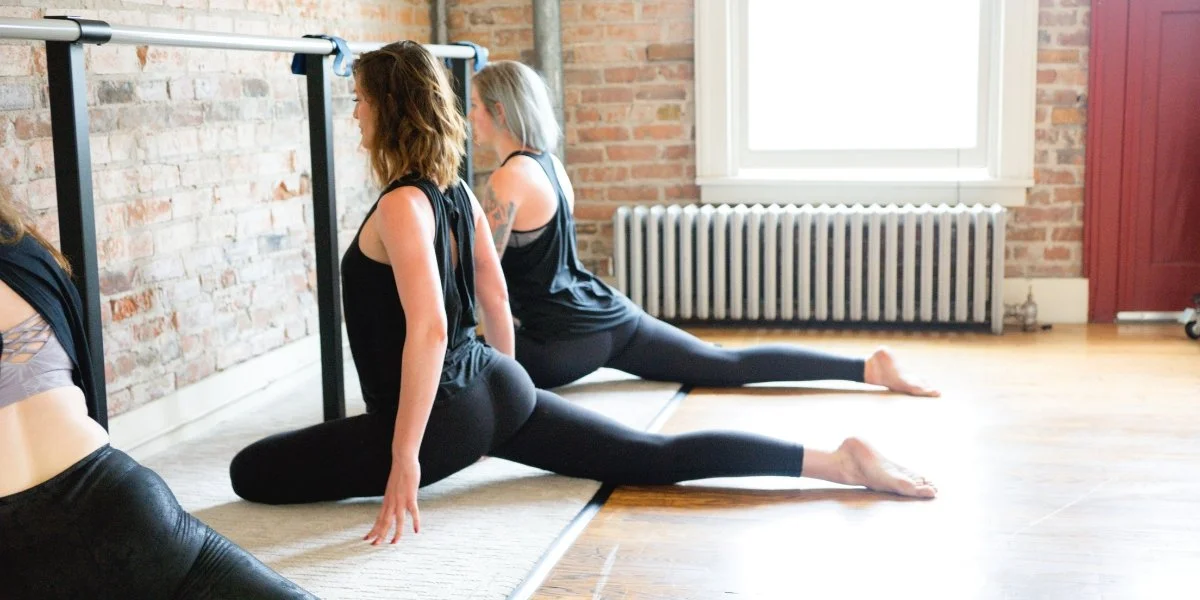
Barre is a fitness method that combines ballet-inspired movements with elements from Pilates, yoga, and strength training.
Classes typically use a ballet Barre for balance support during standing exercises and floor work. The practice emerged in the 1950s when dancer Lotte Berk created exercises to rehabilitate her own injury.
Modern Barre has evolved into various styles, from classical approaches to fitness-focused variations with added cardio. Most classes follow a similar format: warm-up, upper body work, lower body at the Barre, and core-focused floor sequences.
The method relies on isometric holds, small pulses, and high repetitions to fatigue specific muscle groups. You'll often hear instructors cue movements in counts of eight, reflecting Barre's dance heritage and rhythmic structure.
How Small Movements Create Big Change
Barre's effectiveness comes from working muscles to the point of fatigue through tiny, precise movements. The small range of motion keeps muscles under constant tension without rest between repetitions.
This approach, often called "working to failure," creates the signature shake that Barre participants experience during class. Isometric holds force muscles to engage continuously while you pulse through minimal movement ranges.
The combination breaks down muscle fibers differently than traditional strength training with larger, explosive movements. Your muscles adapt by building endurance and creating that lean, defined appearance Barre is known for.
The method proves you don't need heavy weights or big movements to create significant strength gains.
What to Expect in a Typical Barre Class
A standard Barre class runs 45 to 60 minutes and moves through distinct sections targeting different body areas.
Here’s what you can expect:
Length: 45–60 minutes
Warm-up: light cardio or flowing movements to elevate your heart rate
Upper body: light hand weights for biceps, triceps, and shoulders
Barre section: lower body work — leg lifts, squats, lunges, and endless variations
Core work: mat-based exercises (often Pilates-inspired) performed at a faster pace
Music: drives the tempo and keeps you moving with the beat
Why Barre Appeals to Those Who Love Structure and Rhythm
Barre provides a clear structure that helps people feel successful even when they're new to the practice. The repetitive format means you know what's coming and can focus on execution rather than learning choreography.
Music creates energy and motivation while also dictating the pace so you're not wondering how long to hold. The visible progress of increased reps or longer holds provides tangible markers of improvement over time.
Group class energy keeps you accountable and pushes you further than you might go alone at home. The ballet aesthetic appeals to people who appreciate grace and elegance alongside fitness and strength building.
This combination of structure, community, and visible results creates loyal Barre devotees who rarely miss class.
Understanding Pilates: Core Principles and Practice
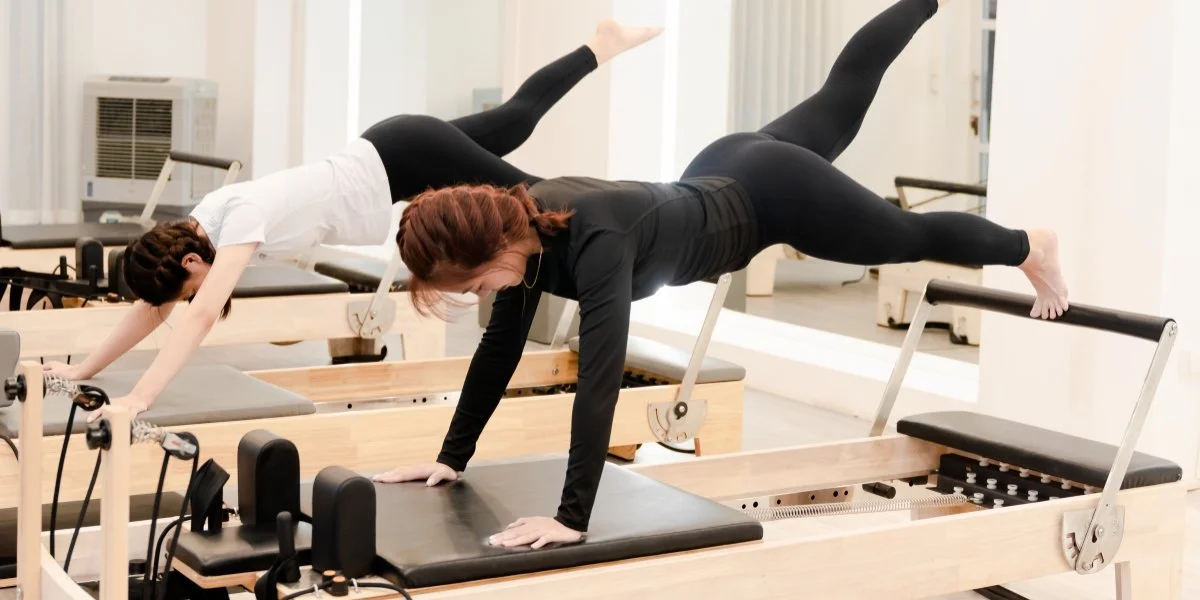
Pilates is a comprehensive movement system focused on developing core strength, flexibility, and total body awareness.
Joseph Pilates created the method in the early 1900s as a rehabilitation tool for injured dancers. The practice centers on six principles: concentration, control, centering, precision, breath, and flow throughout all movements.
Every exercise originates from your core, which Pilates calls the "powerhouse" that stabilizes your entire body. The method can be practiced on a mat using body weight or on specialized equipment like the Reformer.
Unlike Barre's rhythmic, repetitive approach, Pilates emphasizes quality over quantity with fewer, more controlled repetitions.
The focus remains on proper neutral spine alignment and engaging the correct muscles rather than working to fatigue.
How Pilates Builds Strength from the Inside Out
Pilates builds deep, functional strength by training your body from the inside out. Here’s how it creates such powerful, lasting change:
Trains deep stabilizing muscles before the ones you see in the mirror
Uses core engagement in every movement to create a strong foundation
Teaches you to move from your center, improving posture and daily movement patterns
Emphasizes eccentric muscle control so you lengthen while staying strong
Pilates breathing coordinates breath with movement to enhance oxygen flow and body awareness
Builds functional strength that changes how you sit, stand, and move throughout your day
What Makes Reformer and Mat Pilates So Different
Mat Pilates relies entirely on body weight and gravity to create resistance during floor-based exercises. The repertoire includes classic exercises such as the Hundred, Roll-Up, and Teaser, performed on a padded mat.
Reformer Pilates uses a specialized machine with a sliding carriage, springs, straps, and a footbar for resistance. The equipment provides both assistance and challenge, making some exercises more accessible and others significantly harder.
Springs offer adjustable resistance that can be customized to your strength level and specific goals. The Reformer allows for endless exercise variations that target muscles from angles impossible on the mat.
Private Reformer sessions deliver personalized programming that adapts to your body's unique needs and limitations.
Why Pilates Is a Game Changer for Posture and Longevity
Pilates addresses the postural imbalances that develop from modern life spent sitting, looking at screens, and moving repetitively.
The practice teaches proper spinal alignment and how to maintain it during movement and throughout daily activities. You develop awareness of your body's positioning in space, which helps you catch and correct poor posture habits.
Core strength built through Pilates supports your spine and reduces the chronic back pain many people accept as normal. The low-impact nature means you can practice Pilates for decades without the joint wear typical of high-impact exercise.
This combination of strength, flexibility, and body awareness keeps you moving well as you age. The method literally changes how you hold yourself and move through the world every single day.
Barre vs Pilates: How Each Shapes the Body in Unique Ways
When comparing Barre vs Pilates, the muscular results differ based on each method's approach to resistance and repetition. Barre creates that lean, dancer-like muscle definition through high-repetition exercises that work muscles to fatigue.
The constant engagement and small movements build muscular endurance more than raw strength or power. Pilates develops longer, more functional muscles through controlled, full-range movements that emphasize quality over quantity.
The focus on core integration means Pilates reshapes your entire posture and how you carry yourself. Barre tends to show visible results in legs and glutes faster due to the targeted, repetitive nature.
Pilates transforms your body more comprehensively, but the changes happen from the inside out over time.
Finding the Right Fit for Your Body and Goals
Your choice between Barre and Pilates should reflect what your body needs right now rather than a specific aesthetic or trend. Looking at the factors that matter most to you can help clarify which method aligns with your goals, preferences, and current physical condition.
Consider the following as you explore both methods:
How much do you value music, rhythm, and group energy in your workouts?
Whether you’re managing injuries, chronic pain, or mobility limitations that may require adaptable programming
The level of customization and individual attention you want in your training
How important performance, balance, and long-term movement quality are to your goals
Whether you’re drawn to dance-inspired movement or prefer slow, controlled, full-range strength work
Which environment — group class or private session — best supports your motivation and consistency
Trying both practices with these factors in mind often gives the clearest insight into what feels right for your body at this moment.
Closing Thoughts: Choosing What Helps You Feel Your Best
The Barre vs Pilates debate isn't about which method reigns supreme but which serves your current needs best. Both practices offer legitimate benefits and can transform how your body looks, feels, and functions over time.
Some people love alternating between both methods to get varied stimulus and prevent adaptation or boredom. Others find their perfect match in one practice and build their entire movement routine around it.
The most important factor is choosing something you'll stick with beyond the initial excitement of trying something new. Your body will tell you what feels right when you listen to how you feel during and after each practice.
Get Started Today
Transform your fitness with Private 1x1 Pilates in NYC. At The Pilates Circuit, we deliver personalized one-on-one training designed around your body, your goals, and your progression. Whether you're improving posture, building strength, or enhancing mobility, every session is structured to drive measurable results.
Book an Intro Session to experience how targeted training can make a difference. Train with us at our Chelsea Private Pilates Studio or NOMAD Private Pilates Studio.
Frequently Asked Questions
Which Is Better for Toning: Barre or Pilates?
Both build lean muscle tone, but Barre creates quicker definition in the legs and glutes through high-rep, targeted work. Pilates develops more gradual, full-body tone while improving posture and functional strength. The best choice depends on whether you want fast visible changes or a comprehensive transformation.
Can You Combine Barre and Pilates in One Routine?
Yes — they complement each other well because they challenge the body differently. Pilates builds core strength and alignment, while Barre adds endurance and intensity. Just allow enough recovery since both work muscles deeply.
Is Barre or Pilates Easier for Beginners to Start With?
Barre often feels more accessible thanks to clear group instruction and repetitive structure. Pilates offers more customization, especially in private sessions, and the Reformer can make movements easier for beginners. Try both and choose the environment where you feel most supported.
