
Does Pilates Help with Menopause? (Everything You Need to Know)
If you are going through Menopause and have been told to try Pilates, here’s why. In this comprehensive guide, we will explore the question: does Pilates actually help with Menopause & its symptoms?
We’ll chat potential benefits, personalized routines, and how you can adjust your lifestyle to work during Menopause.
Short answer - Pilates is a GREAT compliment to your training during Menopause but let’s get into the details.
What Is Menopause?
Menopause is the natural end of a woman's reproductive years, occurring typically between 45 and 55, but can be seen far earlier in some women. It’s medically defined as the permanent cessation of menstrual periods for at least 12 consecutive months due to declining ovarian function. But the symptoms of Menopause are far more than just the ending of the menstrual period.
What Are The Symptoms Of Menopause?
You’ve likely heard the main Menopausal symptoms, including:
Hot flashes
Night sweats
Sleep disturbances
Mood swings
Vaginal dryness
Weight gain
Fatigue
Decreased libido
Women should seek guidance and support from healthcare professionals to manage and alleviate these symptoms. These are the medical symptoms that require blood tests and management with a medical professional.
But there are physical symptoms at a workout level that most people don’t know about, including:
Increased Recovery time
Increased Risk of Frozen Shoulder
Decreased Muscle Mass and Strength
Joint Stiffness and Reduced Mobility
Reduced Bone Density
Changes in Balance and Coordination
Higher Risk of Tendon and Ligament Injuries
Reduced Power Output and Explosiveness
These shifts aren’t dramatic overnight, but they change how the body responds to training. What used to feel effective can start to feel either too easy to drive change, or too intense to recover from.
That’s also why a more individualized Pilates for menopause approach can become increasingly valuable during this stage. The goal is no longer just exercising harder, but training in a way your body can consistently recover from while still building strength, stability, and long-term resilience.
That’s why training during this phase needs to become more intentional and the workout you did at 30 may not work like it used to.
Does Pilates Help with Menopause?
Strength, flexibility, and balance usually all decline during menopause. Pilates is a great remedy for these losses. It targets the core while enhancing coordination and stability.
Strength is one of many things Pilates improves. It also improves posture and alignment. With those, Pilates can take strain off of your joints and improve the ease of movement in daily activities.
Menopause Pilates can reclaim your body’s functionality alongside strength training, or it can provide a great base for a fitness regimen.
Learning to move properly is a main goal in Pilates. When exercising in and out of the gym, proper movement and control translate to effectiveness an understanding of the exercises and their purpose are essential. Pilates teaches this. Pilates takes the guesswork out of exercises.
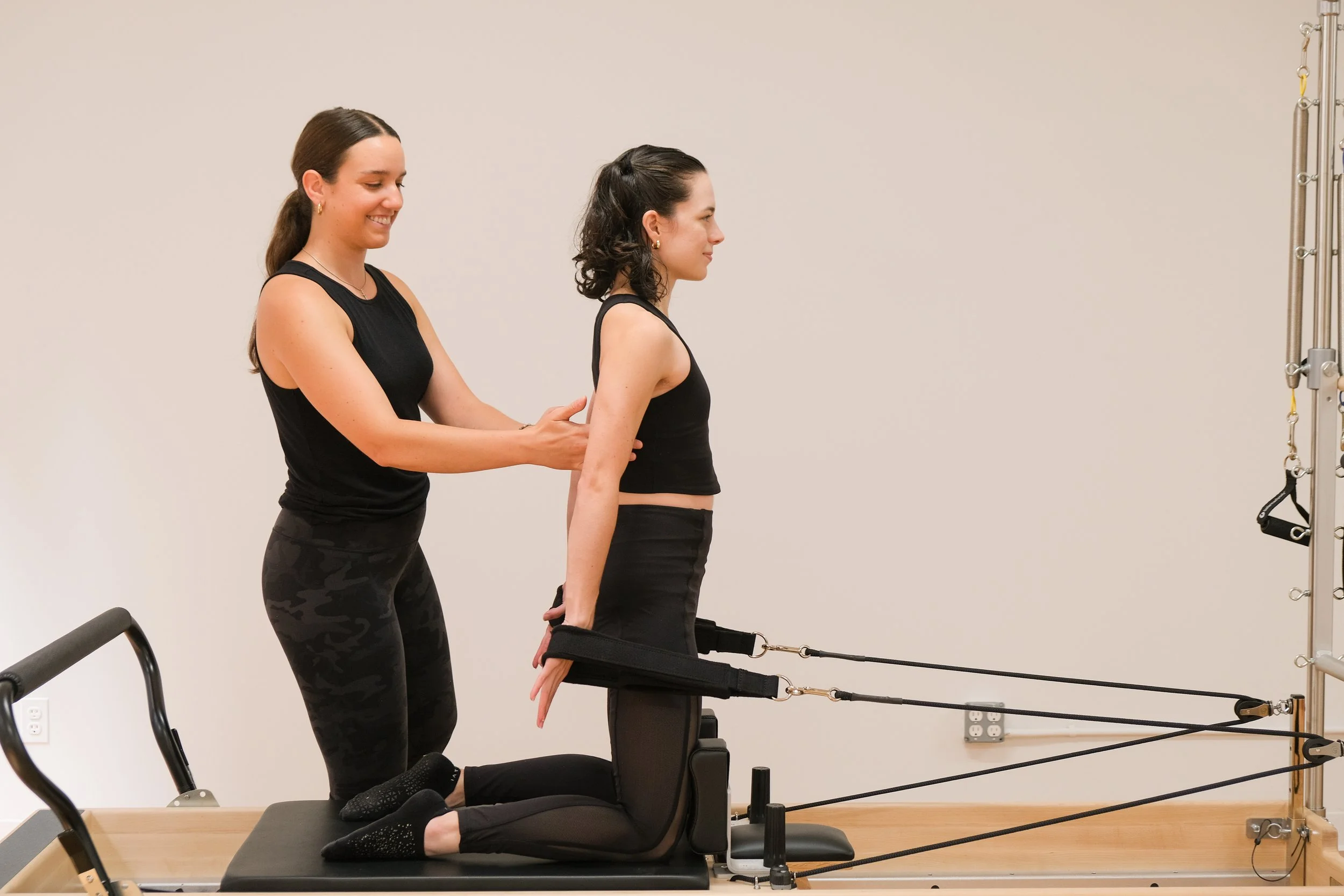
Exploring Benefits of Pilates For Perimenopause & Menopause Relief
Pilates can offer significant relief during perimenopause and menopause. As you age, regular exercise becomes key to your longevity. Pilates presents a really smart way of moving that’s less likely to injure, teaches you the foundations, and also addresses some key Menopausal symptoms.
#1) Alleviation of Menopause Symptoms
Fatigue, poor recovery, and sleep disturbances are common complaints for many individuals in this stage of menopause. Regular, low-impact activity is important for keeping your system energized. Pilates is one such activity and can be included in your regular routine. Pilates is physically demanding but not debilitating.
Loss of muscle and mass, along with increased joint strain and changes in posture, are all signs of decreasing estrogen. Pilates is a valuable exercise for improved posture and reduces pain by building the muscles that stabilize the spine in the core and back.
During menopause, individuals often experience a decline in balance and coordination. The risk of falling can be significantly reduced with Pilates, which contains many dynamic and controlled movements. Pilates also keeps your body responsive.
RELATED: 5 Benefits of Pilates for Seniors
#2) Improvement in Bone Density and Reduction in Osteoporosis Risk
Bone loss at menopause targets the spine and hips, and results in some of the more notable fracture risks as well as the weaker posture due to reduced structural support that is observed.
With Pilates, the discomfort is greatly lessened as you strengthen the core, back, and hips, and decrease the unnecessary bone strain while increasing bone load handling.
It also realigns your bones by correcting posture, which often shifts bones to put more pressure on more at-risk areas, as Pilates helps you adopt positions that minimize pressure.
While Pilates is not at all a high-impact modality, it provides a low-risk environment and good controlled resistance, which is a great way to increase strength if your bone density is at all reduced or your joints are sensitive.
Combined with strength training, you have even more safe control to increase your training further, as it helps you train in a more effective way.
Pilates won’t replace strength training for bone density, but it’s what allows you to do strength training well.
#3) Enhancement of Mental Functions and Stress Reduction
Symptoms of menopause include brain fog, not being able to focus, and increased stress.
Pilates combines the control of movement with conscious breathing to help support the regulation of your nervous system and help you to switch out of the persistent “on” state.
Pilates practice is to be balanced, and inclusive of developing focus, engaging with “how you feel, awareness to your body, and how your body is responding.” Pilates improves concentration and overall body awareness.
Typically, your mind is not engaged in the myriad of tasks calling your attention, and the mental reset is of equal value to the physical work.
Doing less to relieve the stress that comes with menopause is a common response. Pilates is a sufficient diversion because it is an engaging focus, allowing your mind to actually switch off.
#4 ) Improved Physical Functioning, Flexibility, and Balance
Menopause affects how the body responds to training. Longer recovery times, decreased muscle mass and strength, and stiffer joints occur. Chronic pain and injury become more frequent, especially in the shoulders.
At TPC, we use strength training for Menopause combined with Pilates to address this.
Strength training is vital at this time. It aids in the maintenance and reconstruction of muscle mass, the support of bone density, and the overall improvement of resilience, allowing the body to withstand the increased loads of injury and chronic pain.
Pilates then complements this by focusing more on the function and intermediate use of strength. It improves joint positioning, restores mobility, and aids in the construction control within full ranges of motions, therefore reducing the occurrence of stiffness and potential injuries.
Individually and in partnership with other approaches, this allows you to train more consistently. You’re not only getting stronger, but you’re also constructing a body that is capable of recovery, and move efficiently, that is capable of supporting further training progression.
Due to the natural decline of balance and coordination, these are also trained throughout. It becomes critical in maintaining performance and overall well-being for longevity. You learn to move well, but are not reliant on force, and are using your body properly.
Tailoring Pilates Techniques for Menopausal Relief
So what does this actually mean for how you’d approach your training during Menopause?
Intensity and Frequency: You want the intensity that you can maintain consistently and frequently. If a workout leaves you sore for a week, the intensity needs to be reduced. One day of mild soreness is normal; anything more requires an adjustment to the intensity of your program
Incorporating Body Weight and Standing work: While the Pilates Reformer is a lot of fun, you need to prioritize the standing pilates repertoire to continue to build your balance and supporting muscles. Instead of a laying down focused session, you should be up and moving for a good amount of the workout. Even seated is beneficial.
Heavier Weights: Pilates allows us a ton of customization - you should be adding weight wherever possible (without sacrificing form). The body needs to take on more load. Higher weight and less reps becomes the priority.
Single Leg work: Coordination, strength and balance. Hips tend to become very tight and can limit your ability to do legwork. Single-leg work and mobility will help maintain your mobility.
Core + Upper back: While Pilates targets these, a Menopause program should prioritize them
Adjust for joint pain: Don’t push through any joint pain - change the weight or the angle and then continue the exercise. You need to build the muscle and the support without damaging the joints and pushing through pain will lead to injury down the line.
Grip and wrists: Weak wrists become increasingly common; however, it’s one of the first things that will reduce your independence as you age. Grip is key, and wrist strength is responsible. Dead hanging and planking on the wrists are important. If you can’t bear weight on the wrists, there are exercises that can be done to build that strength.
Overall, it’s the customization that makes Pilates for Menopause the perfect training option. Whatever your body is doing in the moment, Pilates can meet you where you are and make sure you’re progressing.
The Importance Of Customizing Your Pilates Routine For Menopause Relief
Doing workouts that don’t prioritize the key concerns for Menopausal women can be a waste of time.
Group Classes that race around without a strong form focus can compromise your joints.
Avoiding exercises you don’t like can turn into major problems down the line when that function is lost.
Overtraining can injure and take you out of your training for months (major negative impact on bone density).
Customizing a Pilates routine is crucial for menopausal relief. Every woman experiences menopause differently, so tailoring a routine to address individual needs becomes essential.
Essential Pilates Routines for Managing Menopause Symptoms
Menopause requires a holistic approach, and incorporating pilates routines can help manage symptoms.
Deep breathing and pelvic floor exercises activate core muscles and improve urinary control.
Spinal articulation exercises promote flexibility and posture.
Weight-bearing exercises prevent osteoporosis.
Stretching routines target tight areas like hips, back, and shoulders.
Consult with a certified instructor or medical professional for proper form and alignment.
Customizing your routine maximizes Pilates' benefits for menopausal relief and wellness.
Embracing Change: Pilates as a Companion Through Menopause
Menopause brings physical and emotional changes that can be challenging. With this in mind, does pilates help with menopause?
Pilates can be an ideal companion through this journey due to its holistic approach. Regular Pilates exercises help maintain a healthy weight, improve posture, and promote emotional well-being. They lock in on the things most likely to be overlooked in other workouts and provide significant room for customization.
Whether you’re brand new to exercise or an experienced Athlete, pilates can be customized to work with you through Menopause.
Get Started Today
Transform your fitness with Private 1x1 Pilates in NYC. At The Pilates Circuit, we deliver personalized one-on-one training designed around your body, your goals, and your progression. Whether you're improving posture, building strength, or enhancing mobility, every session is structured to drive measurable results.
Book an Intro Session to experience how targeted training can make a difference. Train with us at our Chelsea Private Pilates Studio or NOMAD Private Pilates Studio.
FAQs
-
Yes, private Pilates training is highly beneficial for beginners as it allows for personalized instruction and guidance tailored to individual needs. A private instructor can introduce beginners to the fundamentals of Pilates, including proper alignment, breathing techniques, and foundational exercises.
Private sessions offer a safe and effective way for beginners to learn Pilates principles and develop a strong foundation before progressing to more advanced techniques.
Most studios recommend starting with privates before progressing to groups for this reason.
-
When selecting a trainer, it is important to consider their experience and method of teaching. Here are a couple of tips!
Consider the trainer's experience with different fitness levels, ages, and goals. Is there anything specific that you’d be after? Let us know! Our trainers have diverse backgrounds and we can make sure you’re compatible.
Ensure you feel comfortable asking questions and expressing your needs. The studio is a safe space, we want to hear everything - how things feel, if something is off, does this exercise make sense? We’re not here to boss you around or blindly lead, we’re collaborating and want to hear from you
Seek recommendations and reviews from friends. You can read some of our reviews here. We take our client relationships super seriously, you trust us with your body and we’re honored that you’re here.
Attend trial sessions to gauge compatibility and teaching style. Book an intro session first: see how you vibe with the studios and the trainer. If you don’t love your first session, we’ll comp your next one so that you can work with another instructor and see if there’s a better fit. We want you to LOVE your sessions with us.
-
The session will include a variety of exercises performed on the Pilates Reformer. The instructor will tailor the session specifically to your goals, abilities, and any concerns. You'll receive instruction on proper form, alignment, and breathing techniques for each exercise, ensuring safety and effectiveness.
Our instructors will play some music and chat with you throughout. You can chat as much or as little as you’d like.
Depending on your personal goals you’ll repeat exercises each week to try and get you there. Coming in tired, your instructor will switch up the routine to match you where you are. Lots of energy? Let’s go!
