
5 Gentle Stretches for Sciatica That May Help Relieve Discomfort
Sciatica can make simple movements surprisingly uncomfortable. It's no surprise that stretching is often one of the first things people try for relief. In many cases, it can help reduce discomfort and improve mobility.
At the same time, stretching isn't a solution for every cause of sciatica. Some stretches can feel helpful, while others may aggravate symptoms if they're performed too aggressively or simply aren't appropriate for your body. Understanding which stretches may help, how to perform them comfortably, and when stretching should be part of a broader approach can make a meaningful difference in how you manage your symptoms.
Quick Overview
- Stretching may help relieve sciatica symptoms: Gentle movement can reduce tension, improve mobility, and make daily movement feel more comfortable.
- Not every stretch is appropriate for everyone: The right movement depends on your symptoms and how your body responds.
- Comfort should guide every movement: Increasing pain, numbness, or tingling signals that the stretch should stop or change.
- Consistency matters more than intensity: Regular, comfortable movement is generally more useful than forcing a deeper stretch.
- Stretching works best within a broader strategy: Lasting improvement may also require strength, movement control, and individualized guidance.
Note: This article provides general education and is not medical advice. Consult a qualified healthcare provider when symptoms are severe or worsening.
Why Stretching Helps Some Types of Sciatica Pain
Sciatica isn't a condition with a single cause, which means there isn't a single stretch that works for everyone. Depending on what's contributing to your symptoms, gentle stretching may be good for sciatica because it can help reduce discomfort, improve mobility, and make everyday movement feel easier.
The goal isn't to stretch as deeply as possible. It's to improve how comfortably your body moves without increasing irritation. When stretching is appropriate, it can become a useful part of a broader movement strategy.
Releasing Tension Around Irritated Nerves And Muscles
Muscles surrounding the hips, glutes, and lower back can become tight or protective when you're experiencing sciatic pain. That increased tension may place additional stress on already sensitive tissues or make everyday movements feel more restricted. That’s one reason we rarely think about stretching in isolation.
Gentle stretching can sometimes help those muscles relax, allowing movement to feel more comfortable. The emphasis should remain on gradual, controlled movement rather than trying to force a deeper stretch.
One thing I often notice is people assuming that more intensity produces better results. In reality, pushing into pain frequently causes the surrounding muscles to become even more protective.
Ultimately, a comfortable stretch is often much more productive than an aggressive one.
Improving Mobility Without Increasing Irritation
Stretching isn't simply about becoming more flexible. It's about helping your body move more comfortably through a range of motion that feels appropriate for you. Improving mobility can reduce unnecessary stiffness while making everyday activities feel less restricted.
That doesn't mean every movement will feel comfortable immediately. Some days your symptoms may feel more sensitive than others. Adjusting your range of motion or reducing the intensity of a stretch is often a better choice than trying to push through discomfort.
Small improvements made consistently tend to be more valuable than occasional aggressive stretching sessions. Giving your body time to adapt often produces steadier progress while reducing the likelihood of aggravating your symptoms.
Before You Start Stretching
Before trying any stretch, remember that the goal is to move comfortably, not to stretch as far as possible. Mild tension is often expected, but increasing pain, numbness, or tingling is a sign to ease out of the movement and choose a gentler approach.
It's also important to remember that symptoms can change from day to day. A stretch that feels comfortable one day may need to be modified the next. Staying within a comfortable range while following any guidance you've received from your healthcare provider is usually the safest approach.
Stretching Safety Checklist
These guidelines can help you stretch comfortably while reducing the chance of aggravating your symptoms.
Move slowly and avoid rushing into the stretch.
Work within a comfortable range of motion.
Breathe normally instead of holding your breath.
Stop if pain, numbness, or tingling becomes worse.
Modify the stretch when your symptoms change.
Choose consistency and comfort over greater depth.
5 Stretches for Sciatica and How to Perform Them Safely
The following stretches target areas that commonly become tight or restricted in people experiencing sciatica. While every case is different, these movements are often recommended because they can help improve mobility and reduce tension without placing excessive demands on the lower back.
Rather than performing as many stretches as possible, focus on how your symptoms respond to each movement. Some stretches may feel more appropriate than others depending on what's contributing to your discomfort.
#1) Piriformis Stretch
The piriformis sits deep within the hip and helps control leg movement. Tension in this area can sometimes contribute to discomfort around the glutes and back of the leg.
This seated version gives you control over the stretch without requiring much spinal movement. You should feel gentle tension through the outer hip, rather than sharp pain.
How to try it:
Sit near the front of a stable chair.
Place one ankle across the opposite thigh.
Keep your spine comfortably upright.
Lean forward slightly until you feel gentle tension.
Hold briefly, then return upright with control.
Tips for Performing This Stretch Comfortably
Many people try to create a stronger stretch by leaning farther forward or pressing the raised knee downward. Both can increase irritation without making the movement more effective.
A few small adjustments often produce a better result:
Keep your spine comfortably upright as you begin the stretch.
Lean forward only until you feel gentle tension through the hip.
Allow your shoulders and jaw to stay relaxed instead of bracing.
Ease out of the stretch if symptoms begin traveling farther down the leg.
In Practice
The piriformis often responds better to patience than intensity. When the surrounding muscles relax, people frequently notice a more effective stretch without moving any farther.
#2) Figure Four Stretch
The figure four stretch targets similar tissues while placing your body in a supported position. It may suit people who feel more comfortable lying down.
This version also allows you to adjust the intensity through your hand placement. Bringing the supporting leg closer increases the stretch through the outer hip.
How to try it:
Lie on your back with both knees bent.
Cross one ankle over the opposite thigh.
Keep your head and shoulders relaxed.
Hold behind the supporting thigh.
Gently draw the leg toward you.
Release slowly before changing sides.
Tips for Performing This Stretch Comfortably
The figure four stretch should feel supported from beginning to end. Pulling too firmly or trying to maximize the stretch usually creates unnecessary tension through the hips and lower back.
A few adjustments can make the movement feel more controlled:
Keep your head and shoulders relaxed against the floor.
Hold behind the thigh rather than pulling directly on the knee.
Use a towel or strap if reaching comfortably is difficult.
Reduce the range if symptoms become sharper or begin radiating farther.
In Practice
The quality of this stretch usually comes from staying relaxed rather than pulling harder. Small adjustments in position often change how the movement feels much more than increasing the stretch itself.
#3) Knee-To-Chest Stretch
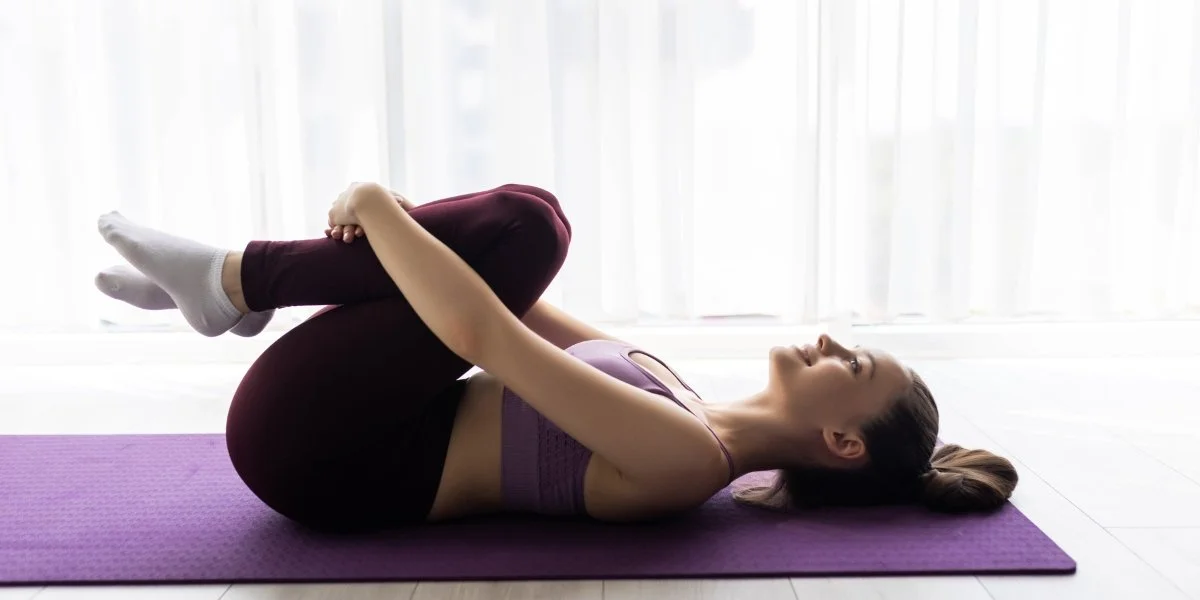
The knee-to-chest stretch gently encourages movement through the hips and may be a comfortable option for lower back pain. For some people, it can help reduce feelings of stiffness while promoting more comfortable movement throughout the pelvis.
Because it's easy to adjust, this stretch is often a good option when symptoms feel more sensitive. The movement should stay slow and controlled, allowing your body to move through a comfortable range rather than forcing additional flexibility.
How to try it:
Lie comfortably on your back with both knees bent.
Bring one knee toward your chest using both hands.
Keep your shoulders and neck relaxed against the floor.
Hold briefly without pulling forcefully.
Lower the leg with control before repeating on the other side.
Tips for Performing This Stretch Comfortably
The goal is to encourage gentle movement through the hip and lower back, not to pull the knee as close to your chest as possible. Small adjustments often make the stretch feel more effective.
A few simple changes can help:
Bring the knee only as far as feels natural.
Hold behind the thigh if reaching the shin feels uncomfortable.
Keep your breathing slow and steady throughout the stretch.
Return to the starting position gradually instead of releasing quickly.
In Practice
People often expect this stretch to create a dramatic sensation. More often, the benefit comes from allowing the lower back and hips to move comfortably instead of trying to maximize the stretch.
#4) Hamstring Stretch
Tight hamstrings can influence how the hips and pelvis move during everyday activities. Improving flexibility in the back of the thigh may help reduce unnecessary tension and make movements like walking, bending, and sitting feel easier.
Because the sciatic nerve travels through the back of the leg, this stretch should always feel gradual. Stretching too aggressively may increase nerve irritation rather than help relieve it.
How to try it:
Sit on the edge of a chair or lie on your back.
Extend one leg while keeping a slight bend in the knee.
Lengthen through your spine as you begin the stretch.
Hinge gently from your hips until you feel light tension.
Return to the starting position slowly before switching sides.
Tips for Performing This Stretch Comfortably
This stretch should create a gradual feeling of length through the back of the leg. Increasing nerve symptoms usually indicate that you've moved beyond a helpful range.
A few adjustments often improve comfort:
Keep a slight bend in the knee if needed.
Think about lengthening your spine before leaning forward.
Avoid bouncing or forcing additional range.
Reduce the stretch if symptoms begin traveling farther down the leg.
In Practice
Hamstring flexibility isn't measured by how close you reach toward your toes. Steady improvements usually come from consistent movement rather than chasing a deeper stretch.
#5) Cat-Cow Stretch
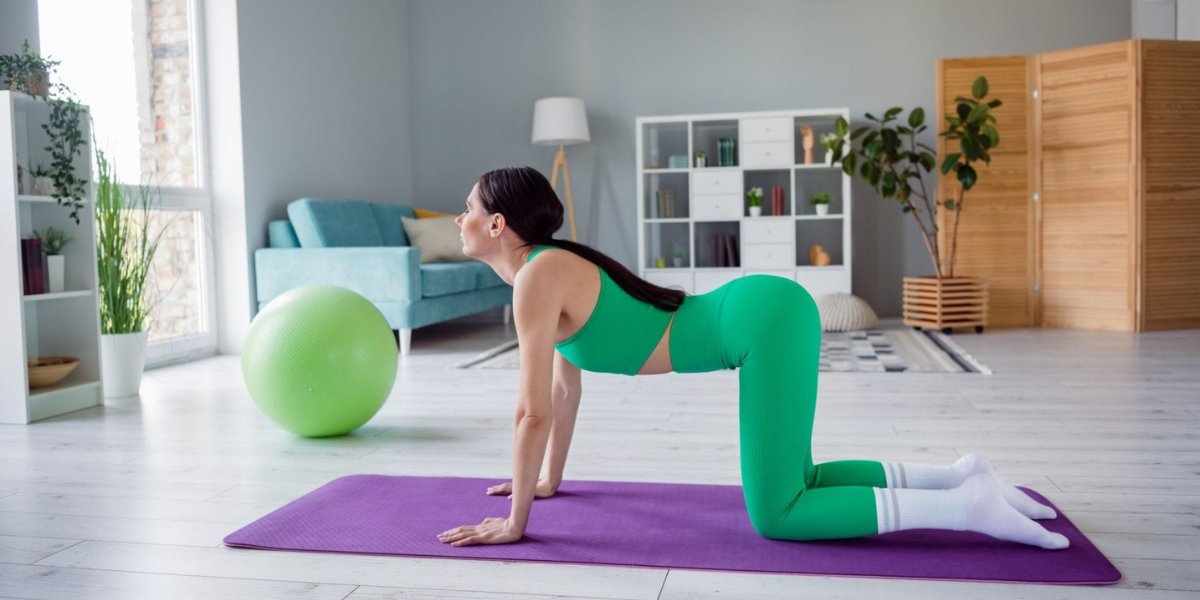
Unlike the previous stretches, Cat-Cow emphasizes gentle movement instead of holding a single position. Alternating between spinal flexion and extension may help reduce stiffness while encouraging more comfortable movement through the back and pelvis.
Many people find this exercise particularly helpful after long periods of sitting or whenever the lower back feels stiff. Moving slowly with your breath often produces a smoother, more controlled motion than rushing between positions.
How to try it:
Begin on your hands and knees with your hands below your shoulders.
As you inhale, gently lift your chest and allow your spine to extend.
As you exhale, round your back comfortably toward the ceiling.
Continue moving slowly between both positions.
Finish by returning to a neutral spine.
Tips for Performing This Stretch Comfortably
Rather than creating the biggest possible arch or curve, focus on making each movement smooth and controlled. A smaller range often feels better while still encouraging mobility.
A few adjustments can help:
Let your breathing set the pace.
Move through your spine gradually instead of rushing.
Keep your shoulders relaxed throughout the movement.
Reduce the range if either position increases your symptoms.
In Practice
Cat-Cow often works best when it's treated as a movement exercise rather than a flexibility exercise. The goal is to restore comfortable motion, not to reach the end of your range every time.
Recognizing When Stretching May Not Be Enough On Its Own
Stretching can be a valuable way to reduce tension and improve comfort, but lasting improvement often requires looking beyond flexibility alone. If symptoms continue returning despite consistent stretching, there may be other factors contributing to the problem.
Movement quality, strength, joint control, and the way your body manages everyday activities all influence how stress is distributed through your back and hips. If those areas aren't working well together, stretching may provide temporary relief without addressing the reason symptoms continue coming back.
That's one reason we rarely think about stretching in isolation. Instead, it’s much more helpful to look at how someone moves as a whole. Adding hip stability exercises to improve strength, coordination, and control can change how comfortably people move throughout the day, making stretching one piece of a much more complete strategy.
If your symptoms are becoming more frequent, more severe, or aren't improving with appropriate self-care, it's important to seek guidance from a qualified healthcare professional. Understanding what's contributing to your symptoms makes it much easier to choose the most appropriate approach.
Closing Thoughts: Effective Relief Comes From A More Complete Movement Strategy
The goal isn't to find one perfect stretch that fixes every episode of sciatica. It's to better understand how your body responds to movement so you can make decisions that support long-term comfort and function.
Sometimes that means stretching. Other times, it means improving strength, adjusting how you move, or giving your body the recovery it needs before asking more of it. The most effective approach is rarely built around one exercise. It's built around choosing the right strategy for what your body needs at that moment.
When you begin thinking about movement that way, stretching becomes more than something you do when pain appears. It becomes one of several tools that can help you move with greater confidence, build resilience over time, and stay active in the activities that matter most.
Get Started Today
Transform your fitness with Private 1x1 Pilates in NYC. At The Pilates Circuit, we deliver personalized one-on-one training designed around your body, your goals, and your progression. Whether you're improving posture, building strength, or enhancing mobility, every session is structured to drive measurable results.
Book an Intro Session to experience how targeted training can make a difference. Train with us at our Chelsea Private Pilates Studio or NoMad Private Pilates Studio.
Prefer to view your options first? Visit our Pricing page to compare private sessions, packages, and memberships before booking.
Frequently Asked Questions
-
Common stretches for sciatica include the piriformis stretch, figure-four stretch, knee-to-chest stretch, hamstring stretch, and cat-cow. The right option depends on what is causing your symptoms and how your body responds to each movement.
Choose stretches that feel gentle and do not increase pain, tingling, numbness, or symptoms traveling farther down your leg.
-
Yes. Stretching too aggressively or performing a stretch that aggravates your symptoms can make sciatica feel worse. Stretches should create gentle tension without causing sharp, radiating, or increasing pain.
If a movement consistently worsens your symptoms, stop performing it and seek guidance from a qualified healthcare professional.
-
There's no single schedule that's right for everyone. Many people benefit from gentle stretching several times per week or even daily if it remains comfortable and doesn't increase symptoms.
Focus on how your body responds over time rather than trying to stretch as often or as intensely as possible.
