
How Low-Impact Strength Training Supports Healthy Joints & Mobility
Your joints shouldn't have to choose between getting stronger and staying comfortable. Too many people accept stiffness, irritation, or fragility as the price of an effective workout. They push through discomfort, thinking it's necessary for progress, only to find themselves sidelined by pain or forced to scale back their activity entirely.
The truth is that building strength and protecting your joints aren't opposing goals. When you understand how your body responds to different types of resistance, you can create real, lasting improvements in both strength and mobility.
Low-impact strength training offers a smarter path forward, one that challenges your muscles without compromising the health of your joints. This approach allows you to train consistently, build functional strength, and maintain the mobility you need for everything you do.
When Joints Feel Stiff, Irritated, or Fragile During Exercise
Joint discomfort during movement often signals that something about your current approach needs adjustment. Stiffness, irritation, or a sense of fragility can emerge from overuse, poor form, or exercises that place excessive stress on vulnerable areas. These sensations aren't just minor inconveniences. They're your body's way of communicating that the load, impact, or movement pattern isn't working for your structure right now.
Many people assume that pushing through discomfort will eventually lead to adaptation and strength. In reality, ignoring joint feedback often worsens the issue over time. Chronic inflammation, reduced range of motion, and compensatory movement patterns can develop when joints are repeatedly stressed beyond their current capacity. The goal isn't to avoid challenges entirely. It's to find methods that build strength without creating additional strain on already sensitive areas.
This is where the training approach becomes critical. High-impact movements like running, jumping, or heavy lifting with poor mechanics can aggravate joint issues rather than resolve them. Your joints need a different kind of stimulus. One that strengthens the surrounding muscles, improves stability, and enhances function without compounding existing irritation. Low-impact strength training offers exactly this type of targeted, joint-protective conditioning.
What Is Low-Impact Strength Training?

Low-impact strength training builds muscular strength and endurance while minimizing stress on joints, ligaments, and connective tissue. Unlike high-impact activities that involve jumping, pounding, or sudden directional changes, this approach emphasizes controlled movements with deliberate resistance.
The emphasis is on quality of movement rather than speed or explosive power.
This training style doesn't mean the workouts are easy or lack intensity. You can challenge your muscles significantly while keeping forces on your joints manageable. The resistance might come from body weight, resistance bands, light weights, or specialized equipment like a Pilates reformer.
What matters most is how the movement is executed and the level of control maintained throughout each exercise.
The defining characteristic is smooth, continuous motion without jarring impact. Each repetition is performed with attention to alignment, breath, and muscle engagement. This creates an environment where muscles work hard, but joints aren't subjected to repetitive shock or compression.
Your body can build strength progressively without the wear and tear that often accompanies more aggressive training methods.
How Joints Respond to Controlled Resistance
Joints function best when the muscles surrounding them are strong and balanced. Controlled resistance training strengthens these supporting structures, which reduces the direct load placed on joint surfaces during movement. When muscles can properly absorb and distribute force, your joints experience less friction and compression.
The key is that resistance is applied gradually and with full control. This allows your nervous system to coordinate movement patterns efficiently while muscles engage at the right time and intensity. Your body learns to stabilize joints through muscular effort rather than relying solely on passive structures like ligaments and cartilage. Over time, this neuromuscular adaptation makes everyday movements feel more secure and less prone to irritation.
Controlled resistance also promotes better circulation to joint tissues. Synovial fluid, which lubricates joints, circulates more effectively during smooth, rhythmic movement. This helps maintain joint health and can reduce stiffness. The combination of strengthened muscles, improved coordination, and enhanced joint lubrication creates a foundation for long-term mobility and comfort.
For individuals managing reduced bone density or looking for safer ways to build strength with less joint stress, low-impact Pilates for osteoporosis can provide a more structured andcontrolled approach to long-term skeletal support and movement health.
Strength Training as a Foundation for Mobility
Mobility isn't just about flexibility or the ability to stretch into a deep position, which is why many people ask, is pilates good for mobility when trying to improve how their body moves. True mobility requires both range of motion and the strength to control that range safely. Without adequate strength, your nervous system will limit how far you can move to protect vulnerable joints. This is why stretching alone rarely solves mobility limitations.
Building strength through the full available range of motion teaches your body that it's safe to move there. Your muscles learn to work effectively at different joint angles, which expands your functional capacity. This approach directly addresses the root cause of many mobility restrictions. Your nervous system gains confidence in your body's ability to handle various positions and loads.
Low-impact strength training is particularly effective for this purpose because it allows you to work through ranges gradually. You can progressively load movements without the risk of sudden impact or loss of control. Each repetition reinforces proper mechanics and builds the muscular foundation needed for lasting mobility improvements.
Strength Supporting Comfortable Range of Motion
Range of motion becomes truly functional when you possess the strength to use it. Passive flexibility might allow you to get into a position, but active strength determines whether you can move through it with control. This distinction is crucial for joint health and injury prevention.
When you strengthen muscles throughout their full range, you create stability at the end ranges of motion. This reduces the risk of overstretching or straining connective tissue. Your joints can move freely without relying solely on passive tension from ligaments and tendons to stop the movement. Muscular control takes over, which protects joint structures from excessive strain.
This type of training also addresses compensatory patterns that limit range. When weak muscles can't support a movement, your body restricts mobility to prevent injury. As strength improves in previously weak areas, those protective restrictions naturally release.
You gain access to ranges that were always anatomically possible but neurologically blocked.
Stability Allowing Mobility to Be Maintained
Mobility gains are only sustainable when supported by adequate stability. Your body won't maintain a range of motion it can't control. This is why mobility work must include a strength component to create lasting change.
Stability comes from the coordinated activation of muscles that support and guide joint movement. Low-impact strength training develops this coordination by emphasizing precise, controlled movement patterns.
You're not just building stronger muscles. You're training your nervous system to maintain alignment and control under various loads and positions.
This stability foundation allows you to move confidently through daily activities without fear of joint irritation. Simple tasks like reaching overhead, bending down, or changing direction become smoother and more effortless.
Your joints stay centered and supported throughout the movement, which prevents the micro-traumas that accumulate from poor mechanics over time.
Low-Impact Strength Training Versus Low Intensity Training (What’s the Difference?)
These terms are often confused, but they describe distinctly different approaches to exercise. Low impact refers to the type of force applied to your body, specifically the absence of jarring or pounding movements. Low intensity describes how hard you're working, measured by factors like heart rate, effort level, or resistance used.
You can have high-intensity training that's still low impact. Think of a challenging Pilates reformer session or swimming intervals that leave you breathless. Your muscles work extremely hard, and your heart rate elevates, but your joints aren't subjected to repetitive pounding.
The intensity comes from sustained muscular effort and controlled resistance, not from impact forces.
Conversely, low-intensity training can be high impact. A leisurely jog at a comfortable pace is relatively low intensity cardiovascularly, but each foot strike still creates significant force through your joints. This distinction matters because joint health depends primarily on impact level, not intensity. You need adequate intensity to build strength and create adaptation, but you want to achieve that intensity through low-impact methods.
Understanding this difference helps you structure workouts that challenge your body appropriately without aggravating joint issues. You can train hard and see real results while protecting the long-term health of your joints.
The Top 3 Low-Impact Strength Training Exercises for Improved Mobility
Certain training methods excel at building strength while protecting joints and enhancing functional movement. These approaches share common characteristics: controlled resistance, emphasis on form, and progressive challenge without impact.
They also address multiple aspects of fitness simultaneously, improving strength, mobility, and body awareness together.
The most effective low-impact options provide full-body conditioning while allowing for individualization. Everyone's body responds differently to various movement patterns and resistance types.
What matters most is finding approaches that you can perform consistently with good form, and that address your specific mobility limitations or joint concerns.
#1) Pilates-Based Strength Training
Pilates strength training stands out as one of the most effective forms of low-impact strength training for mobility and joint health. The method emphasizes core stability, precise alignment, and controlled movement throughout the full range of motion.
Every exercise is designed to challenge muscles without placing unnecessary stress on joints.
The reformer machine provides variable spring resistance that supports your body while creating progressive challenges. This adjustable resistance allows you to work at an appropriate intensity regardless of your current strength level. The gliding carriage and pulley system eliminates impact while providing smooth, continuous resistance throughout each movement.
Pilates exercises target deep stabilizing muscles that directly support joint function. These muscles often get neglected in traditional strength training but are essential for maintaining proper alignment during movement. Strengthening them reduces joint wear and improves overall movement efficiency.
The emphasis on breathing and body awareness also helps you identify and correct compensatory patterns that contribute to joint irritation.
#2) Swimming Laps for Low-Impact Conditioning
Swimming provides total-body resistance training in a completely buoyant environment. The water supports your body weight, eliminating impact on joints while creating resistance in all directions. Every movement requires you to work against water resistance, which builds strength throughout your entire body.
The continuous, rhythmic nature of swimming promotes cardiovascular fitness alongside muscular endurance. Different strokes target various muscle groups and movement patterns, providing well-rounded conditioning. The resistance is self-regulating, meaning you can adjust intensity simply by changing your speed or adding equipment like paddles.
Water's buoyancy also makes swimming particularly valuable for those with existing joint issues. You can perform movements that might be painful on land without discomfort. This allows you to maintain fitness and build strength even during injury recovery or flare-ups of chronic joint conditions.
#3) Cycling for Joint-Friendly Lower-Body Strength
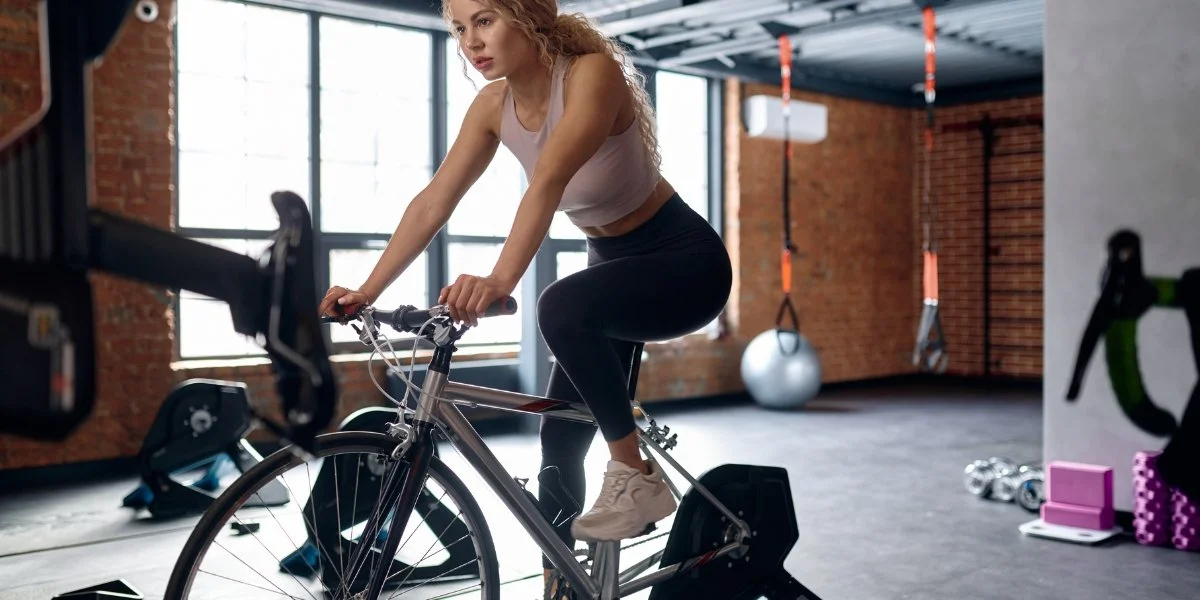
Cycling builds significantly lower-body strength while keeping your joints in a supported, controlled position. The circular pedaling motion creates smooth, continuous resistance without impact. Your knee and hip joints move through a functional range repeatedly, which strengthens surrounding muscles and promotes joint health.
Both stationary and outdoor cycling offer benefits, though stationary bikes allow for more precise control over resistance and positioning. You can adjust seat height, resistance level, and cadence to match your current capabilities and goals. This customization makes cycling accessible for various fitness levels and joint sensitivities.
The seated position reduces load on weight-bearing joints while still providing substantial muscular challenge. You can achieve high intensity through increased resistance or speed without subjecting your ankles, knees, and hips to pounding forces. This makes cycling an excellent complement to other low-impact training methods for comprehensive lower-body conditioning.
Long-Term Benefits of Low-Impact Strength Training
The protective nature of low-impact strength training creates a sustainable path for lifelong fitness.
Unlike high-impact activities that often lead to accumulated joint wear, this approach builds strength while preserving joint health. You can train consistently year after year without the breaks required for injury recovery or joint irritation management.
Progressive strength gains translate directly to improved function in daily life. Tasks like carrying groceries, climbing stairs, or playing with children become easier as your muscular foundation strengthens. Your joints feel more stable and secure during these activities because the supporting muscles can handle the demands placed on them.
Perhaps most importantly, this training style maintains and often improves joint health as you age. The combination of strength, mobility, and controlled movement patterns keeps joints mobile and well-supported.
Many people find that joint discomfort they once accepted as inevitable actually decreases with consistent practice. Your body becomes more resilient and capable rather than gradually breaking down over time.
Closing Thoughts: Applying Low-Impact Strength Training to Individual Bodies
Everybody responds differently to various training approaches. What works perfectly for one person might not suit another's structure or current condition. The key is finding low-impact methods that match your individual needs and allow for progressive challenges over time.
Start with movements you can perform with good form and without pain or excessive fatigue, especially if you are exploring pilates for beginners as a starting point for building strength and mobility. Pay attention to how your joints feel during and after training sessions. Some muscle soreness is normal, but joint pain or persistent stiffness signals that adjustments are needed. You might need to reduce resistance, modify the range of motion, or change exercise selection entirely.
Consistency matters more than intensity, especially when building a foundation for long-term joint health. Regular training sessions at a sustainable intensity produce better results than sporadic high-intensity efforts that leave you too sore to train again soon. Your body adapts to the stimulus you provide most consistently.
Working with experienced instructors can dramatically accelerate your progress and help you avoid common pitfalls. A skilled professional can assess your movement patterns, identify limitations, and design a program that addresses your specific needs. At The Pilates Circuit, we specialize in exactly this type of personalized, progressive training. Our private sessions allow us to customize every exercise to your body and goals.
Get Started Today
Transform your fitness with Private 1x1 Pilates in NYC. At The Pilates Circuit, we deliver personalized one-on-one training designed around your body, your goals, and your progression. Whether you're improving posture, building strength, or enhancing mobility, every session is structured to drive measurable results.
Book an Intro Session to experience how targeted training can make a difference. Train with us at our Chelsea Private Pilates Studio or NOMAD Private Pilates Studio.
Frequently Asked Questions
-
A low-impact workout minimizes stress on joints by avoiding jarring movements and repetitive pounding. Activities like walking, swimming, cycling, and Pilates fall into this category because they keep at least one foot on the ground or support your body weight. These workouts can still be challenging and effective for building strength and cardiovascular fitness.
-
Yes, low-impact training builds significant strength when performed with adequate resistance and progressive challenge. The key is applying enough resistance to stimulate muscle adaptation while maintaining controlled movement patterns. Many people achieve excellent strength results through methods like Pilates, swimming, and cycling without ever performing high-impact exercises.
-
Pilates is one of the most effective forms of low-impact strength training available. It builds core strength, improves mobility, and enhances overall body conditioning without placing stress on joints. The controlled, precise movements strengthen muscles through their full range of motion while the equipment or mat provides support throughout each exercise.
