
How to Build Functional Strength for Everyday Life (5 Tips)
Functional strength shows up in the moments you are not thinking about exercise at all. Carrying groceries without shifting into your low back, getting up from the floor without bracing yourself, or reaching overhead without feeling unstable all depend on how well your body coordinates strength, control, and mobility together. Knowing how to build functional strength means training your body to work as a connected system rather than a collection of isolated muscles, so strength actually transfers into daily life.
When your training reflects how your body moves outside the gym, everything from balance to resilience improves, and everyday tasks start to feel easier instead of effortful.
Why Functional Strength Matters for Everyday Life
Functional strength is what keeps your body working well as you move through your actual life. It's the difference between feeling capable and feeling limited by your own body.
Strength That Transfers Beyond The Gym
The whole point of functional strength is that it transfers. You're not training muscles in isolation - you're training movements and patterns that your body actually uses.
When you squat down to pick something up, your body doesn't isolate your quads and then your glutes and then your core. Everything works together in a coordinated sequence. Functional strength training respects that reality and builds strength accordingly.
Compound exercises - movements that use multiple joints and muscle groups at once - are the foundation of functional strength. Squats, deadlifts, push-ups, rows, lunges, and carries.
This is why low-impact strength training built around coordinated, multi-joint patterns is often more effective for long-term progress than isolated or high-impact work that does not reflect how the body actually functions.
These exercises mirror how your body actually moves in the world.
What Is Functional Strength In Practical Terms?
Functional strength is about control as much as it is about force. It's your ability to stabilize your spine while reaching overhead, to maintain balance on one leg while bending down, to control your body through complex movements without compensating.
How Functional Strength Supports Coordination And Control
This shows up in practical ways. You can carry something heavy on one side without leaning. You can get up from the floor smoothly. You can catch yourself if you trip without pulling something. It's a strength that makes your body more reliable and less fragile in everyday situations.
How To Build Functional Strength With Purpose
Building functional strength requires intention. You can't just do random exercises and hope they connect to real life. You need to train patterns, progress intelligently, and give your body time to adapt. Here's how to do it.
#1) Prioritize Compound Functional Strength Exercises
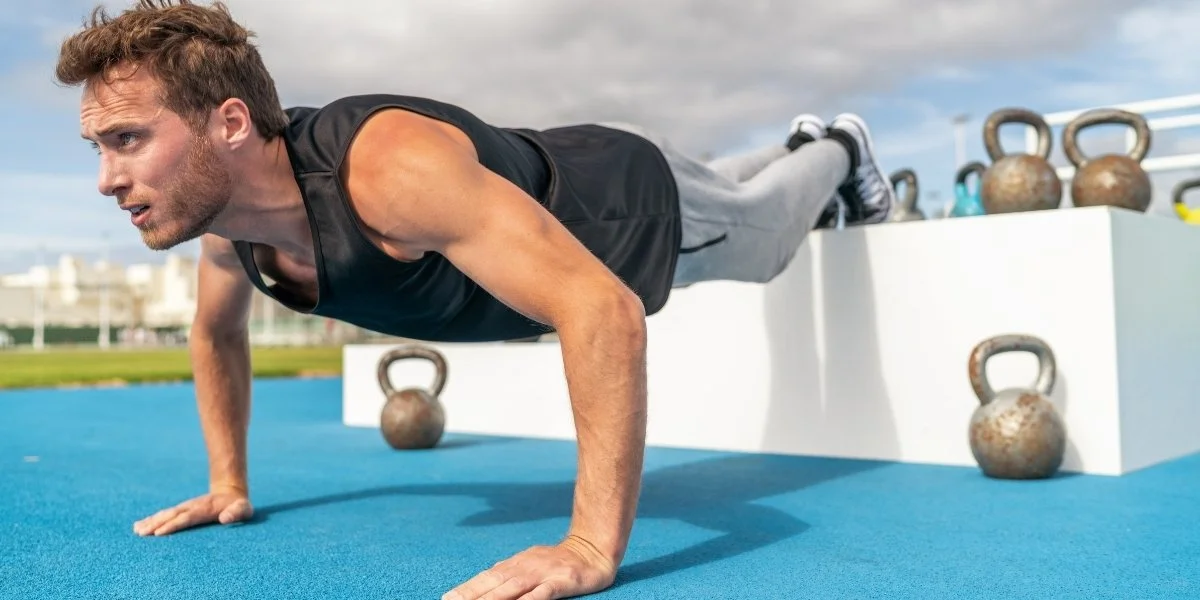
When you squat, you're training the same pattern you use to sit down, stand up, or pick something up off the ground. When you do a push-up, you're building the strength you need to push yourself up from the floor or move furniture. These aren't arbitrary gym movements - they're fundamental human patterns that your body needs to perform well.
The key is doing them with good form and appropriate load. A well-executed bodyweight squat with full depth and control will build more functional strength than a heavy partial squat with poor mechanics. Quality matters more than numbers on a bar.
Start with bodyweight versions of these movements until you can perform them smoothly and without compensation. Then add load gradually. Your body will tell you when it's ready for more challenges- if your form breaks down, you're not there yet.
#2) Train Core Stability In Motion, Not Isolation
Your core isn't just your abs, and it doesn't work in isolation. It's your entire trunk - abs, obliques, back muscles, pelvic floor - and its job is to stabilize your spine while your arms and legs move. That's functional core strength.
Crunches and sit-ups have their place, but they don't train your core the way it actually functions. Your core needs to resist movement (anti-rotation, anti-extension, anti-lateral flexion) while maintaining a stable spine. Planks, dead bugs, pall of presses, bird dogs - these exercises teach your core to do its actual job.
Pilates reformer core exercises, like those we offer in our studio, build on these same principles by adding adjustable resistance and feedback, which increases the demand for control while your spine stays stable and your limbs move independently.
Even better, integrate core stability into your compound movements. When you're doing a single-leg deadlift or an overhead press, your core is working hard to keep you stable and aligned. That's functional core training - strength that shows up when you're reaching for something on a high shelf or carrying a bag on one shoulder.
The goal is a core that stabilizes reflexively, without you having to think about it. That comes from consistent practice with exercises that challenge stability in multiple planes of movement.
#3) Build Strength Through Full Ranges Of Motion
Functional strength requires strength through your entire range of motion, not just in the middle. If you can only squat halfway down, you don't have functional strength in a full squat pattern. If your shoulder can't move freely overhead, you're limited in what you can safely lift or reach for.
Training through full ranges of motion does two things: it builds strength where you're weakest (usually at the end ranges), and it maintains or improves your mobility. You're not choosing between strength and flexibility - you're building both at the same time.
This is exactly why pilates mobility exercises are so effective, because they develop controlled movement at the edges of your range while reinforcing strength, stability, and alignment at the same time.
This doesn't mean forcing yourself into ranges you don't have. It means working at the edge of your current capacity and gradually expanding it. If you can't get into a deep squat with good form, work on your mobility while building strength in the ranges you do have. Over time, those ranges will increase.
The practical payoff is huge. When you have strength through full ranges of motion, your body can handle whatever positions life puts you in without injury. You can bend down fully to tie your shoe, reach overhead to put something on a shelf, or rotate to look behind you while driving—all without feeling limited or at risk.
#4) Progress Load Without Sacrificing Control
Progressive overload - gradually increasing the challenge over time - is essential for building strength. But functional strength requires that you maintain control as you add load. There's no point in lifting heavier weight if your form falls apart and you start compensating.
Control means you can move smoothly through the entire exercise, pause at any point, and reverse direction without momentum taking over. If you're using momentum or losing position to complete a rep, the weight is too heavy. Drop it down and focus on quality.
There are lots of ways to progress beyond just adding weight. You can slow down the tempo, add pauses, increase range of motion, work on one side at a time, or reduce your base of support (like doing an exercise standing on one leg). All of these increase the challenge while keeping you in control.
The goal is sustainable progress. You want to build strength that sticks around and keeps improving, not push so hard that you get injured and have to take time off. Intelligent progression keeps you moving forward consistently.
#5) Program Recovery As Part Of Strength Development
Recovery isn't something that happens when you're not training - it's when the actual adaptations occur. Your workouts create the stimulus, but your body gets stronger during recovery. If you don't give yourself adequate recovery, you're limiting your results.
This means getting enough sleep, managing stress where possible, and spacing out your intense training sessions. It also means incorporating active recovery - light movement, mobility work, walking - that keeps blood flowing and helps your body process the work you've done.
Listen to what your body is telling you. Persistent soreness, declining performance, trouble sleeping, increased resting heart rate - these are signs you need more recovery, not more work. Functional strength training should make you feel more capable over time, not constantly beat up.
Recovery also includes proper nutrition and hydration. Your body needs protein to rebuild tissue, carbohydrates to replenish energy stores, and adequate water to function well. These aren't minor details - they're essential parts of the strength-building process.
Closing Thoughts: Turning Functional Strength Into Long-Term Progress
Building functional strength is a long game. You're building a body that works better, feels more capable, and holds up over time. That requires consistency, smart programming, and patience with the process.
How Personalized Coaching Supports Functional Strength Gains
Building functional strength on your own is possible, but applying it correctly over time requires objective feedback, intelligent progression, and an understanding of how your body actually moves. This is where working with experienced instructors makes the difference between simply exercising and developing strength that truly transfers into everyday life.
Get Started Today
Transform your fitness with Private 1x1 Pilates in NYC. At The Pilates Circuit, we deliver personalized one-on-one training designed around your body, your goals, and your progression. Whether you're improving posture, building strength, or enhancing mobility, every session is structured to drive measurable results.
Book an Intro Session to experience how targeted training can make a difference. Train with us at our Chelsea Private Pilates Studio or NOMAD Private Pilates Studio.
Frequently Asked Questions
-
Functional strength is strength that transfers to real-life movements - carrying things, getting up from the floor, and maintaining balance. It trains patterns your body actually uses rather than isolated muscles.
-
Traditional strength training often isolates individual muscles. Functional strength training focuses on movement patterns that involve multiple muscle groups working together, which mirrors how your body functions in daily life.
-
Yes. Bodyweight exercises like squats, lunges, push-ups, and planks build excellent functional strength. You can progress by adjusting tempo, adding pauses, or increasing range of motion.