
Deep Core Exercises vs Traditional Ab Workouts Explained
Many people associate core training with abdominal fatigue. Burning abs, long plank holds, high-repetition circuits, and crunch variations. That trains part of the system, but it doesn’t fully reflect what the core actually does during daily life.
Most of the core’s job happens during ordinary movement. Walking quickly down stairs while carrying bags. Rotating to grab something from the backseat of a car. Stabilizing on one leg while putting on shoes. Recovering balance after stepping awkwardly on uneven pavement. The body is constantly managing forces and trying to stay organized as movement occurs around it.
At the studio, you can usually tell within a few minutes when someone lacks deep stability. Their pelvis shifts during simple exercises. Their ribs lift the second the arms go overhead. Their neck takes over during abdominal work. They move quickly because slowing the exercise down exposes the underlying instability.
The body starts searching for support anywhere it can find it (think lower back, hip flexors, upper traps)
- The main difference: Deep core exercises train stability, coordination, breathing, and spinal support, while traditional ab workouts often focus more on fatigue.
- Why it matters: Your core has to support the spine and pelvis while the rest of the body moves through daily life.
- What people often miss: Strong abs do not automatically mean strong movement control, especially if the body relies on momentum or tension.
- What effective core work feels like: Deep core training usually looks slower, quieter, and more controlled because stability is the priority.
- The key takeaway: The most useful core training helps your body feel steadier, more supported, and more confident outside the workout itself.
Understanding The Difference Between Training Your Abs And Training Your Core
The abs are part of the core, but they are not the entire system. The deeper core includes muscles that help stabilize the spine and pelvis while movement happens around them. These muscles work constantly throughout the day, usually without people noticing until something starts to feel off.
You see it in people who exercise regularly but still feel physically uncomfortable a lot of the time. Their lower back tightens after walking. Their posture disappears by the end of the workday. They constantly shift weight while standing still. They feel strong during workouts but unstable during ordinary movement.
Someone can have strong superficial abdominal muscles and still move poorly. You see it often in people who train hard but rely heavily on momentum and tension to get through exercises. The body can produce force well while still distributing force poorly.
Deep core training focuses more on coordination and support through the trunk and pelvis, thinking of the relationship between the rib cage and the pelvis. That tends to carry over more directly into real life because most daily movement requires stability first.
What Are Deep Core Exercises?

Deep core exercises focus on stability, coordination, pressure management, and spinal support. Many deep core exercises for women apply these principles through controlled movement rather than high-repetition abdominal work.
In practice, they usually look slower and more controlled than traditional ab workouts.
People are often surprised by how difficult controlled movement feels once momentum is removed. A simple leg lift becomes much harder when the pelvis stays stable, and breathing stays normal. That’s usually the point where people realize how much unnecessary movement was happening everywhere else.
The Muscles That Help Support The Spine And Pelvis
The deep core includes muscles such as the transversus abdominis, pelvic floor, diaphragm, and multifidus. These muscles help stabilize the trunk while breathing and movement happen simultaneously.
When these systems work well, movement tends to feel smoother and less effortful. The body distributes force more evenly, joints tolerate movement better, and balance becomes more automatic.
When they’re not working well. The lower back braces excessively. Hip flexors dominate simple exercises. The neck gets involved during abdominal work. Breathing becomes shallow under effort. Most people don’t notice these patterns until movement slows down enough to expose them.
Deep Core Training Focuses On Control, Stability, And Support
A lot of deep core training is really positional control. Can the body stay organized while the limbs move independently? Can someone rotate without losing spinal control? Can they maintain breathing during effort instead of bracing through the ribcage?
These things matter more than people think because daily life is mostly unstable and asymmetrical.
Nobody carries weight evenly all the time. People twist while carrying bags, stabilize on uneven surfaces, lean while reaching overhead, rush through airports, sleep poorly, sit for too long, and move under constant fatigue. The body handles all of that better when stability is efficient.
Why Breathing And Pressure Matter During Core Training
Breathing affects core function constantly.
The diaphragm, abdominal wall, spine, and pelvic floor work together to manage pressure through the trunk. That pressure helps create support during movement.
When people struggle with this system, you usually see excessive tension somewhere else. Their ribs lift during exercises. Their jaw tightens. They hold their breath during effort. Their shoulders elevate unnecessarily. Their lower back stays switched on all the time.
People often describe themselves as “tight” when they are really just over-bracing all the time. Deep core and pelvic floor workouts often improve movement quality because the body stops gripping everywhere for stability. It allows you to release because your core has got you.
What Deep Core Training Looks Like In Practice
Deep core work usually looks less dramatic than people expect. Sometimes it’s slow marching movements, controlled leg lowers, rotational stability work, breathing-focused exercises, or simple movements on a reformer. Once that control is reliable, kettlebell core exercises can be a useful next step for practicing it while the body manages a light load.
Easy exercises done really, really well,l where you can feel them deeply.
Deep Core Exercises Often Use Slower, More Controlled Movement
Slower movement exposes weak points quickly. You see where the pelvis shifts, where the ribs lose position, where balance disappears, and where someone starts using momentum instead of control.
This is one reason Pilates tends to work well for deep core training. The equipment quickly exposes asymmetry and instability.
Clients often discover one side of the body is doing significantly more work than the other. Or that they can stabilize well until breathing gets involved. Or that control disappears, the second movement speeds up.
Those details matter because real life rarely happens under perfect conditions. People are tired, distracted, carrying things, moving quickly, walking on uneven surfaces, rushing through airports, sitting for long periods, and sleeping poorly.
Movement quality becomes more important as recovery capacity decreases.
Stability And Coordination Matter More Than Fatigue
A lot of effective core training looks relatively calm because the goal is efficient movement, not exhaustion. The body is learning to stabilize without unnecessary tension spreading elsewhere.
You can usually see the difference in how people move outside the studio. Some clients become physically quieter over time. Less gripping through the shoulders. Less side-to-side weight shifting while standing. Less hesitation during movement.
The body starts trusting itself more.
Fatigue core work, i.e., 100 sit-ups every day, will give you the 6-pack appearance but not the function.
How Deep Core Work Differs From Traditional Ab Workouts
Traditional ab workouts usually focus on strengthening the superficial abdominal muscles through repeated flexion or high-repetition fatigue training.
Deep core work focuses more on support, coordination, and stability through the trunk and pelvis.
Both can be useful. They train different qualities.
| Training Focus | Deep Core Exercises | Traditional Ab Workouts |
|---|---|---|
| Main Goal | Improve stability, coordination, breathing, and support through the trunk and pelvis. | Build abdominal strength, muscular fatigue, and visible abdominal definition. |
| How The Exercises Usually Feel | Slower, more controlled, and stability-focused with less momentum. | Faster-paced, higher-repetition, and more fatigue-driven. |
| What The Body Is Learning | How to stabilize efficiently while movement happens around the body. | How to repeatedly contract the superficial abdominal muscles under effort. |
| Movement Qualities It Improves | Balance, posture, breathing mechanics, rotational control, and movement efficiency. | Abdominal endurance and localized muscular strength through the trunk. |
| Carryover Into Daily Life | Often transfers more directly into walking, lifting, balance, carrying, and everyday movement. | May improve abdominal strength without improving overall movement stability. |
| Common Limitation | Can look deceptively simple even though the coordination demands are high. | People often rely on momentum, tension, or compensation to complete the exercises. |
Deep Core Training Prioritizes Support And Stability
Deep core exercises train the body to manage movement and force while helping people build functional strength for everyday activities and long-term mobility. That includes maintaining pelvic stability while walking, controlling rotation, stabilizing during single-leg movement, and transferring force efficiently between the upper and lower body.
These qualities tend to matter more with age. In your twenties, the body tolerates inefficient movement strategies fairly well. Over time, people usually become less tolerant of constant compensation. Lower backs become reactive, hips stiffen, balance shifts, and recovery slows.
Traditional Ab Workouts Often Prioritize Strength And Fatigue
Traditional ab workouts usually focus more directly on muscular effort through the abdominal wall. Crunches, sit-ups, bicycle twists, toe taps, and long abdominal circuits effectively build fatigue and can absolutely improve strength and endurance in the superficial muscles of the trunk.
They build abdominal strength without improving the body's stability during movement. Then they wonder why they still feel unstable carrying luggage, hiking downhill, standing for long periods, or rotating quickly.
The body experiences movement three-dimensionally. Core training tends to work better when it reflects that.
When To Focus On Deep Core Training
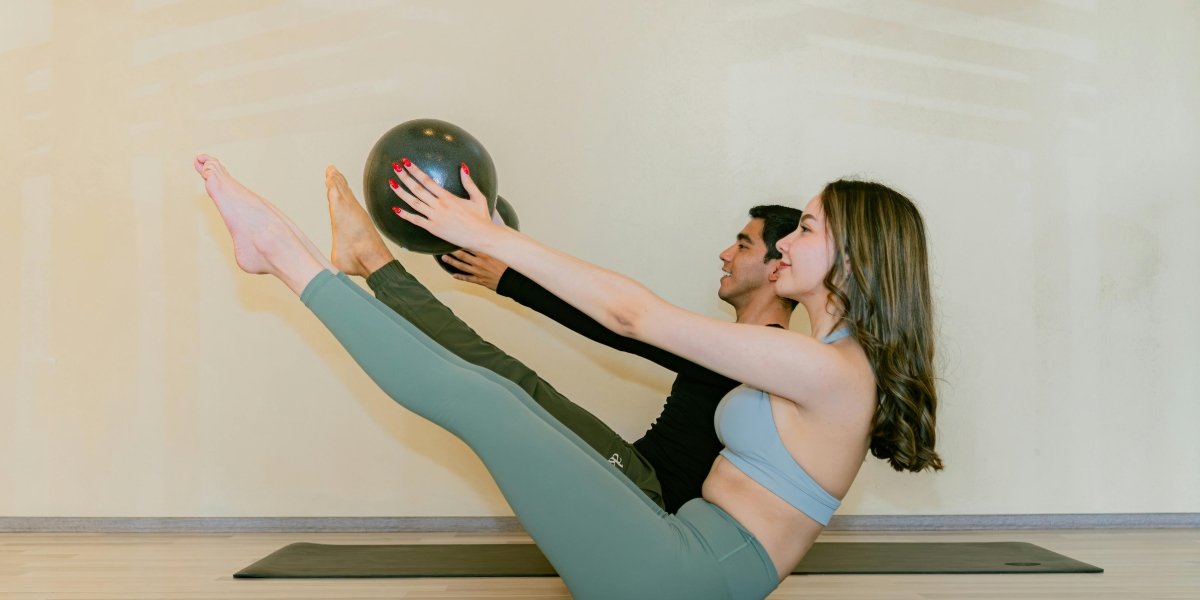
Deep core training becomes especially useful when the body needs more support and adaptability. Pregnancy, postpartum recovery, aging, chronic lower back tightness, poor balance, high stress, long periods of sitting, frequent travel, and returning from injury all tend to expose inefficient movement strategies more clearly.
People often think they suddenly become weak when the body is really just less tolerant of compensation.
Deep Core Work Can Help Support Posture And Balance
Posture improves when the body can support itself efficiently. People stop hanging into their joints as much. Standing upright takes less effort. Weight shifts more evenly through the feet and hips.
Balance improves similarly. Good balance is usually a combination of strength, coordination, reflexive stability, and body awareness working together.
You can often tell when someone has maintained these systems well as they age. They move confidently. They recover quickly after losing balance slightly. They don’t hesitate during ordinary movement.
Stability-Based Training Can Be Helpful During Pregnancy And Postpartum Recovery
During pregnancy, a lot of people assume they should stop using their core entirely or avoid abdominal work altogether. In practice, most people benefit from learning to use the core more efficiently as their bodies change.
Usually, the first thing people notice is a loss of stability during normal movement. Rolling in bed becomes harder. Getting off the couch starts feeling awkward. Walking for long periods creates more lower back fatigue. Standing on one leg to put on shoes feels less automatic. Some people notice they hold their breath every time they lift something heavier than expected.
As the abdomen expands, the rib cage and pelvis shift, and the abdominal wall is placed under greater tension. The body often responds by gripping through the lower back, hip flexors, or glutes to create stability. You can feel strong overall and still feel physically unsupported during movement.
Deep core work during pregnancy is usually less about “tightening the abs” and more about improving support and pressure management.
For many people, that means learning how to breathe without bracing aggressively through the ribs and abdomen. It may mean strengthening the hips and glutes to make walking feel more stable. It may mean improving rotational control, so getting in and out of bed or carrying groceries creates less strain through the lower back.
This applies to postpartum as well. Many people expect to “bounce back” quickly because they feel generally healthy, but the body often needs time to rebuild coordination. People commonly notice weakness first during transitions: standing while holding the baby, carrying the car seat on one side, pushing the stroller uphill, lifting laundry, or trying to return to higher-impact workouts too quickly.
This is usually where gradual stability work helps most. The body tends to respond better to controlled strengthening and consistent movement than aggressive abdominal exercises early on. Most people benefit from rebuilding pressure control, hip stability, breathing mechanics, and single-leg balance before layering on more intensity.
Closing Thoughts: Better Core Training Starts With Understanding Your True Goals
Most adults benefit more from sustainable physical capacity than extreme training. The body responds well to consistent demand over time. Consistent core work gives you the support needed to live well. It unlocks the rest of your body while providing the support you need to move and perform at your best.
Deep core exercises improve the body's ability to support movement under real-world conditions, a benefit that usually becomes more valuable with age. People want to keep traveling comfortably, carrying things comfortably, moving confidently, and staying active without constantly managing pain or tightness afterward.
The better your core, the more supported the rest of your body and the more facility you’ll have.
Get Started Today
Transform your fitness with Private 1x1 Pilates in NYC. At The Pilates Circuit, we deliver personalized one-on-one training designed around your body, your goals, and your progression. Whether you're improving posture, building strength, or enhancing mobility, every session is structured to drive measurable results.
Book an Intro Session to experience how targeted training can make a difference. Train with us at our Chelsea Private Pilates Studio or NOMAD Private Pilates Studio.
Frequently Asked Questions
-
Deep core exercises train stability, coordination, pressure management, and support through the trunk and pelvis. They often involve controlled movement, breathing coordination, and maintaining alignment while the limbs move.
-
Many deep core exercises can be performed regularly because they are typically lower-impact and less fatiguing than traditional abdominal workouts. Recovery and variation still matter, and most bodies respond best to progressive, sustainable training over time.
-
Deep core exercises are commonly used during pregnancy when appropriately modified. Training usually focuses on breathing, stability, pressure management, posture, and pelvic support as the body changes throughout pregnancy.
-
Deep core exercises focus more on stability, coordination, pressure management, and spinal support. Traditional ab exercises usually focus more directly on strengthening and fatiguing the superficial abdominal muscles.
