5 Deep Core Exercises for Women That Build Real Stability
Most women do not notice core stability until it disappears during ordinary movement. The ribs lift during leg work, the pelvis shifts in a bridge, or the neck starts helping. That is why deep core exercises for women are so useful. They teach support before effort gets noisy.
The deeper core should help the spine and pelvis stay organized while the arms and legs move. When that coordination improves, daily tasks feel steadier, from climbing stairs to lifting a heavy bag.
These exercises are simple on purpose, because precision usually teaches more than pushing harder.
- Why this matters: Deep core exercises for women help the spine, pelvis, and trunk stay organized while the arms and legs move.
- What to prioritize: Breath, pelvic control, rib position, and pace matter more than high reps or forcing a harder variation.
- What the exercises reveal: Small shifts in the pelvis, ribs, neck, or low back often show where the body is compensating.
- Where it helps most: Better deep core control can support lifting, stair climbing, posture, balance, pregnancy, postpartum recovery, and everyday strength.
- The key takeaway: Real stability comes from precision and progression, not from making every core exercise harder as quickly as possible.
Deep Core Training Supports The Stability Behind Stronger Movement
The deeper abdominal muscles help the trunk stay organized while the limbs move. In daily life, that control shows up when you lift luggage or carry groceries. You feel less swaying, less gripping, and fewer sudden shifts through the low back. Many women first notice this need during transitions, not during still positions. Rolling in bed, stepping off a curb, or getting off the couch can reveal instability.
The most effective deep core exercises for women teach the body to hold shape without bracing hard. That matters because tension can look like strength at first. A held breath, tight jaw, or lifted ribs often means the body is compensating.
Good training makes movement quieter, steadier, and easier to repeat. The work should feel controlled, not forced or rushed.
Stability Starts With How The Core Coordinates With The Pelvis And Spine
The core works best when the pelvis and spine can share load. When one area stops contributing, another area usually overworks. A common pattern is the ribs lifting while the low back arches. You may notice this during leg lifts, planks, or reformer footwork. The movement may look strong, but the body is borrowing control.
Pelvic position also changes how the legs feel during exercise. When the pelvis shifts, the hip flexors often take over. That can make simple leg movements feel tight or pinchy. A better starting point is finding steady contact through the mat. From there, the breath can help the abdominals respond without gripping.
Form, Breath, And Pace Matter More Than Repetition Count
Quality matters most when the goal is better control. A slow heel slide teaches more than twenty rushed repetitions. The breath should stay available while the legs or arms move. If breathing stops, the nervous system is often creating stiffness.
That stiffness may hide the instability you are trying to train.
Pace gives the body time to notice small shifts. The pelvis may rock, the ribs may flare, or the neck may tighten. Those are useful signals, not signs of failure. In private sessions, those small details often guide the next correction.
Fewer precise repetitions usually build better coordination than more careless ones.
5 Deep Core Exercises for Women That Build Functional Stability
These movements train control before intensity. They also help the trunk stay responsive during ordinary tasks. The best deep core exercises usually look simple at first. Their value comes from precision, breath, and honest feedback from the body. Each movement should feel steady enough to repeat without strain.
You should feel abdominal support without bearing down into the pelvis. You should also avoid pushing the stomach outward during effort. If pressure builds, reduce the range or slow the movement.
During pregnancy or postpartum recovery, confirm exercise choices with your provider. The right version should feel steady, breathable, and manageable.
#1) Heel Slides For Pelvic Control And Deep Core Activation
Lie on your back with knees bent and feet on the floor. Let the back of the ribs soften toward the mat. Slide one heel away while keeping the pelvis quiet. Return the foot without tucking hard or arching the back. The moving leg should feel light, not dragged by the hip flexor.
This exercise often reveals hidden asymmetry. One side may slide smoothly while the other pulls the pelvis forward. That difference matters when walking, climbing stairs, or stepping into pants.
Keep the range smaller when the pelvis starts to move. The smaller version usually teaches the body more accurately.
#2) Dead Bug Variations For Breath, Coordination, And Stability

Start on your back with knees above the hips. Reach the arms toward the ceiling without lifting the ribs. Extend one leg slowly while the opposite arm moves overhead. Return to center with the breath still easy. The trunk should stay steady as the limbs move away.
Dead bug work is useful because it challenges timing. The arms and legs move while the spine stays supported. Many people compensate by arching, gripping the neck, or rushing back. Those changes mean the range is too large for now. The strongest version is the one you can control without tension.
#3) Bird Dog Variations For Spinal And Pelvic Control
Begin on hands and knees with weight even across both hands. Reach one leg back without letting the pelvis rotate. Add the opposite arm only when the trunk stays quiet. The spine should feel long, not collapsed between the shoulder blades. Think of balancing a cup on the low back.
Bird dog is useful because it resembles real movement. Walking, running, and stair climbing all ask for opposite-side coordination. When the pelvis wobbles, the low back often tries to stabilize. That can create fatigue before the glutes have done their job. Move slowly enough to feel which part wants to take over.
#4) Glute Bridge Marches For Core Support Under Movement
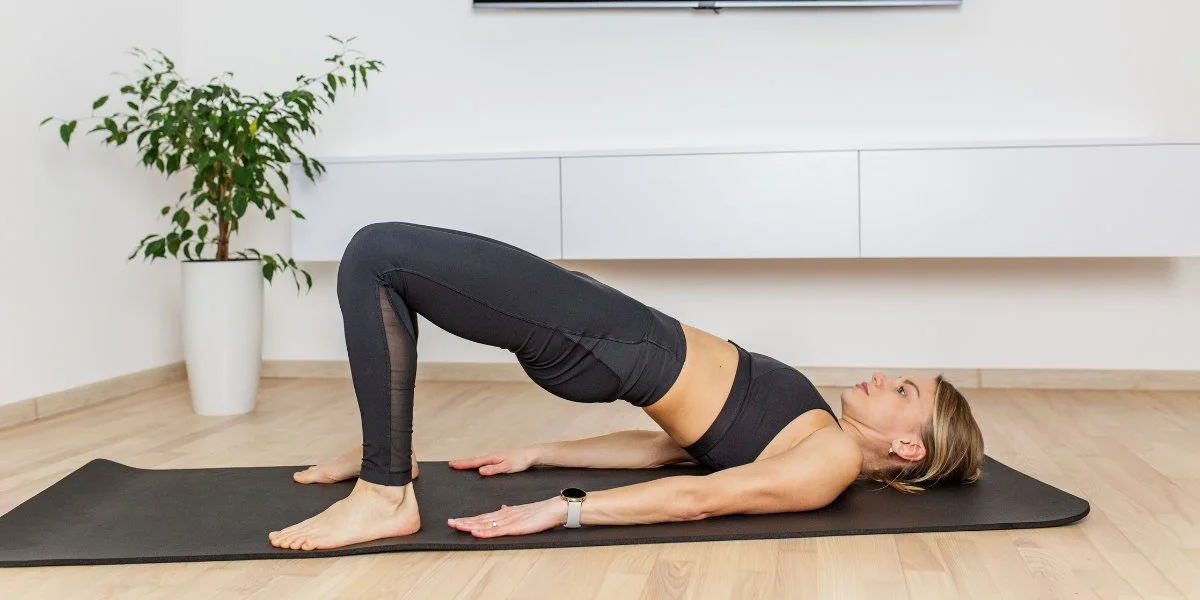
Lie on your back with knees bent and feet grounded. Lift the hips into a bridge without pushing through the ribs. Hold the bridge while lifting one foot a few inches. Place it down quietly, then repeat on the other side. The pelvis should stay level through the weight shift.
This drill connects hip strength with trunk control. That connection matters when climbing stairs or pushing a stroller uphill. Many people drop one hip as soon as a foot leaves. Others grip the hamstrings or arch the back to stay lifted. Lower the hips slightly if the march feels unstable.
#5) Bear Hover Holds For Deep Core Strength Under Load
Start on hands and knees with toes tucked under. Press into the floor and lift the knees slightly. Keep the spine steady while breathing into the back ribs. The knees only need to hover an inch or two. A higher lift usually turns the exercise into compensation.
Bear hover work asks the core to manage body weight. That makes it more demanding than floor-based leg movements. Watch for rounded shoulders, lifted ribs, or breath-holding. Those patterns often appear when the load arrives too quickly.
Short holds with clean form are more useful than long, strained holds.
How Stability Training Helps The Body Handle Movement More Efficiently
Better control reduces wasted effort during everyday movement. The body no longer needs to grip everywhere to feel safe. You may notice this when standing on one leg to put on shoes. The pelvis stays steadier, and the neck does less work. That kind of change often feels subtle at first.
Efficiency also changes how strength shows up. A strong body still struggles when timing is disorganized. For example, squatting can feel heavy when the ribs flare upward. Carrying bags can feel uneven when one hip keeps shifting.
Deep core exercises help connect strength to usable coordination.
Common Adjustments During Pregnancy And Postpartum Recovery
Pregnancy and postpartum training should respect pressure, fatigue, and healing. Activity may need changes because pregnancy places different demands on the body. Range, position, and intensity may all need adjustment. Some women feel better with side-lying, seated, or elevated positions. Others need more focus on breathing before load returns.
The pelvic floor also deserves attention during this period. These muscles help support the bladder, bowel, and pelvic organs.
Core work should never create heaviness, doming, or downward pressure. Those signs mean the exercise needs modification or professional guidance. Good training meets the body where it is that day.
Postpartum Core Training Should Rebuild Coordination First
Postpartum work should start with coordination, not intensity. The body has changed shape, pressure strategy, and load tolerance. Early exercises often focus on breathing, pelvic position, and gentle abdominal response. The first goal is not maximum effort. It is helping the body organize pressure again.
That early work may feel small, but it matters. A heel slide can teach more than a hard plank. A bridge can reveal whether the pelvis is shifting. A supported march can show whether breath disappears under effort.
Progress should feel organized before it feels intense.
Closing Thoughts: Stronger Stability Comes From Practice, Precision, And Progression
Real stability develops through repeated, careful practice. The body learns from the details you repeat most often. If the ribs lift every time effort increases, that becomes the strategy. If breath stays steady, the body learns a cleaner option. Small corrections become meaningful when they show up in daily movement.
The most effective deep core exercises for women are not always dramatic. They are usually the exercises that reveal what the body is doing. That information helps build strength with less gripping and better control.
Over time, movement feels more supported, more balanced, and more dependable. That is the kind of strength people can use outside the studio.
Get Started Today
Transform your fitness with Private 1x1 Pilates in NYC. At The Pilates Circuit, we deliver personalized one-on-one training designed around your body, your goals, and your progression. Whether you're improving posture, building strength, or enhancing mobility, every session is structured to drive measurable results.
Book an Intro Session to experience how targeted training can make a difference. Train with us at our Chelsea Private Pilates Studio or NoMad Private Pilates Studio.
Prefer to view your options first? Visit our Pricing page to compare private sessions, packages, and memberships before booking.
Frequently Asked Questions
-
The best choices include heel slides, dead bugs, bird dogs, bridge marches, and bear hovers. These exercises train the trunk while the arms or legs move. They also reveal common compensations, like rib flare or pelvic shifting.
Start with the version you can control while breathing normally.
-
They can support better coordination with the pelvic floor. The diaphragm, abdominal wall, and pelvic floor work closely during breathing. Pelvic floor exercises are also commonly recommended during pregnancy and postpartum.
Avoid bearing down, breath-holding, or pressure that feels heavy.
-
Many gentle options can be appropriate, but the right version depends on the person. Pregnancy may also require changes to position, range, and intensity. Postpartum return should reflect birth experience, symptoms, healing, and provider guidance.
Choose movements that feel steady, breathable, and free of pressure.
