
Understanding the Difference Between Mobility and Flexibility
Understanding how your body moves starts with knowing that not all tightness or stiffness comes from the same place. Many people use the words mobility and flexibility interchangeably, but they describe two very different abilities. The difference between mobility and flexibility shapes how you train, how your body feels during everyday movement, and why some areas stay tight no matter how much you stretch them.
Getting clear on what each one actually means creates a foundation for smarter workouts, fewer compensations, and progress that feels noticeably easier to maintain.
Moving Well Starts With Knowing What Your Body Can (and Can’t) Do
You know that frustrating feeling when you can touch your toes in a stretch but somehow can't squat down to pick something up without your back complaining? That's the difference between flexibility and mobility showing up in real time.
Most of us have been told that being flexible is the goal—that if we could just stretch more, everything would feel better. But flexibility is only part of the story. Understanding what your body can do passively versus what it can control actively changes everything about how you approach movement.
It's not about being able to fold yourself into a pretzel; it's about moving through your day without stiffness, discomfort, or that nagging sense that your body isn't quite working the way it should.
Why People Confuse Mobility and Flexibility
These terms get used all the time interchangeably, and honestly, it's not surprising. The fitness world hasn't always been clear about the distinction, and both qualities often improve together when you're doing good movement work.
Flexibility tends to get more attention because it's visible—you can see someone touch their toes or do a split. Mobility is quieter and more functional, so it doesn't photograph as well.
Research in movement science has gotten more precise about defining these terms in recent years, but in everyday conversation, people still mix them up.
The key thing to understand is that they're related but not the same, and knowing the difference helps you figure out what your body actually needs.
What Is Flexibility?
Flexibility is passive range of motion—how far your muscles and connective tissues can stretch when something else is doing the work.
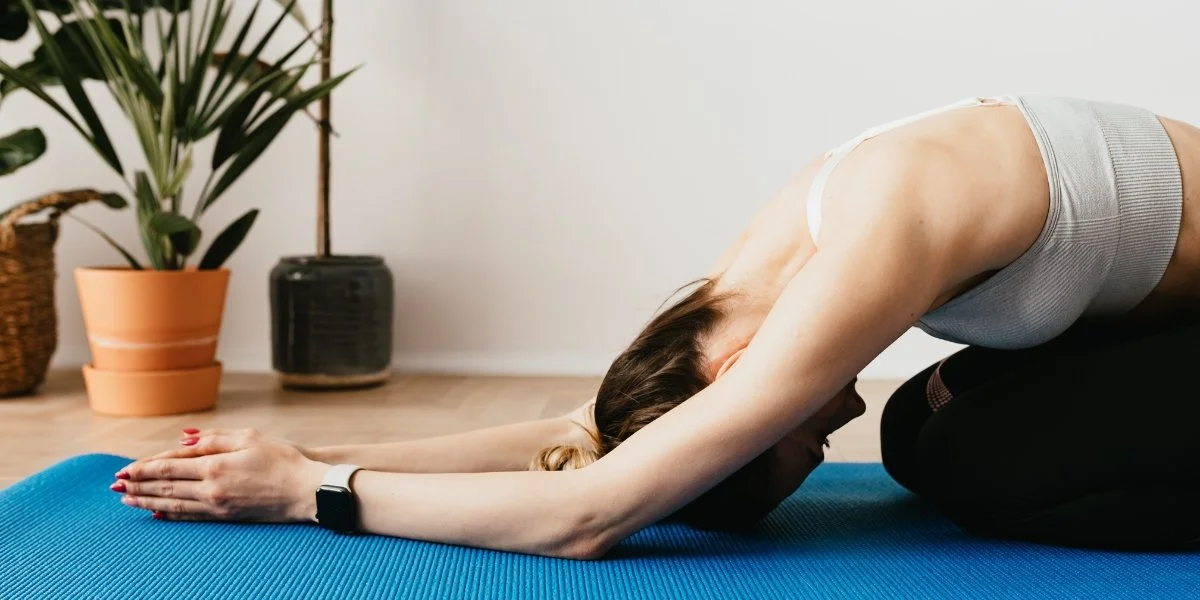
When you sit on the floor and fold forward, using gravity to deepen the stretch, that's flexibility. When you lie down and pull your leg toward your chest with your hands, that's testing hamstring flexibility. The muscle is lengthening, but you're not actively using strength to create or control the position.
Studies show that regular stretching increases flexibility by changing the properties of muscles and tendons, making them more extensible. Some people are naturally more flexible due to genetics, joint structure, or body type.
But here's what matters: having a lot of flexibility doesn't automatically mean you can use that range when you're actually moving
How Length and Range Work Together to Support Balanced Movement
Flexibility gives you potential, but movement in real life is more complicated than a single muscle stretching. When you reach overhead for something, you're coordinating your shoulder, spine, ribs, and core all at once.
If one area is flexible but another is tight, your body compensates—maybe you arch your lower back to make up for tight shoulders, or round your spine because your hips are restricted. Research shows that balanced flexibility across opposing muscle groups is what allows smooth, efficient movement.
If your hamstrings are super flexible but your hip flexors are tight, your pelvis tilts and throws off your alignment.
The goal isn't just more range—it's proportional range that lets everything work together without one area doing too much.
What Is Mobility?
Mobility is the active range of motion—your ability to move a joint through its full range using your own strength and control, without help. It's not just about how far you can move, but how well you can control that movement.
When you can squat deeply with good form, that's hip and ankle mobility. When you can lift your arm overhead without arching your back, that's shoulder mobility. The difference is control. You might be able to pull your leg up to your ear with your hands, but can you lift it there on its own and hold it steady?
Mobility requires your nervous system to have mapped that range, your muscles to be strong enough to access it, and your joints to be stable enough to move through it safely.
It's the usable range you actually have access to when you're moving through life.
How Joints, Muscles, and Control Work Together for Real Movement Freedom
Your body is a system—bones, joints, muscles, connective tissue, and your nervous system all working together. True mobility requires all of these elements to communicate well.
Take your hip: it's designed for multi-directional movement, but whether you can actually access that depends on muscle length, strength in your glutes and stabilizers, joint structure, and your brain's ability to coordinate everything without compensating.
Research using motion capture shows that people with good mobility have better muscle coordination—the right muscles fire at the right time. If your nervous system doesn't trust that you're strong and stable in a particular range, it restricts your movement by tightening muscles as protection.
This is why stretching alone often doesn't create lasting change. You have to show your body that you're strong in new ranges.
The Real Difference Between Mobility and Flexibility
Flexibility Lets You Reach; Mobility Lets You Move With Control
Here's the simplest way to think about it: flexibility is about potential, mobility is about what you can actually use.
You might stretch your hamstrings until your nose touches your knees when sitting down, but if you can't lift your straight leg to hip height while standing without losing your balance or hiking your hip, you don't have functional mobility in that range.
Flexibility is static; mobility is dynamic. Studies consistently show that active range of motion is almost always less than passive range, and that gap matters. A huge gap means you have flexibility you can't control, which can leave you vulnerable to injury.
The goal is having flexibility that slightly exceeds your mobility—giving you some reserve range—while continuously working to expand what you can actively control through strength and movement training.
How Strength and Stability Complete the Equation
You need strength to use your range and stability to control it. This is also why low-impact strength training that builds control through full ranges of motion is essential, because it reinforces stability without adding unnecessary joint stress.
This is where hypermobile people often struggle—they can get into impressive positions but lack the muscular strength and joint stability to support them safely, leading to chronic pain or injuries.
Stability is your ability to resist unwanted movement and keep joints properly aligned. Strength is your capacity to generate force and control motion.
Good movement requires balance between mobility, stability, and strength. Someone with great mobility but poor stability might move with excessive range and compensation patterns.
Someone with great strength but limited mobility might be powerful but rigid. Someone with great flexibility but poor strength might feel chronically loose and unstable.
You need all three working together.
How to Train for Mobility and Flexibility Without Overcomplicating It
#1) Balance Stretching With Strength Work for Better Range
Passive stretching has its place, but pairing it with strength work in the ranges you're trying to access is what creates real change. This means loading muscles in lengthened positions progressively.
Research shows that eccentric training—where muscles lengthen under load—is more effective than static stretching alone for improving both flexibility and functional range.
This might look like holding a lunge with your back knee hovering, doing controlled movements through full range, or using light weights in stretched positions.
Start with body weight or light resistance, focus on controlling the full range, and gradually increase difficulty. This gives your nervous system confidence that you're strong in new ranges, which often leads to rapid improvements that stretching alone never achieves.
#2) Use Controlled Reformer Movements to Build Mobility That Lasts
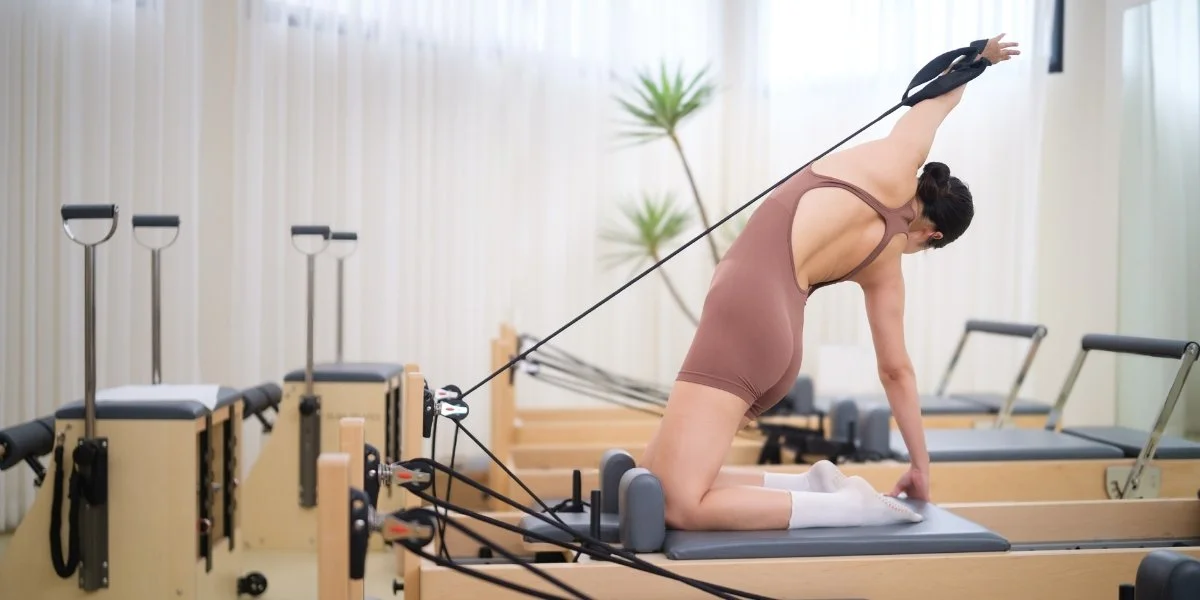
The reformer is essentially a mobility-building machine. The spring resistance provides an adjustable load throughout the entire range of motion, forcing you to control movement in both directions.
Unlike static stretching, where you passively hold a position, reformer work requires active engagement through a full range, training both flexibility and strength simultaneously. Take the Long Stretch—you're pressing the carriage away and drawing it back, which demands shoulder mobility, hip extension, and core stability all at once.
The reformer's feedback is immediate: if you lack the mobility or control to perform an exercise properly, you'll feel it right away, which makes it remarkably effective for systematically expanding your usable range.
#3) Make Small Daily Practices Part of Your Routine
Your body adapts to what you do regularly. Two or three focused sessions per week are good, but brief daily movement adds up.
Even five to ten minutes of intentional movement signals to your nervous system that certain ranges are important and worth maintaining. Do a few hip circles when you wake up, take a stretching break between meetings, or spend two minutes on cat-cows before bed. Focus on what your body needs—if you sit all day, prioritize hip mobility; if you're hunched over a computer, work on shoulders and thoracic spine.
Consistency beats intensity. Moving a little every single day creates more lasting change than one intense session per week.
How Pilates Builds Mobility and Flexibility Together
Pilates integrates strength, flexibility, and control into every exercise. You're never just stretching passively; you're actively controlling movement through full range while maintaining alignment.
You're never just building strength in shortened positions; you're working through complete ranges. The Teaser demands hip mobility and strength simultaneously. The Swan requires thoracic extension with scapular stability. The Side Kick series builds hip mobility in all planes while challenging core stability.
The breath work matters too, as Pilates breathing keeps you from holding your breath and bracing, which limits range, and instead encourages movement through the ribcage and spine.
Every reformer class atThe Pilates Circuit incorporates this integration. You're constantly asking your body to be flexible and strong, stable and mobile, all at the same time.
Move Better, Live Better: The True Goal of Every Pilates Practice
The point isn't impressive stretching photos. It's moving through your life with less pain and more ease.
Being able to sit on the floor with your kids without your back hurting. Reaching into the back seat of your car without tweaking your shoulder. Walking, hiking, or just existing in your body without constant stiffness.
Studies show that consistent Pilates practitioners report improved quality of life, reduced chronic pain, better balance, and increased confidence in their physical abilities. This is functional fitness in the truest sense—training so your body serves you well in whatever you want to do.
When you move better, you feel better. It's that simple.
Building true mobility and flexibility is much easier when you train in a way that strengthens your range instead of just stretching it. If you want support applying these concepts to your own body, The Pilates Circuit offers targeted work that helps you improve active control, reduce compensations, and progress with confidence.
Get Started Today
Transform your fitness with Private 1x1 Pilates in NYC. At The Pilates Circuit, we deliver personalized one-on-one training designed around your body, your goals, and your progression. Whether you're improving posture, building strength, or enhancing mobility, every session is structured to drive measurable results.
Book an Intro Session to experience how targeted training can make a difference. Train with us at our Chelsea Private Pilates Studio or NOMAD Private Pilates Studio.
Frequently Asked Questions
How Often Should I Work on Mobility and Flexibility?
Aim for daily movement, even if it’s only 5–10 minutes. Short, consistent sessions beat long, sporadic ones.
A practical routine:
Do 2–3 Pilates sessions per week (your reformer classes count).
On other days, add brief mobility work for your tight areas—5 minutes of shoulder work if you sit at a desk, hip stretches or squats while watching TV, etc.
Your best bet is to try to make movement part of your daily rhythm. If you’re sore, rest; if you feel good, keep going. Consistency creates lasting change.
Can Pilates Improve Both at the Same Time?
Yes. Pilates naturally improves mobility and flexibility because every exercise trains strength, control, and range of motion simultaneously. Research shows it boosts both flexibility and overall movement quality. The reformer’s adjustable springs let you work safely whether you’re tight and need a controlled range or hypermobile and need more stability.
Skilled instructors, ours here at The Pilates Circuit, ensure each exercise is tailored to your needs.
What Are the Signs My Mobility Is Limiting My Flexibility?
You may have good passive flexibility that you can’t access actively. Common signs include:
Big gap between passive and active range (e.g., you can pull your leg high with your hands, but can only lift it to hip height on your own).
Compensations such as rounding your spine to touch your toes (limited hip mobility) or bending only through your low back in a backbend (limited thoracic mobility).
Instability in stretched positions or trouble holding them without support (insufficient strength in that range).
No lasting progress from stretching alone or flexibility that “resets” quickly (lengthening tissue without building strength or control).
The fix: Add strength work in lengthened positions and practice active range of motion—both built naturally into Pilates.
