
Active vs Passive Range Of Motion Exercises Explained Simply
Understanding how your body moves through space makes a greater difference in daily life than most people realize. Range of motion affects everything from reaching overhead cabinets to getting up from chairs without assistance or discomfort. Many people experience stiffness or limitation without understanding whether the issue stems from tight muscles, weak stabilizers, or actual joint restrictions.
Understanding the differences between active and passive range-of-motion exercises simply gives you language for what you feel. This knowledge helps you work with your body more effectively rather than pushing blindly through movements that don't serve you.
How Your Range Of Motion Matters In How Your Body Feels Day To Day
Your range of motion directly impacts your ability to perform everyday activities without compensation patterns or discomfort throughout movements. Limited shoulder mobility makes putting on jackets or reaching back seats in cars unnecessarily difficult and frustrating.
Restricted hip range forces your lower back to compensate during simple tasks like bending to tie your shoes. For people who sit long hours, targeted stretches for desk workers can help reduce lower back stiffness.
When joints move freely through their full available range, your body functions more efficiently and expends less energy.
You'll notice fewer aches and pains when your movement patterns distribute stress appropriately across joints and muscles. Poor range of motion often develops gradually, so you adapt without realizing how much freedom you've lost over time.
Addressing these limitations through intentional range work restores the ease your body is designed to experience during normal activity.
What Is Range Of Motion in Simple Terms?
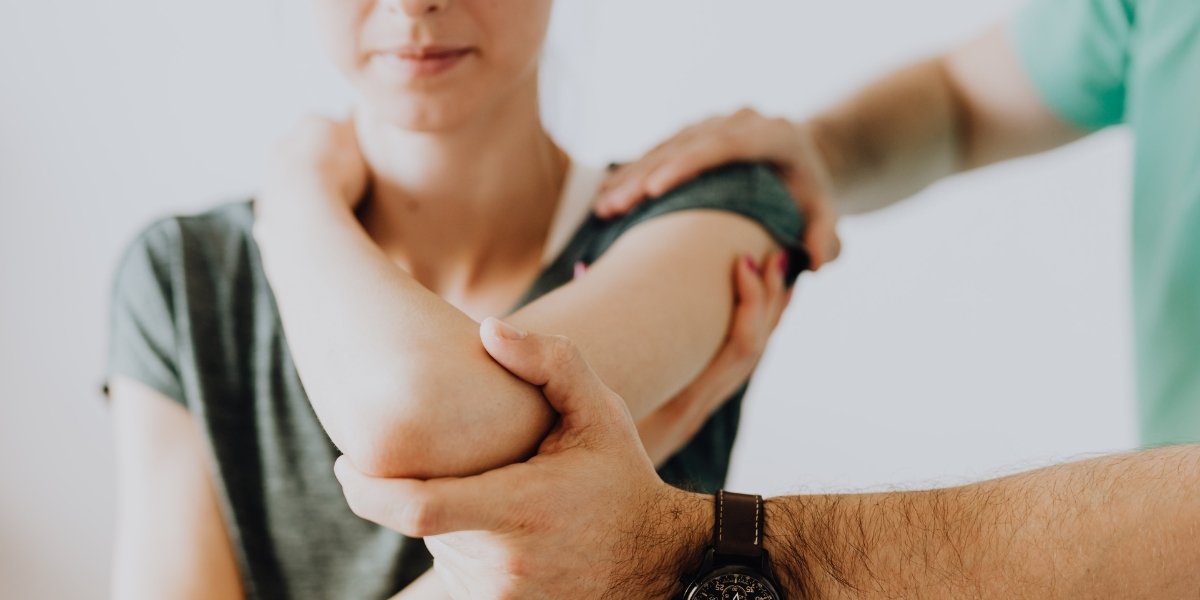
Range of motion describes how far a joint can move in different directions before reaching its natural endpoint. Every joint has a specific range determined by bone structure, soft tissue flexibility, and muscular control working together.
Your shoulder can lift overhead, rotate internally and externally, and move across your body in multiple planes simultaneously. Hip joints allow you to walk, squat, rotate your leg, and perform countless movements essential for basic function.
Range of motion exists on a spectrum from very limited to hypermobile, with most healthy bodies falling somewhere between.
The goal isn't maximum flexibility but rather having adequate range for the activities your life demands without restriction.
How Your Joints Move And Why It Matters For Everyday Strength
Joints function as hinges, pivots, and ball-and-socket connections that allow your skeleton to create movement under muscular control. The relationship between joint mobility and muscular strength determines how effectively and safely you can move through daily activities.
Strong muscles mean nothing if your joints lack the range to position your body correctly for functional movement patterns. Conversely, extreme flexibility without strength creates instability and injury risk when joints move beyond your muscles' ability to control.
Your body needs joints that move freely, combined with muscles that can stabilize and control the available range.
What Is Active Range Of Motion?
Active range of motion means you move a joint through its available range using only your own muscular effort. No external assistance from gravity, equipment, or another person helps create or support the movement you're performing.
Knowing the best active recovery workouts helps you choose movements that train strength and control without undermining recovery.
Your muscles contract to both create the movement and control the joint's position throughout the entire range of motion. This type of movement requires strength, coordination, and neuromuscular control working together to execute the action smoothly and deliberately.
Active range reveals what your body can actually do independently rather than what's theoretically possible with help or momentum.
Testing active range shows where you have genuine functional capacity versus areas needing strength development for better control.
How Active Movement Feels When Your Muscles Are Doing The Work
Active movement feels effortful because your muscles are working to both move and stabilize your joints simultaneously throughout the action. You'll sense the muscular engagement required to lift, lower, or rotate a body part without external assistance.
The sensation includes awareness of which muscles are contracting and where you might be compensating for weakness or instability. Active range often feels more limited than passive range because you're constrained by your current strength and control capacity.
You might notice shaking or an inability to hold positions at your range limits, where muscles fatigue quickly under load.
This feedback teaches you where your body needs strengthening work to improve functional movement capacity over time.
What Active Range Looks Like In Real Life And On The Mat
On the Pilates mat, active range shows up when you lift your leg toward the ceiling using only your hip flexors and core strength. This is why hip flexor band exercises are so effective.
Single-leg circles require active control to move your leg through space while keeping your pelvis completely stable and grounded. Rolling exercises demand active spinal articulation, where each vertebra moves sequentially under precise muscular control without momentum, helping you.
In daily life, the active range appears when you lift your arm to place something on a high shelf using shoulder strength. Standing from a seated position without using your hands demonstrates active hip and leg range combined with adequate strength.
These movements reveal your body's true functional capacity rather than its theoretical flexibility when relaxed or supported externally.
The Strength, Stability, And Control Active Work Builds Over Time
Practicing active range of motion exercises consistently builds the neuromuscular connections that improve how your body moves and functions. Your nervous system learns to recruit the right muscles at the right time to control joint position throughout movement.
Strength develops specifically in the ranges where you practice active control, making those positions more accessible and sustainable. The stability you build through active work protects your joints from injury during unexpected movements or demands.
Over time, active range work expands what your body can do independently without relying on momentum or external support.
This type of training translates directly to improved daily function, better posture, and reduced injury risk during all activities.
What Is Passive Range Of Motion?
Passive range of motion occurs when an external force moves your joint through its available range without muscular effort. The external force might be gravity, another person, equipment, or even your other hand assisting the movement gently.
Your muscles remain relaxed while the joint moves, allowing you to explore the range your anatomy permits without strength limiting you. Passive range typically exceeds active range because you're not constrained by your muscles' current capacity to control the position.
This type of movement reveals your joint's structural range and soft tissue flexibility independent of strength or control.
How Passive Movement Works When Something Helps You Move
During passive movement, you consciously relax the muscles around a joint while allowing external assistance to create the motion.
A Pilates instructor might gently lift your leg higher than you can actively raise it to assess your hip's available range of motion. Straps on the Reformer can support your legs overhead in positions you couldn't hold independently with current strength. Gravity pulls your arm down during certain stretches, increasing the range beyond what you can actively control or maintain.
The key is complete muscular relaxation, so the external force can reveal your true anatomical range without resistance.
This approach helps identify whether limitations stem from joint restrictions or simply a lack of strength to control the available range.
What Passive Range Looks Like In Practice And Why It Feels Different
Passive stretching feels distinctly different because you're not working to create or maintain the position your body occupies. You might feel the stretch sensation of tissues lengthening but without the muscular effort active movement requires.
An instructor assisting your hamstring stretch can take your leg further than you could lift it yourself actively. Using a strap to pull your knee toward your chest creates passive hip flexion that exceeds active capacity.
The sensation tends toward relaxation and release rather than the engagement and effort of active work. Passive range feels more comfortable to hold because you're not fighting muscular fatigue while exploring the joint's limits.
How Range Of Motion Exercises Fit Naturally Into Pilates Training
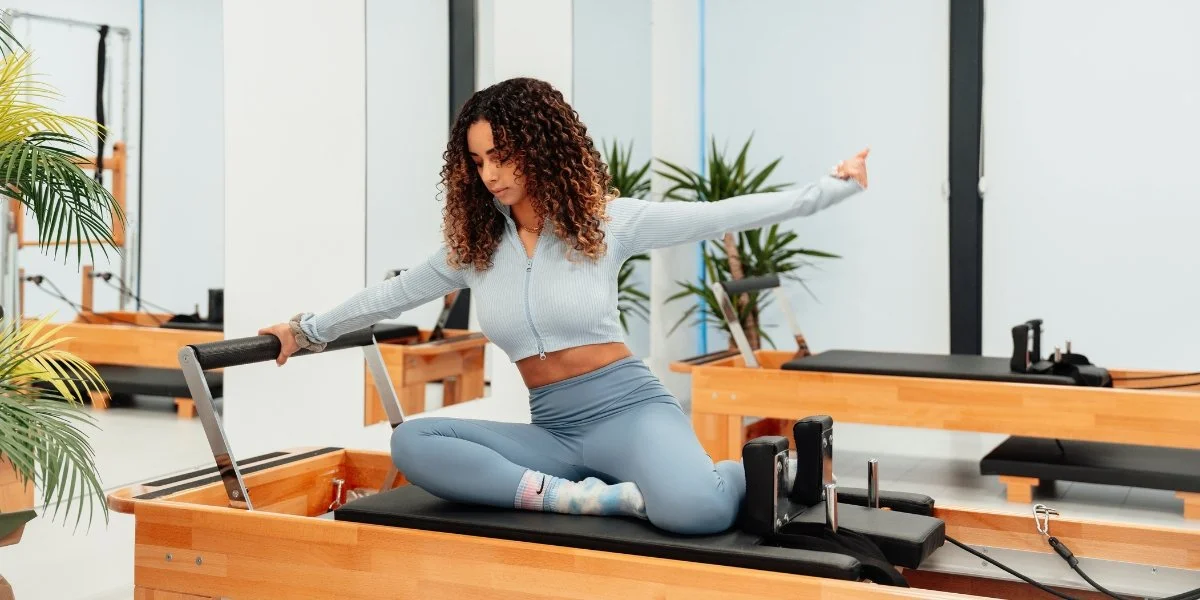
Pilates seamlessly integrates both active and passive range work throughout its exercise repertoire to address mobility and strength simultaneously.
Every exercise requires active control to move with precision, while certain positions incorporate passive stretching to improve overall flexibility. The method's emphasis on control means you're constantly working at or near your active range limits during practice.
Equipment like the Reformer provides guided assistance that lets you safely explore passive ranges of motion while learning to build the strength needed to control those ranges actively.
This blend of support and challenge is one of the key benefits of reformer Pilates, helping your mobility and strength develop together rather than in isolation.
Where Active Effort Matters Most In Pilates-Based Strength Work
Active range of motion is central to Pilates because it trains the strength, control, and coordination needed for functional movement. Many foundational exercises rely on active effort to build strength that translates into daily life. Key examples include:
Leg circles: Require active hip stability and controlled movement rather than letting momentum take over.
Arm reaches: Build shoulder strength and stability while reinforcing postural control.
Spinal articulation: Trains active segmental control of the spine for smoother, more supported movement patterns.
The Hundred: Demands active core engagement and shoulder stability to sustain the lifted position and coordinated breathing.
The Teaser: Requires active hip flexion, deep core strength, and precise balance without relying on momentum.
These exercises strengthen the ranges you can use, not just the ranges you can access, ensuring your mobility becomes functional and applicable beyond the mat.
How Gentle Support Helps You Explore a New Range Without Pushing Too Hard
Passive range work in Pilates allows safe exploration of joint mobility without forcing or creating injury risk through overstretching. The Reformer's springs can support your legs in positions you're working toward controlling actively over time and practice.
An instructor's gentle assistance during stretches provides feedback about where your range ends without you pushing aggressively past healthy limits. This supported exploration builds body awareness about your current capacity while respecting where your tissues need more gradual adaptation.
The passive work complements active training by maintaining or improving flexibility while you build the strength to control it.
This balanced approach prevents the common problem of flexibility without stability, which creates injury vulnerability in hypermobile individuals.
Closing Thoughts: Bringing More Ease And Awareness To How You Move
Understanding the difference between active and passive range transforms how you approach movement in both practice and daily life. You'll recognize when you're working at your strength limits versus exploring your flexibility potential during different exercises.
This awareness helps you direct your effort appropriately rather than pushing blindly or avoiding challenge when you actually need it.
Active vs passive range of motion exercises explained simply gives you tools to assess your own movement capacity honestly. The goal is joints that move freely combined with muscles strong enough to control that range in all positions. Pilates provides the perfect framework for developing this balance through intentional, mindful practice that respects your body's current capacity.
Get Started Today
Transform your fitness with Private 1x1 Pilates in NYC. At The Pilates Circuit, we deliver personalized one-on-one training designed around your body, your goals, and your progression. Whether you're improving posture, building strength, or enhancing mobility, every session is structured to drive measurable results.
Book an Intro Session to experience how targeted training can make a difference. Train with us at our Chelsea Private Pilates Studio or NOMAD Private Pilates Studio.
Frequently Asked Questions
What Is The Difference Between Active And Passive Range Of Motion?
Active range of motion means you move a joint using your own muscle strength and control, while passive range occurs when an outside force moves the joint for you. Think of it as a practical way to understand mobility vs flexibility: mobility reflects how far you can move a joint with control, and flexibility reflects how far the joint can go when relaxed.
Active range is usually smaller because it depends on your strength, coordination, and stability, while passive range shows your available flexibility. Both matter for healthy movement and balanced training.
Are Range Of Motion Exercises Helpful For Building Strength?
Active range of motion work builds strength because your muscles must control the joint through its path. Passive range sessions improve flexibility but do not directly increase strength.
Combining both creates balanced development: more mobility to move through, and more strength to control it. Pilates is effective here because it blends active control with strategic passive stretching.
How Often Should You Practice Range Of Motion Work?
A gentle range of motion practice can be done daily to maintain joint mobility. Active range exercises fit well two to three times per week within a strength routine, while passive stretching can be done more often since it doesn’t create fatigue.
Listen to your body and adjust as needed. Consistent Pilates practice naturally includes both types and supports long-term joint health.
