
5 Kettlebell Core Exercises For Beginners
The first few exercises you choose with a kettlebell can shape how comfortable you feel using one. You are learning more than where to place your hands. You are learning how the weight changes your balance, how much range you can control, and how to keep your movement steady as you work.
These five kettlebell core exercises give you a practical way to build that familiarity through hinging, squatting, stepping, and carrying. Your legs and hips will do much of the work, while your trunk responds to the load and helps you stay organized. Each exercise also gives you room to adjust the weight, range, or balance demands as you learn.
Your Core Works Beyond Crunches and Planks
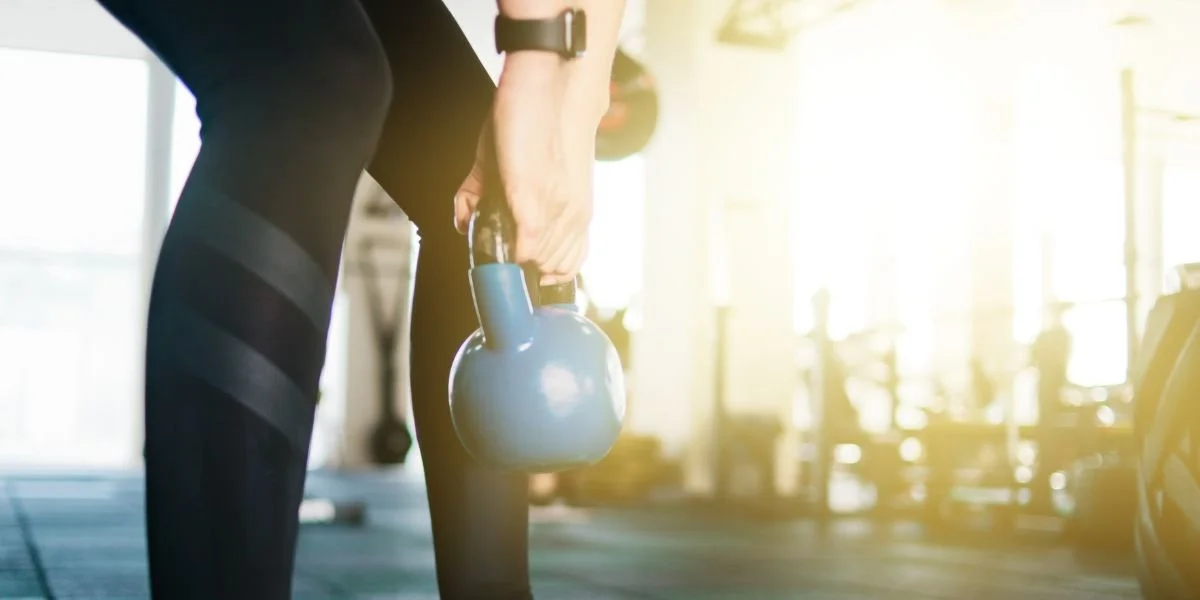
When you’re training your core, it helps to understand what it’s doing during each exercise. In a weighted squat, your legs and hips do much of the lifting. Your core helps keep your torso steady as you lower and stand with the kettlebell. You might feel your thighs working hardest, especially during those first few repetitions. That doesn’t mean you’ve missed the core work.
We start with deadlifts, squats, lunges, and carries because they work as deep core exercises that teach you to coordinate your body while handling weight. As you learn, we focus on your breathing and how your torso moves with your legs. Those details help us guide you beyond simply completing a repetition.
The kettlebell exercises we cover in this guide are meant to give you a foundation you can keep building as the movements become more familiar.
Start With a Weight You Can Control
If you’re unsure which kettlebell to choose, begin by checking how you handle a few repetitions. Your grip should feel secure, and you should be able to lower the bell deliberately after lifting it. Following general strength training safety principles, look for a weight that feels challenging while allowing you to repeat the movement cleanly without rushing. You don’t need to match the weight shown in the video.
That choice can change between exercises, even within the same session. You might feel comfortable deadlifting a weight with both feet planted, then struggle with it on one leg. Using a lighter bell there gives you room to learn the balance while practicing the movement.
When something feels difficult to control, the adjustment depends on what’s getting in your way:
If the weight pulls you out of position, reduce it and try again.
If reaching lower disrupts the movement, shorten the range to a point you can control.
If you’re still figuring out the movement, practice without weight before adding resistance.
These adjustments give you a starting point that suits the exercise and your experience. We want you to have enough challenge to work, with enough control to learn from each repetition.
5 Kettlebell Core Exercises to Build Your Foundation
The exercises you start with should give you room to learn how the kettlebell changes your balance, range, and control. These five movements use basic patterns that help you build functional strength while helping you track how your body responds. Together, they create a practical set of kettlebell core exercises that you can adapt as you become more comfortable.
The video here also demonstrates the first four exercises. Our instructions below add the details that help you understand each movement and make adjustments when the weight, balance, or range needs to change.
1. Kettlebell Deadlifts
The deadlift teaches you to bend through your hips while managing weight close to your body. Your hips and legs provide the lifting effort, while your core helps support your torso. Take time to learn the hip movement here. You’ll use it again in the single-leg deadlift.
Stand with the kettlebell between your feet, using a stance that gives you room to reach the handle.
Move your hips backward and bend your knees enough to grasp the handle with both hands.
Keep your arms long and gently brace your abdomen. Push through your feet to stand, bringing your hips forward.
Finish standing tall, without leaning backward. Move your hips back and bend your knees to lower the bell between your feet.
If reaching the handle makes you round forward, we would adjust the starting height. Place the bell on a stable, elevated surface so you can practice the hinge within reach. The floor doesn’t have to be your starting point.
2. Weighted Squat
Holding the kettlebell close to your chest lets you practice squatting with the weight in front of you. Your core helps support your torso as your hips and knees bend. You may already know how to squat, but adding weight can change which depth feels manageable.
Hold the kettlebell securely by the sides of its handle, close to your chest.
Set your feet at a comfortable width, with your toes turned slightly outward if that suits your stance.
Bend your hips and knees together, lowering between your legs. Keep your heels and the fronts of your feet grounded.
Stop at a depth you can control, then press through your feet to stand. Keep the bell close throughout.
If your heels lift or you lose control near the bottom, try stopping a little higher. We want you to be able to return from the position you reach. Your depth can develop as you become more comfortable; there’s no need to copy someone else’s immediately.
3. Single-Leg Deadlift
The single-leg deadlift builds on the hinge while asking you to manage your weight over one supporting leg. Your core helps control your torso as the other leg moves behind you. Balance may take considerable attention at first, so start with a small movement.
Hold the kettlebell in your right hand and shift your weight onto your left foot. Keep your left knee slightly bent.
Move your hips backward, allowing your right leg to reach behind you as your torso tips forward.
Let the bell lower close to your left leg. Keep your hips facing the floor rather than opening sideways.
Stop before you lose your balance or position. Press through your left foot to stand, then switch sides after your repetitions.
If balancing interrupts every attempt, use your free hand on a sturdy support. A kickstand position also works: keep the rear toes lightly grounded, with most of your weight over the front leg. That gives you room to learn the hinge. You can gradually reduce support as the movement becomes more familiar.
4. Weighted Lunge
For this version, step backward into the lunge while holding the kettlebell close to your chest. Your front leg works to bring you back up, while your core helps manage your torso throughout. Learning where to place the rear foot is part of finding a steady rhythm.
Hold the kettlebell by the sides of its handle at chest height. Begin with your feet about hip-width apart.
Step one foot backward, keeping some width between your feet rather than placing them on a tightrope.
Bend both knees to lower as far as you can comfortably control. Keep your front foot grounded.
Push through your front foot to return to standing. Repeat on the other side when you’re ready to switch.
If you wobble as you lower, check your stance before adding more weight. You may need more space between your feet or a shallower movement. To use a hand support, set the kettlebell down and rehearse the lunge without weight. Give yourself time to find your footing before combining every challenge.
5. Single-Arm Suitcase Carry
The suitcase carry adds a different task: keeping your walking steady while holding weight on one side. Your core helps you manage that uneven load, and your grip works throughout. We’ve included it alongside the four demonstrated movements because the setup is straightforward and easy to adjust.
Place the kettlebell beside you. Bend through your hips and knees, grasp the handle, and stand with it at your side.
Walk forward with comfortable, controlled steps. Keep your arm long and avoid leaning sideways to compensate for the asymmetrical load.
Stop while you can still hold the bell securely. Bend through your hips and knees to set it down, then change sides.
Choose a clear path with enough room to walk without dodging furniture or making tight turns. If your grip starts slipping or you begin leaning, finish the carry and set the bell down. A shorter distance gives you a chance to practice steady steps without struggling through the last few.
Make This Kettlebell Core Workout Work for You

If you’re using these movements as part of low-impact strength training, you don’t need to perform all five exercises in one session. Start with the movements that feel easiest to understand, then add the others as you become more comfortable handling the kettlebell. A deadlift and squat may give you a steadier starting point than a single-leg deadlift or suitcase carry.
Our video shows the exercises performed for 15 repetitions. That gives you one example of how the movements can be organized, but it is not a requirement for every beginner. Your starting amount may depend on the exercise, the weight, and how well you can maintain your position.
You could begin with a small number of repetitions for each movement, resting when you need to reset your grip or position. For single-leg exercises, count each side separately, so you give both sides the same opportunity to practice. For the suitcase carry, use a short, clearly measured distance or amount of time before changing hands.
As you practice, pay attention to what limits the movement:
If the exercise feels steady and repeatable, you may gradually add repetitions or weight.
If your balance changes, use support or reduce the range.
If your grip becomes the first problem, shorten the carry or choose a lighter bell.
If your position changes before the set is finished, stop there and reset.
Progress does not have to mean making every exercise harder at once. You may first need a more comfortable range, more consistent repetitions, or less support. Once those pieces are in place, adding weight can give you a useful next challenge.
Closing Thoughts: Build Confidence Before Adding More Weight
You don’t need to use the heaviest kettlebell or complete all five exercises to make progress. Start with the movements you can set up, repeat, and adjust without losing control. A deadlift may feel ready for more weight while a single-leg deadlift still needs a smaller range or extra support.
As the exercises become more familiar, choose the change that serves your next goal. That might mean adding weight, walking farther with the suitcase carry, or working through a fuller range. The right progression is the one that lets you keep managing the movement as the challenge increases.
Get Started Today
Transform your fitness with Private 1x1 Pilates in NYC. At The Pilates Circuit, we deliver personalized one-on-one training designed around your body, your goals, and your progression. Whether you're improving posture, building strength, or enhancing mobility, every session is structured to drive measurable results.
Book an Intro Session to experience how targeted training can make a difference. Train with us at our Chelsea Private Pilates Studio or NoMad Private Pilates Studio.
Prefer to view your options first? Visit our Pricing page to compare private sessions, packages, and memberships before booking.
Frequently Asked Questions About Training Your Core With Kettlebells
-
No. Crunches and twists can have a place in a core program, but they are not required. These exercises train your core while you hinge, squat, lunge, or carry weight. The better choice depends on what you’re trying to practice, such as trunk stability, rotation, balance, or strength through movement.
-
Yes, a dumbbell can work for most of these exercises. The shape and grip will change how you hold it, and its length may affect how close you can keep it to your body. A dumbbell may also start at a different height during a deadlift. Choose the option that lets you set up comfortably and control the movement.
-
Not necessarily. Your legs, hips, back, shoulders, and grip may all work during these whole-body movements. You may feel your abdomen helping you stay steady without feeling a strong burn there. Sharp pain, pinching, or discomfort that changes your movement is a reason to stop and reassess the exercise.
