
What Do You Need For Pilates At Home? (Checklist + Tips)
Pilates at home offers flexibility and convenience that studio schedules simply cannot match for many people's lives. You control the timing, pace, and environment without commuting or coordinating with class schedules that rarely align perfectly. But what do you need for Pilates at home to ensure effective workouts?
Home practice eliminates the pressure of performing in front of others while you're still learning movements and building confidence. Yet many people hesitate to start because they're unsure what equipment they actually need, versus what's just marketing hype.
The truth is that effective home Pilates requires less stuff than the fitness industry wants you to believe. This guide covers the actual essentials, smart additions, and how to create space that supports consistent practice.
Finding Your Flow at Home
Home Pilates practice develops differently from studio work because you're entirely responsible for showing up and following through. The absence of an instructor watching means you must cultivate internal motivation and body awareness that external accountability provides.
This self-directed approach builds ownership over your practice in ways that scheduled classes cannot fully replicate or develop. You'll discover which movements your body craves and which ones you tend to avoid without guidance, pushing you.
The freedom to repeat exercises, skip sections, or extend holds based on what you need that day becomes genuinely empowering. Home practice teaches you to listen to your body's signals rather than pushing through predetermined class choreography.
This relationship with your own movement creates a foundation for lifelong practice that adapts as your body changes.
Why Pilates Translates So Well to Home Practice
Pilates fundamentals require minimal space and equipment, making it uniquely suited for home environments compared to other fitness methods. The focus on controlled, precise movements means you're not jumping around or needing extensive clearance for explosive exercises.
Most mat Pilates exercises happen lying down or seated, fitting into surprisingly small floor areas without modifications. The method emphasizes quality over quantity, so a focused 20-minute session delivers more value than an hour of distracted movement.
You don't need mirrors, sound systems, or specialized flooring to practice Pilates effectively at home with good results.
The internal focus that Pilates demands actually benefits from the quiet, private environment your home naturally provides.
Creating an Environment That Supports Focus and Consistency
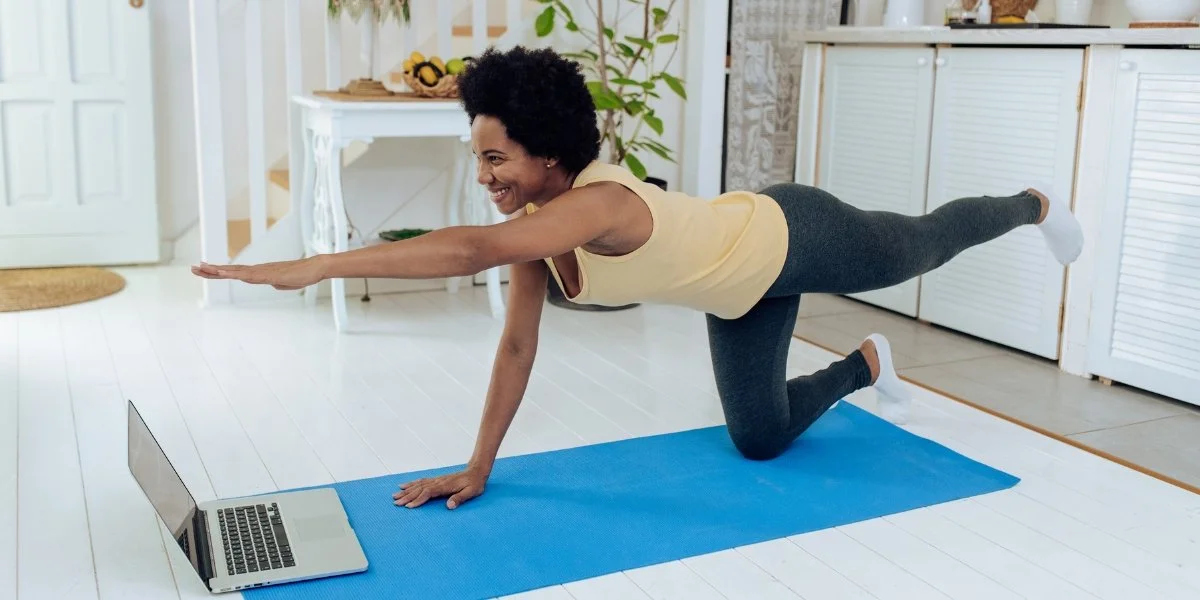
Your practice space doesn’t need to be exclusively for Pilates, but it should feel intentional each time you use it. The goal is to reduce distractions, support body awareness, and cue your mind to shift into movement mode.
When your environment works with you rather than against you, it becomes much easier to show up consistently.
When setting up your space, you should consider:
Clutter and visual distractions: Clear the area of items that pull your attention away from your body and breath.
Lighting: Choose calming, gentle lighting rather than harsh overhead fluorescents that can create tension.
Temperature: Work in a comfortably warm space so muscles can move freely and safely.
Sound environment: Decide whether instrumental music helps you focus or if silence better supports your internal cues and breath awareness.
Mental associations: Set up the space so it signals a shift into movement rather than work or rest, helping your brain transition smoothly into practice.
What Do You Need for Pilates at Home?
Pilates at home requires far less equipment than many people assume. While there are countless accessories marketed as “must-haves,” the true essentials are minimal.
The goal is simply to create a safe, comfortable setup that supports proper alignment and allows you to follow guided instruction.
The core items you actually need include:
A quality mat: Provides cushioning and traction for the majority of movements you’ll practice.
Comfortable, form-fitting clothing: Helps you see your alignment clearly without loose fabric getting in the way.
Clear floor space: Ideally the size of your mat plus room for full arm extensions to accommodate all exercises.
Access to instruction: Videos, apps, or virtual sessions offer guidance until you’ve internalized the foundational exercises.
Everything beyond these basics fits into the “nice to have” category—not a requirement for effective, consistent home practice.
Choosing the Right Area Based on Comfort and Mobility
Your practice area should offer enough space to extend arms and legs fully without hitting furniture or walls. Hardwood or tile floors work better than thick carpet, which absorbs stability and makes balancing exercises harder.
Positioning your mat near a wall provides support for certain exercises and modifications as you're building strength. Natural light improves mood and energy levels compared to practicing in dark or artificially lit spaces throughout the day.
Proximity to high-traffic household areas might mean interruptions, so consider locations offering relative privacy and fewer disturbances. The space doesn't need to be beautiful but it should feel calm and separated from work or sleep zones.
These practical considerations affect whether you actually use the space consistently versus letting your mat collect dust.
Essentials for an Effective Home Practice
A proper Pilates mat measuring at least 6 feet long and providing adequate cushioning protects your spine during exercises.
Look for mats around half an inch thick rather than thin yoga mats that don't provide sufficient padding. Non-slip surfaces on both sides prevent the mat from sliding on your floor and you from sliding on the mat.
Brands like Manduka, Balanced Body, or Liforme offer quality options that last years rather than breaking down after months.
Beyond the mat, your own body provides the primary resistance and feedback you need for fundamental Pilates practice. A water bottle keeps you hydrated without needing to leave your practice space and break your focus completely.
Core Essentials: The Equipment You’ll Use Most
The mat remains your most important investment and the piece you'll use during every single home practice session. Quality matters here because cheap mats compress quickly, tear easily, and don't provide the cushioning your spine needs.
A small hand towel helps with grip exercises or provides extra padding under your tailbone when needed. These items together cost less than a single month of boutique studio classes while supporting years of practice.
Prioritize quality over quantity when building your home setup, rather than choosing Pilates equipment for home that you'll rarely touch.
When and Why to Add Props Like Rings, Balls, or Bands
Props can add challenge, variety, and progression to your Pilates routine once you have built a solid foundation with basic mat exercises. After you understand alignment, control, and core engagement, props can enhance your practice without creating confusion. The main reasons to incorporate them include:
Small stability balls: These create gentle instability that increases core activation and requires greater control during movements you already know.
Resistance bands: These provide different levels of resistance so you can progress strength work without collecting a lot of equipment.
Pilates ring (magic circle): This offers targeted resistance for the inner thighs, arms, and chest in ways that body weight alone cannot create.
Foam rollers: These support myofascial release and can be used in more advanced balance exercises once you feel ready.
It is best to wait to purchase props until you understand your practice well enough to know what you will actually use. Many people invest in full prop collections that end up sitting unused because they bought equipment before establishing a consistent basic practice.
Setting Up for Safety, Stability, and Ease of Movement
Safety at home requires more attention than in studios where instructors monitor your form and provide immediate corrections.
Start conservatively with exercises you can execute properly rather than attempting advanced movements without a proper foundation or supervision. Keep your phone nearby for reference videos, but avoid the temptation to scroll between exercises and lose focus.
Ensure adequate warm-up before deeper stretches or more challenging exercises to prevent injury from cold, unprepared muscles. Listen to your body's signals about discomfort versus productive challenge, stopping when something feels wrong beyond normal muscle work.
Clear the area of obstacles you might roll into or trip over when moving between exercises or transitions.
These safety considerations become your responsibility without an instructor watching and protecting you from poor choices.
Building a Consistent Home Routine
Consistency matters more than duration when establishing a home Pilates practice that actually creates results and lasting change.
Start with realistic commitments like 15 to 20 minutes three times weekly rather than ambitious plans you'll abandon. Schedule practice times on your calendar as non-negotiable appointments rather than squeezing sessions into leftover time and energy.
Follow structured videos or programs initially rather than randomly choosing exercises without clear progression or purpose built in. Track your practice in a simple journa,l noting what you did and how your body felt afterward.
Remember to also celebrate showing up consistently rather than only measuring progress through advanced exercises or visible physical changes alone.
This approach builds the habit foundation that supports long-term practice far more effectively than sporadic intense sessions.
How to Structure Your Practice for Sustainable Results
A well-rounded home Pilates session benefits from a clear structure that supports both progression and long-term consistency. The goal is to warm up the body, challenge it appropriately, and finish in a balanced, restored state. The key components to include are:
Warm-up movements: Begin with gentle exercises that mobilize the spine and activate deep core muscles before you ask your body for more effort.
Core and full-body work: Include exercises that target multiple areas of the body rather than repeating the same focus every time.
Progressive difficulty: Move from foundational exercises toward more challenging variations as strength and control steadily improve.
Recovery time: Build in rest between practice days so muscles can recover and adapt to the work you are doing.
Cool-down stretches: End sessions with movements that release tension and bring your body back to a calm, regulated state.
This structure supports sustainable progress while helping you avoid burnout, boredom, and overuse injuries.
Staying Accountable Without Studio Pressure
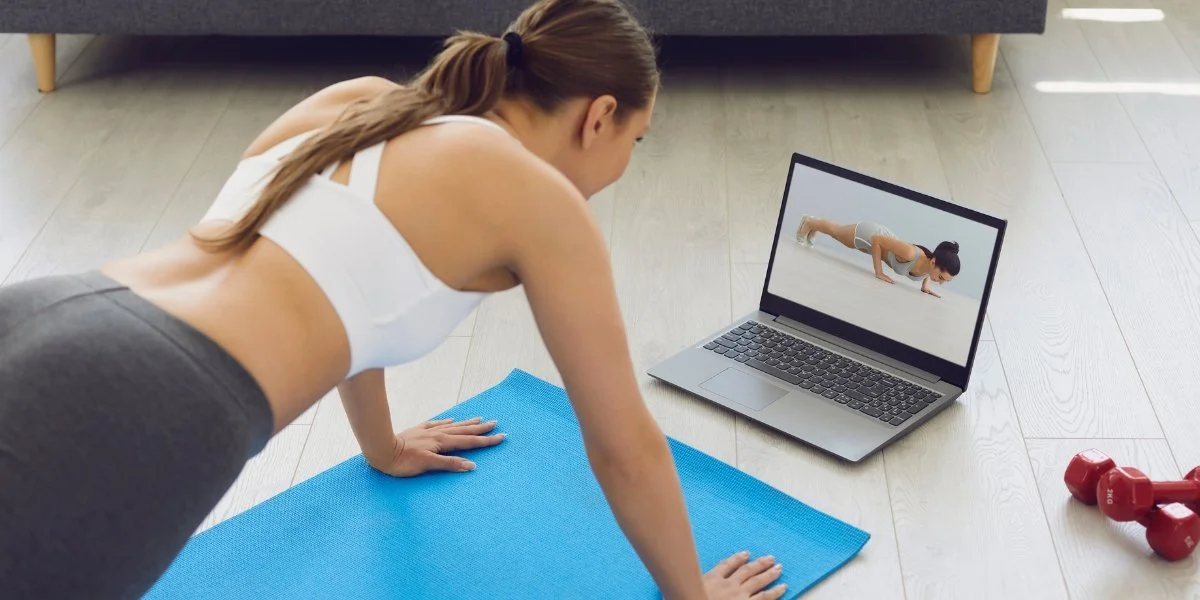
Home practice requires developing internal motivation that doesn't rely on external pressure from instructors or classmates watching you.
Set specific, measurable goals beyond vague intentions to "do more Pilates" that don't create real accountability or direction. Find an accountability partner who also practices at home and check in regularly about whether you're following through.
Join online communities where home practitioners share their experiences, challenges, and wins to feel less isolated in your practice. Consider periodic private sessions with an instructor who can assess your form and provide programming guidance for home work.
Here at The Pilates Circuit, we offer virtual Pilates classes that provide you with expert instruction in your own space with personalized attention and accountability.
These strategies replace the external pressure of studio environments with internal drive and community support that sustains practice.
At-Home Pilates Checklist To Get Started
Use this checklist to ensure you have everything needed to begin your home Pilates practice today without delays:
Essential Equipment:
Quality Pilates mat (minimum 6 feet long, half-inch thick)
Comfortable, form-fitting workout clothing
Water bottle for hydration
Clear floor space (mat length plus arm extensions)
Device for accessing instruction videos or programs
Recommended Additions:
Resistance bands (light, medium, and heavy)
Small hand towel
Pilates ring for targeted resistance work
Small stability ball for core challenges
Environment Setup:
Clutter-free practice area
Adequate lighting (natural light preferred)
Comfortable room temperature
Minimal distractions and interruptions
Wall access for support and modifications
Practice Support:
Scheduled practice times on calendar
Structured program or video series to follow
Simple tracking journal or app
Accountability partner or online community
Closing Thoughts: Bringing Studio Energy Into Your Space
Home Pilates practice offers freedom and convenience but requires cultivating the focus and intention that studio environments naturally provide. Your commitment to showing up consistently matters more than having perfect equipment or a dedicated beautiful practice space.
The discipline you develop through self-directed practice translates to other areas of life beyond just physical fitness goals. Remember that home practice and studio work aren't mutually exclusive but can complement each other beautifully when balanced thoughtfully. Many practitioners find that private sessions provide the expert guidance that elevates their home work between studio visits.
Get Started Today
Transform your fitness with Private 1x1 Pilates in NYC. At The Pilates Circuit, we deliver personalized one-on-one training designed around your body, your goals, and your progression. Whether you're improving posture, building strength, or enhancing mobility, every session is structured to drive measurable results.
Book an Intro Session to experience how targeted training can make a difference. Train with us at our Chelsea Private Pilates Studio or NOMAD Private Pilates Studio.
Frequently Asked Questions
Can I Get Results From Pilates Without Equipment?
Yes. Mat Pilates alone can build strength, improve flexibility, and enhance posture when practiced consistently. Your body provides all the resistance you need, and there are hundreds of exercises that require nothing more than a mat. Practicing two to three times a week with good form delivers visible results within weeks.
Equipment like the Reformer adds variety and resistance, but it is not required to transform your body. Your body is the primary tool; equipment simply enhances the practice.
What’s the Most Important Piece of Equipment to Start With?
A quality mat is the only essential item for home Pilates. It cushions your spine, provides traction, and supports daily practice. Expect to invest fifty to one hundred dollars in a mat that will last years.
Avoid cheap mats, which wear down quickly and can make practice uncomfortable. Save additional props for later once you’ve built consistency and know what will truly support your routine.
How Do I Stay Consistent With Pilates at Home?
Schedule your workouts like non-negotiable appointments and start with manageable goals, such as fifteen minutes three times per week. Use structured programs or videos to eliminate decision fatigue, and track your sessions to stay accountable. Periodic private sessions can reinforce your form and keep you progressing.
Consistency comes from routine and accountability just as much as from the equipment you choose.
