
Ask Tamara: Why Do Exercise Needs Vary Between Individuals?
You can finish a perfectly good workout and still feel like it never addressed why you showed up. The instructor was attentive, the exercises were safe, and the class moved smoothly. You spent most of it working around a limitation, while your actual goal barely entered the picture. Nothing necessarily went wrong; the workout was designed for the room, not around your particular priorities. So why do exercise needs vary between individuals following the same workout?
That is why choosing an exercise is only part of programming. Range, resistance, support, volume, and progression all change what the exercise asks of you. The useful question is not whether an exercise is good. It is whether that exercise fits what you can do now and what you are trying to improve.
Why Do Exercise Needs Vary Between Individuals?
Exercise needs vary because injuries, current abilities, and goals change what each workout needs to accomplish. I plan from those realities and the available time, then choose the exercises, range, resistance, support, and pace.
One client may need a shorter range, while another is ready to load the same movement. An exercise earns its place only when it serves a clear purpose for that client.
We Have to Start With What Your Body Can Do Today
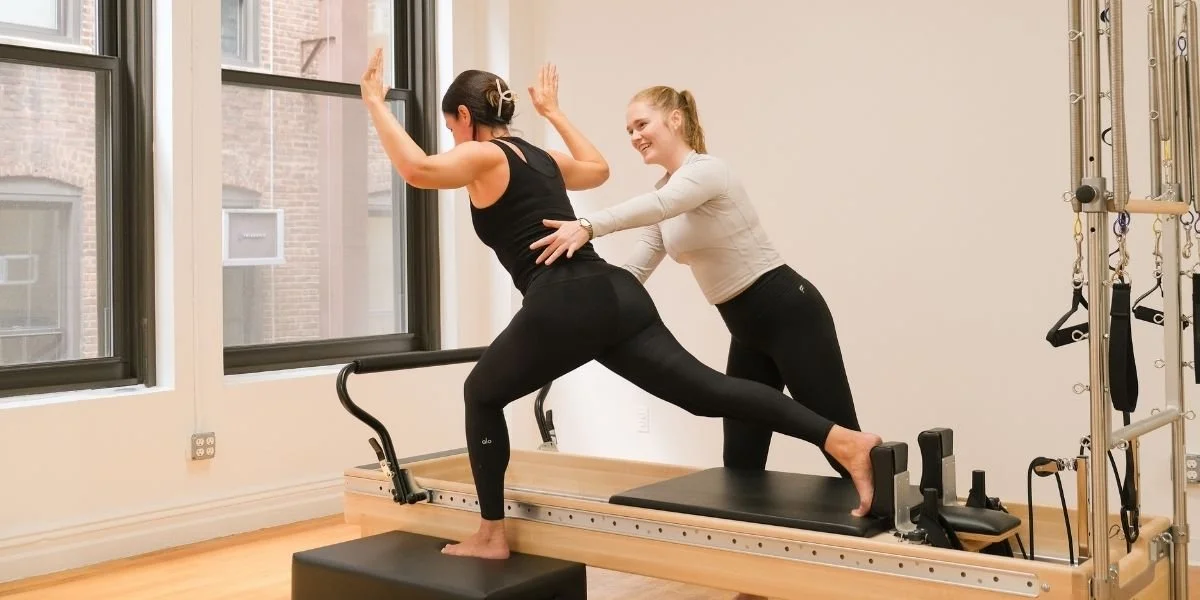
Before I choose exercises, I look at how much strength, control, range, and coordination the client can actually use. Training history also matters because familiarity and physical capacity are not the same. Someone can be strong from another sport yet need time to organize movement on the reformer. Another person may know the full Pilates repertoire but lack the strength for heavier springs or longer levers.
Recent training load, time away from exercise, recovery, and overall load management affect how much useful work someone can handle. A current injury or symptom adds another boundary, guided by medical advice when needed.
I then watch how the client responds before setting the session’s range, resistance, support, and pace. Those choices should change as their movement skill and physical capacity improve.
Your Goal Changes What the Workout Needs to Accomplish
Capacity tells me where we can start, while the goal tells me where the program needs to go. A client building glute strength may need to practice lunges consistently and progress them over time. Another client may perform that lunge well but need the session focused somewhere else. In our studios, the Pilates repertoire gives us the options, but the client’s goal actually decides which options deserve priority.
Personalized programming may repeat the same exercise for weeks while resistance, range, or control progresses. For the glute-focused client, progress may mean greater resistance, stronger control, or more confidence in the lunge.
Those changes matter because they reflect the reason we selected the exercise in the first place.
Group Classes and Private Sessions Handle Individual Needs Differently
Two individuals can need the exact opposite from the same exercise. One’s knee may not currently tolerate lunging. Another may need lunges specifically to build the glute strength they came to develop. A third person with a significant back issue may need a completely different setup.
Nothing about the lunge itself has changed. Its purpose and suitability change according to the person performing it. For one individual, it may be useful and worth progressing. For another, it may need to be removed temporarily and reconsidered as their capacity improves.
A private session can let those differences determine the entire program. Studies examining the benefits of supervised exercise demonstrate that individual supervision yields superior gains in physical function and targeted strength compared to generalized formats. A group instructor can respond to each person, but everyone must still follow one shared plan
Why a Group Class Eventually Has to Meet in the Middle
A group class must move several people toward one general training objective. The instructor manages the sequence, pace, challenge, and safety of the entire room. Participants may use different springs, ranges, or exercise variations, but they still follow the same program.
I have taught group classes, and I still take them myself. A skilled instructor can watch form, offer alternatives, and stop someone from forcing an unsuitable movement. Their attention, however, remains divided across the room.
When participants need conflicting things, the instructor must choose an approach that keeps the class moving for everyone.
Modification Can Help, but It Cannot Rebuild the Whole Class Around You.
A modification changes how someone participates in the planned workout. The instructor might reduce the range, change the spring tension, add support, or substitute another movement. Those are meaningful coaching decisions, and a modified exercise can still be effective.
The limitation is not the quality of the modification. It is what the class can realistically reorganize around one person. If an individual cannot lunge, the instructor can remove the lunge and offer another option. They cannot then dedicate thirty minutes to understanding what that person’s knee needs.
That would change the session’s objective, sequence, and time allocation for the entire room. A modification helps someone access the shared program. Individualized programming can change the program itself.
That distinction matters when someone needs repeated feedback or sustained attention on one specific priority.
A Private Session Can Follow What Your Body Actually Needs
When I teach you privately, I do not have to preserve a plan written for an entire room. I can begin with your goal, current ability, relevant history, and response to previous sessions. From there, I decide which work deserves our time and how it should progress.
That does not mean inventing a completely new workout every week. Good individual programming has structure, and useful exercises often return. I watch how the setup affects your movement and whether the demand is appropriate. What I see determines whether we progress the exercise, adjust it, or take a different approach.
Your Main Priority Does Not Have to Compete With the Rest of the Room
In a group class, your main concern receives only the time that fits the shared sequence. In a private session, I can stay with it long enough to learn something useful.
If your knee is limiting the session, I might spend thirty minutes studying how it affects your movement. That time lets me adjust the setup, test an appropriate variation, and compare your response. We can build strength or control, then revisit the movement to see what changed.
We are not diagnosing the knee or treating an injury. We are using movement and strength work within appropriate medical guidance. Your priority receives concentrated work and follow-through instead of a quick alternative before the class continues.
The Plan Can Change as Your Body Changes
I am not interested in changing exercises simply to make each session feel new. I want the work to change when you are ready for a more useful challenge.
During a session, I may adjust range, resistance, support, position, tempo, repetitions, or exercise order. Clinical reviews confirm that modifying exercise range of motion directly alters joint load and neuromuscular recruitment, allowing exercises to be scaled precisely to your current state. If added support improves your control, we can gradually reduce it. If increasing the range changes the movement, I can scale it back and build from there.
Across sessions, the same exercise can become more demanding through load, range, duration, or precision. That progression is often more valuable than replacing an exercise that is working. Progress is not perfectly linear, either. Symptoms, fatigue, and changing goals may require a temporary adjustment without erasing the progress already made.
You May Not Need More Workouts, Just More Specific Ones
The longer I teach, the less convinced I am that everyone needs five or six workouts each week. Frequency matters, but it cannot compensate for training that rarely addresses your actual goal. More sessions are not automatically more productive sessions.
Specific programming uses your time differently. The work follows one coherent objective, and each session can build on the previous one. I can correct movement problems early and progress exercises instead of repeatedly starting from a general routine. Depending on your needs, two focused private sessions may accomplish more than four or five broadly programmed classes.
That is not a universal equation. Appropriate frequency depends on your goals, experience, other activity, current capacity, and recovery. Specificity makes training time more productive, but it does not replace consistency or effort.
Group Classes Make Sense When Consistency and Cost Matter
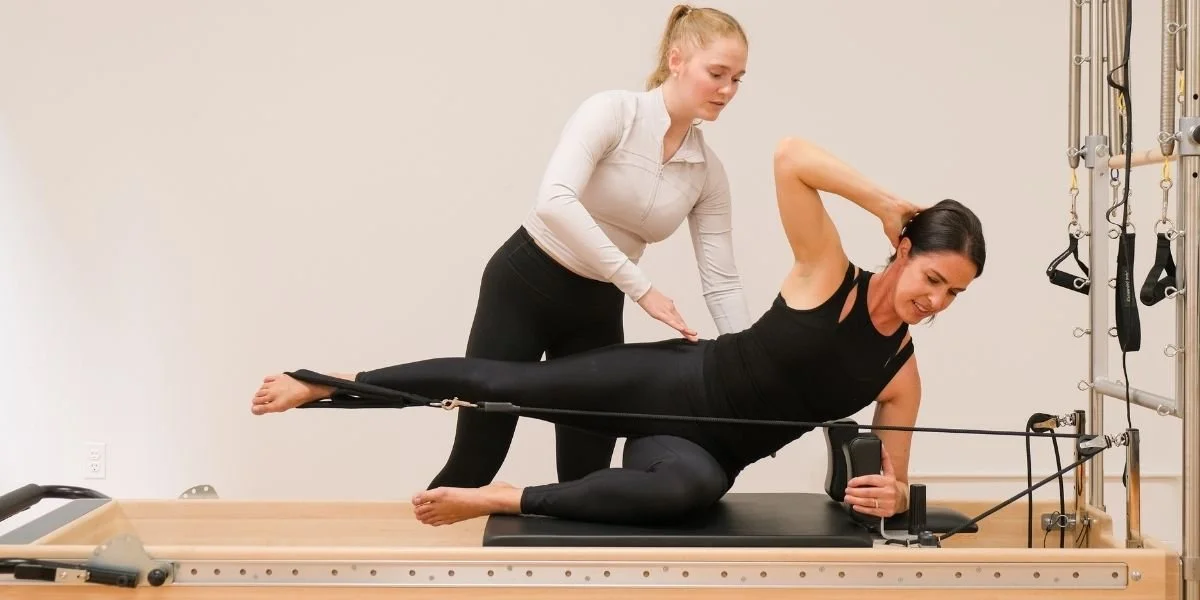
Repeating a well-designed routine can improve your technique and make you much stronger. A workout doesn't need constant variation to keep delivering value.
Group classes also make regular exercise more financially accessible. Their schedules and predictable structure can make consistency easier to maintain. When the shared program broadly supports your needs, that repetition can be practical and effective.
Private Training Makes More Sense When Time Is Limited & Your Goals Are Specific
Private sessions cost more, and I do not pretend that investment works for every budget. Their value becomes easier to justify when your available training time is limited, and your goal requires focused work.
Frequent modifications, a specific strength goal, or a persistent limitation can all make individual programming more useful. Close feedback helps address movement problems and muscle imbalances before they become repeated habits. The program can also continue progressing between sessions instead of returning to the same general starting point.
There is no universally correct format. Group classes can provide affordable, consistent exercise. Private training may be the better investment when each session needs to accomplish something specific for you.
Closing Thoughts: The Power Of Building A Routine Around You
A workout can be well designed and still spend very little time on what is holding you back. If you regularly modify the plan, it may no longer match what you need. Focused guidance becomes valuable when the same limitation or goal keeps requiring more attention.
The value of private training is deciding what deserves your time, then building the work around that priority. I want every exercise to serve a purpose and progress as your capacity changes.
If your current routine keeps missing what matters most, an intro session with us may be worth exploring.
Get Started Today
Transform your fitness with Private 1x1 Pilates in NYC. At The Pilates Circuit, we deliver personalized one-on-one training designed around your body, your goals, and your progression. Whether you're improving posture, building strength, or enhancing mobility, every session is structured to drive measurable results.
Book an Intro Session to experience how targeted training can make a difference. Train with us at our Chelsea Private Pilates Studio or NoMad Private Pilates Studio.
Prefer to view your options first? Visit our Pricing page to compare private sessions, packages, and memberships before booking.
Frequently Asked Questions
-
Exercise needs vary because capacity, training history, goals, and movement control determine which work will help. Those factors can change exercise selection, resistance, range, volume, and support. As you improve, the program should progress rather than keep the same demands indefinitely.
-
Many people can do Pilates with an injury or limitation when the work is appropriately adapted. Medical clearance may be necessary depending on the condition, symptoms, and healthcare guidance.
Private instruction allows closer observation and more precise changes to range, resistance, support, and exercise selection. Pilates instructors do not diagnose injuries, and new or worsening symptoms should be evaluated by a medical professional.
-
Change your routine when your goal, capacity, or progress shows that the current demands need adjustment. Do not replace useful exercises simply to create novelty. Repetition improves technique and supports strength development.
You can progress familiar work by changing resistance, range, volume, tempo, or control. The right timing depends on your experience, training frequency, and how you respond to the program.
