
When Should Balance Training for Seniors Become a Priority?
Quick Overview: When Balance Training for Seniors Matters
- Balance training for seniors should become a priority when strength, coordination, or confidence during everyday movement begins changing.
- Balance depends on leg, hip, and core strength alongside coordination, sensation, vision, and reaction time.
- Reaching for support, feeling less steady on uneven ground, or avoiding familiar activities can provide useful information.
- This guide explains when to prioritize balance work, what effective training includes, and which common mistakes can limit progress.
Balance often becomes something people think about only after it starts affecting their daily lives. By then, it can feel like a problem to solve rather than a physical ability that could have been maintained all along.
In reality, those changes are usually much quieter than people expect. You might hesitate slightly on uneven ground, reach for a railing without thinking, or notice that certain movements require a little more concentration than they once did. None of those moments necessarily mean your balance is poor. Together, though, they can signal that it's time to make balance a more intentional part of your training. Understanding when that shift happens, and why it matters, can help you stay confident, capable, and active for years to come.
When Balance Changes Start To Affect Daily Movement
One of the biggest misconceptions about balance is that you either have it or you don't. In practice, balance tends to change gradually, often through small adjustments that are easy to overlook because they develop over months or even years.
You may pause a little longer before stepping off a curb, feel less comfortable walking across uneven ground, or instinctively look for something to steady yourself while putting on your shoes. On their own, those moments usually aren't a cause for concern. Nearly everyone experiences occasional lapses in balance. What matters is whether those small adjustments begin appearing more often, a primary indicator flagged in the CDC STEADI fall risk screening protocol, or start influencing how confidently you move through everyday activities.
Looking at balance this way shifts the conversation away from age and toward function. Two people of the same age can move very differently depending on their strength, activity level, previous injuries, and overall health.
The question isn't whether you've reached a certain birthday. It's whether your body is beginning to rely on compensations that weren't there before.
Why Balance Training Is Proactive, Not Just Preventive
Purposeful balance training introduces those challenges in a gradual, controlled way, with clinical evidence showing up to a 34% reduction in falls when paired with strength exercises. This helps maintain coordination, confidence, and stability before everyday activities begin to feel more difficult.
Daily life also doesn't challenge balance as much as many people assume. Most routines become familiar and predictable, so your body has fewer opportunities to adapt to new movement demands. Purposeful balance training introduces those challenges in a gradual, controlled way, helping maintain coordination, confidence, and stability before everyday activities begin to feel more difficult.
The goal isn't simply to prevent future problems. It's to preserve the freedom to keep moving comfortably as your life continues to change, which is one of the many benefits of pilates for seniors through improved strength, stability, and confident movement.
Understanding The Physical Systems That Support Better Balance
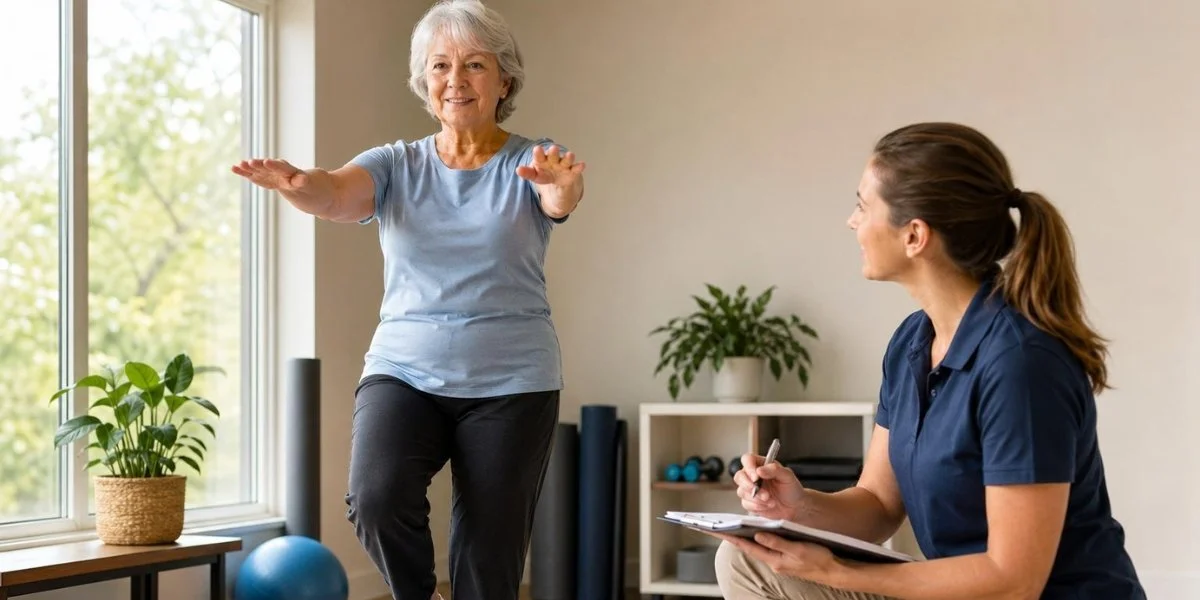
Balance isn't controlled by one part of the body. Several systems work together every time you walk, turn, reach, or recover from a small loss of stability. Understanding those systems makes it easier to see why balance training involves much more than simply standing on one leg.
Strength Through The Hips, Legs, And Core
Strength gives your body more options for controlling movement. Your hips, legs, and trunk work together to keep you steady as you climb stairs, stand from a chair, carry groceries, or recover after an unexpected shift in balance.
When those muscles become weaker, everyday movements often require more effort and leave less room to react if something doesn't go as planned.
Rather than focusing on individual muscles, effective balance training helps build functional strength needed to move with greater control, making everyday activities feel safer and more manageable. That foundation makes it easier to respond confidently during everyday activities instead of simply trying to stay upright.
Vision, Sensation, And Reaction Time
Your body relies on several sources of information to maintain balance, and each one plays a different role.
Vision helps you judge your surroundings and anticipate changes in terrain or direction.
Sensation from your feet and joints tells your brain where your body is positioned, even when you aren't looking down.
Reaction time determines how quickly you can adjust when you trip, slip, or need to change direction unexpectedly.
As one system becomes less reliable, your body naturally depends more on the others. That is one reason balance can begin feeling more challenging even when no single problem seems obvious.
Coordination During Real Movement
Balance rarely happens while you're standing perfectly still. It is constantly being challenged as you turn, reach, step around obstacles, carry something in your hands, or shift your weight from one foot to the other. Those movements require your strength, coordination, and awareness to work together without conscious thought.
That is why balance training is most effective when it reflects the way people actually move throughout the day, rather than treating balance as an isolated skill.
When Should Balance Training For Seniors Become A Priority?
There is no universal age when balance training becomes necessary. Function, health history, activity level, and confidence provide more useful guidance than a birthday. Balance work becomes increasingly important when changes in any of those areas begin affecting daily movement.
Starting earlier usually allows more strength and confidence to be preserved.
| Situation | Why Balance Training Matters |
|---|---|
| Recovering From Illness Or Injury | Time away from normal movement can reduce strength, coordination, and confidence more quickly than age alone. |
| Reduced Walking Or Physical Activity | Balance depends partly on regular exposure to stepping, turning, changing direction, and varied surfaces. |
| Declining Strength Or Movement Confidence | Less strength leaves fewer options for controlling movement. Reduced confidence can also lead to further inactivity. |
| Living With Osteoporosis | Improving strength and control becomes especially important when a fall could have greater consequences. |
| A Medical Condition Changes How You Move | Training may need to account for pain, fatigue, medications, previous injuries, or medical guidance. |
Signs It Is Time To Prioritize Balance Training
Balance rarely changes in one obvious moment. More often, familiar movements begin asking for more concentration, support, or caution than they used to. The following signs can help you recognize when balance training may be worthwhile.
If something has changed suddenly or simply doesn't feel right, it's a good idea to speak with your healthcare provider right away.
Feeling Less Steady On Stairs Or Uneven Ground
Many people first notice changes in their balance somewhere other than a flat floor. Stairs, curbs, gravel, uneven sidewalks, and sloped paths all ask your body to make small adjustments with every step. If those situations begin feeling less comfortable than they once did, it's often worth paying attention.
That doesn't necessarily mean something is wrong. It may simply mean your balance deserves more attention before those changes begin affecting more of your daily routine.
Reaching For Support More Often
Using a handrail or steady surface isn't a problem on its own. What matters is whether you've started relying on that support more often than you used to. You might notice yourself reaching for a wall while turning, using the kitchen counter to steady yourself, or looking for something to hold as you step over an obstacle.
Those small habits often provide useful information about how confident your body feels managing everyday movement. They can also help identify where balance training may be beneficial.
Avoiding Activities That Used To Feel Manageable
One of the clearest signs isn't always how you move. Sometimes it's what you stop doing. You may decide to skip a favorite walking trail, avoid stairs when possible, or pass on activities that once felt routine because they no longer feel quite as comfortable.
That change is worth paying attention to because confidence and movement influence each other. The less we do, the fewer opportunities we have to maintain the strength, coordination, and balance those activities require.
Addressing those changes early often makes it easier to continue doing the things you enjoy, rather than waiting until they begin feeling out of reach.
Better Balance Comes From Strength, Control, And Practice
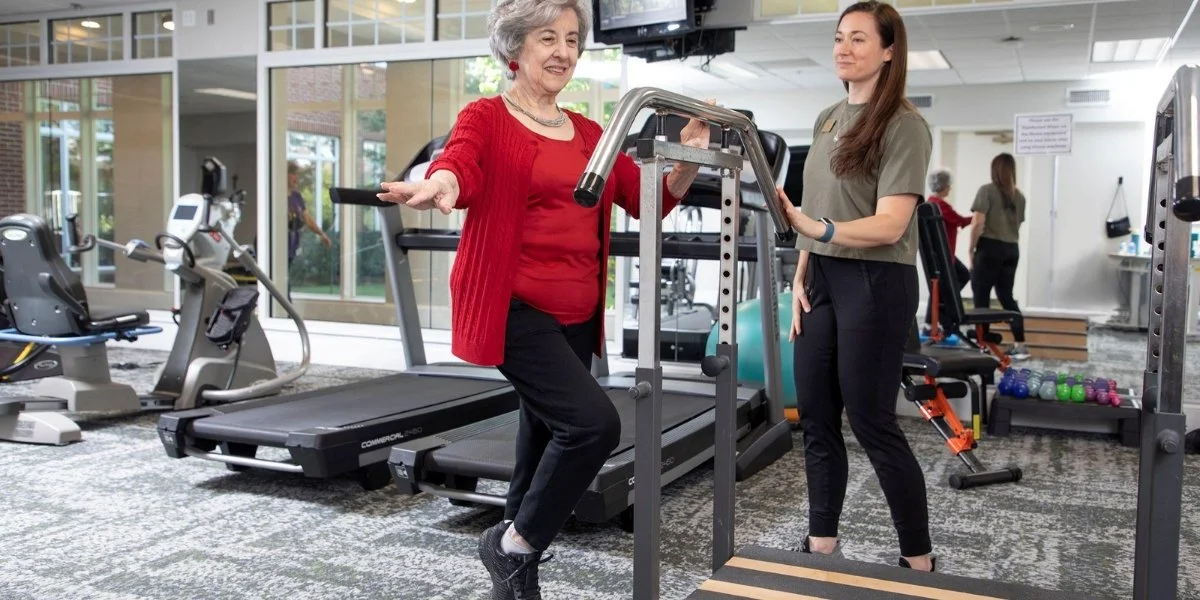
Improving your balance isn't about mastering one specific skill. It comes from building the strength to support your movements, the coordination to control them, and the confidence that develops through regular practice. Those qualities work together every time you walk across uneven ground, carry groceries, climb stairs, or recover from a small stumble.
That's why effective balance training looks beyond exercises that simply challenge stability. It also builds the physical capacity needed to respond when life becomes unpredictable. The goal isn't to become better at balancing during an exercise. It's to move more confidently throughout everyday life.
How Strength And Balance Training Work Together
Strength and balance training each contribute something different. Together, they create the control needed for more confident everyday movement and improve coordination, helping your body respond more effectively during daily activities.
How Strength & Balance Training Work Together
Neither approach replaces the other. Strength training gives your body more physical capacity, while balance training teaches you how to use that capacity with greater control during everyday movement.
Strength Training
- Builds the force needed for everyday movement.
- Improves your ability to recover from a loss of balance.
- Creates more physical options when movement becomes demanding.
Balance Training
- Improves coordination during changing movements.
- Refines control while shifting weight.
- Helps you use your strength more effectively.
Common Mistakes When Starting Balance Training
Beginning balance training doesn't require making every exercise difficult from the first day. In fact, progressing too quickly often makes it harder to develop the control you're actually trying to improve.
Common mistakes to avoid:
Removing stable support too soon.
Starting with unstable equipment unnecessarily.
Progressing several exercises at the same time.
Challenging balance without building enough strength.
Continuing despite dizziness or symptoms that don't feel normal
Ultimately, a gradual approach allows your body to build confidence alongside strength and coordination. That usually leads to steadier progress and more meaningful improvements over time.
Closing Thoughts: The Right Balance Work Helps Preserve Confidence And Independence
It's easy to think about balance as its own physical ability because that's often how it's discussed. In practice, it rarely works that way. The quality of your balance reflects the quality of your movement as a whole. It changes alongside your strength, coordination, mobility, and confidence because those qualities constantly influence one another.
Looking at balance in isolation can make it seem like a problem to solve, when it's often a reflection of how well the rest of your body is functioning.
That's why the goal isn't simply to fit more balance exercises into your routine. The more valuable question is whether your overall training continues asking your body to stay strong, coordinated, and adaptable as the years go by.
When those qualities are maintained consistently, balance tends to remain part of how you move rather than becoming something you eventually have to get back.
Get Started Today
Transform your fitness with Private 1x1 Pilates in NYC. At The Pilates Circuit, we deliver personalized one-on-one training designed around your body, your goals, and your progression. Whether you're improving posture, building strength, or enhancing mobility, every session is structured to drive measurable results.
Book an Intro Session to experience how targeted training can make a difference. Train with us at our Chelsea Private Pilates Studio or NoMad Private Pilates Studio.
Prefer to view your options first? Visit our Pricing page to compare private sessions, packages, and memberships before booking.
Frequently Asked Questions
-
Balance training doesn't need to wait until balance has noticeably declined. For many people, it's worth incorporating as soon as strength, coordination, or confidence begin changing, or simply as part of maintaining healthy movement with age. Starting earlier often makes it easier to preserve those qualities over time.
-
Not necessarily. Many effective balance exercises use body weight and a stable surface for support when needed. As balance improves, equipment can add variety or increase the challenge, but it isn't required to build better balance.
-
It can reduce fall risk by improving the strength, coordination, and control that help you respond to unexpected movement. While no exercise program can prevent every fall, balance training is an important part of maintaining the physical abilities that support safer, more confident movement.
