
8 Pilates Moves That Strengthen the Pelvic Floor
Quick Overview: Strengthening the Pelvic Floor With Pilates
- The most useful Pilates moves strengthen pelvic floor function through breath, timing, pressure management, and whole-body coordination.
- Pelvic floor strength includes contracting when support is needed and relaxing when the demand changes.
- Each movement challenges the relationship between the pelvic floor, deep abdominals, hips, glutes, and spine differently.
- This guide walks through eight movements, the details to watch, and signs that an exercise needs to be adjusted.
Pelvic floor work is often taught as squeezing, but the body rarely works that simply. The pelvic floor also needs timing, breath, relaxation, and support from nearby muscles. You may notice this during bridging, balance work, or getting up from the floor. Pressure builds, the breath stops, or the glutes never seem to join in. Many pilates moves strengthen pelvic floor function by improving breath, pressure, and hip control. The best work feels steady and coordinated, not clenched or forced.
Why Pelvic Floor Strength Affects More Than Core Stability
The pelvic floor helps support the bladder, bowel, and reproductive organs. It also helps stabilize the core during movement. Cleveland Clinic describes these muscles as part of both support and core stability.
That connection matters during ordinary movement. The pelvic floor responds when you breathe, lift, walk, squat, or change direction. If it cannot relax and contract well, other muscles may compensate. The inner thighs may grip, the glutes may overwork, or the abdomen may brace too hard.
Your Pelvic Floor Influences Breathing, Pressure, & Movement Control
The pelvic floor works with breath and pressure. When you inhale, the rib cage and abdomen should expand with control. When you exhale, the deep abdominals and pelvic floor can respond gently. This should feel coordinated, not like holding everything tight.
Pressure problems often show up during effort. You may hold your breath during a bridge or toe tap. You may feel heaviness, pushing, or downward strain. Those signs usually mean the movement needs less load or better pacing. A calmer version often teaches more than a harder one.
How Pilates Can Help Strengthen Pelvic Floor Function
Pilates can help because it trains small details during whole-body movement. The work connects breath, pelvis, hips, spine, and legs. That makes pelvic floor training more functional than isolated squeezing alone. The body learns to organize support while something else is moving.
This is why pilates moves strengthen pelvic floor control best when form stays honest. A bridge should not turn into low back gripping. A toe tap should not make the ribs lift. A standing exercise should not make one foot claw the floor.
These details show whether the pelvic floor is working with the body.
The Importance of Controlled Breathing & Pressure Management
Breathing gives the pelvic floor a rhythm to follow. If the breath stops, pressure often has nowhere useful to go. That can make the abdomen push outward or downward. It can also make the neck, jaw, or hips grip.
Relaxation matters as much as contraction. NHS Inform notes that full relaxation is important during pelvic floor exercises. A strong pelvic floor should not stay tense all day. It should respond when needed, then release when effort changes.
| Signs You're Moving Well | Signs The Exercise Needs To Be Adjusted |
|---|---|
| Breathing stays smooth and steady | You hold your breath during effort |
| The pelvis stays relatively stable | The pelvis shifts or tips excessively |
| The movement feels controlled and repeatable | Tension spreads into the neck, jaw, or hips |
| The glutes, hips, core, and pelvic floor share the work | One area feels like it's doing all the work |
| Pressure feels manageable throughout the exercise | You feel heaviness, bearing down, or downward pressure |
8 Pilates Moves That Strengthen The Pelvic Floor
These movements train pelvic floor support through coordination. None should feel like forced squeezing or bearing down. The goal is to breathe, move, and keep pressure organized. If symptoms appear, choose a smaller range or seek professional guidance.
The best pilates moves strengthen pelvic floor function through repetition and precision. They also reveal common compensations. Watch for breath-holding, rib flare, hip gripping, or downward pressure.
Those signals help you choose the right version.
#1) Pelvic Curl
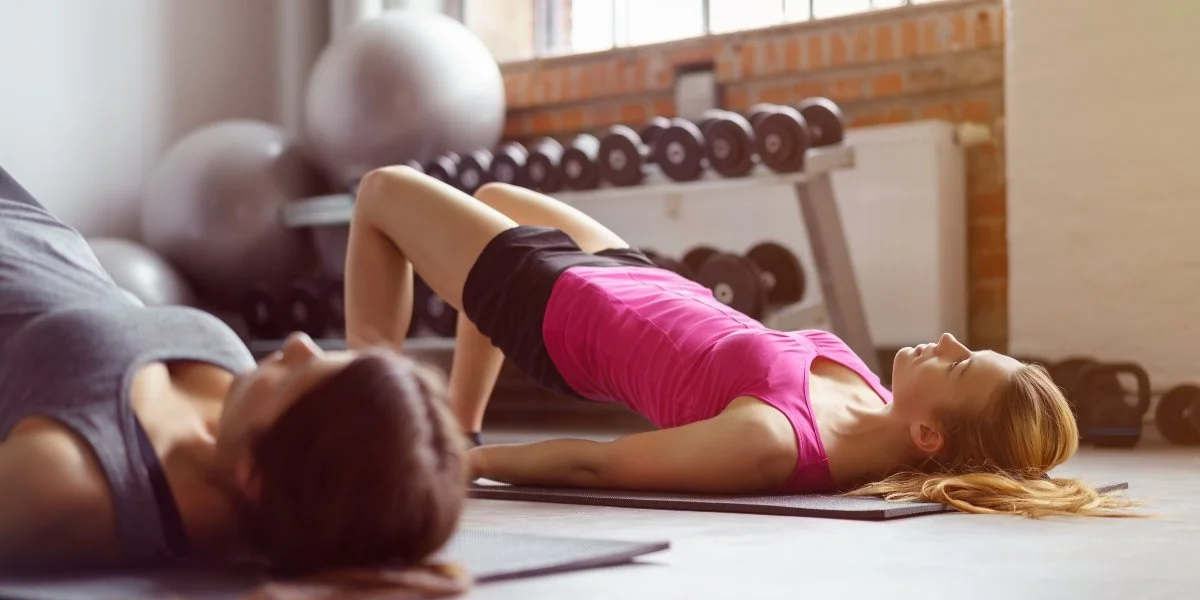
Lie on your back with knees bent and feet grounded. Begin with a slow exhale. Let the pelvis roll gently as the spine peels from the mat. The glutes should help lift without pushing the ribs upward.
This exercise teaches the pelvis and spine to move together. Many people grip the hamstrings or tuck too hard. Others push into the low back to rise higher. Keep the lift smaller if the movement loses smoothness. The best version feels connected through breath, glutes, and deep support.
- Glutes helping without pushing the ribs upward.
- Smooth spinal movement rather than a hard tuck.
- Steady breathing throughout the lift and lower.
#2) Supine Toe Taps
Lie on your back with knees above the hips. Keep the ribs soft and the pelvis steady. Lower one foot toward the floor with control. Return the leg without letting the back arch.
Toe taps challenge pressure management. The moving leg often pulls the pelvis forward. Some people brace the abdomen and stop breathing. Use a smaller range if the stomach pushes outward. The movement should stay quiet through the trunk.
- The pelvis staying relatively still.
- Breathing that remains calm and natural.
- The lower back avoiding excessive arching.
#3) Modified Dead Bug
Start on your back with arms reaching upward. Bring the legs to tabletop only if pressure stays controlled. Extend one arm and the opposite leg slowly. Return to center while keeping the breath available.
The modified dead bug trains timing across the body. It asks the trunk to stay organized while limbs move away.
Many people rush back when control disappears. That is useful feedback. A shorter reach often creates better pelvic floor coordination.
- Control during both the reach and return.
- Ribs staying connected instead of flaring upward.
- Choosing a shorter reach if pressure increases.
#4) Side-Lying Leg Series
Lie on one side with the head supported. Bend the bottom leg slightly for balance. Move the top leg with a small, controlled range. Keep the pelvis stacked without rolling backward.
Side-lying work connects the outer hips with pelvic stability. That connection matters for walking, stairs, and single-leg balance. The waist may collapse if the hip loses support. The top leg may also swing instead of moving cleanly.
Slow movement helps the pelvis stay organized.
- The pelvis staying stacked rather than rolling backward.
- The waist remaining long and supported.
- The leg moving with control instead of swinging.
#5) Quadruped Arm And Leg Reach
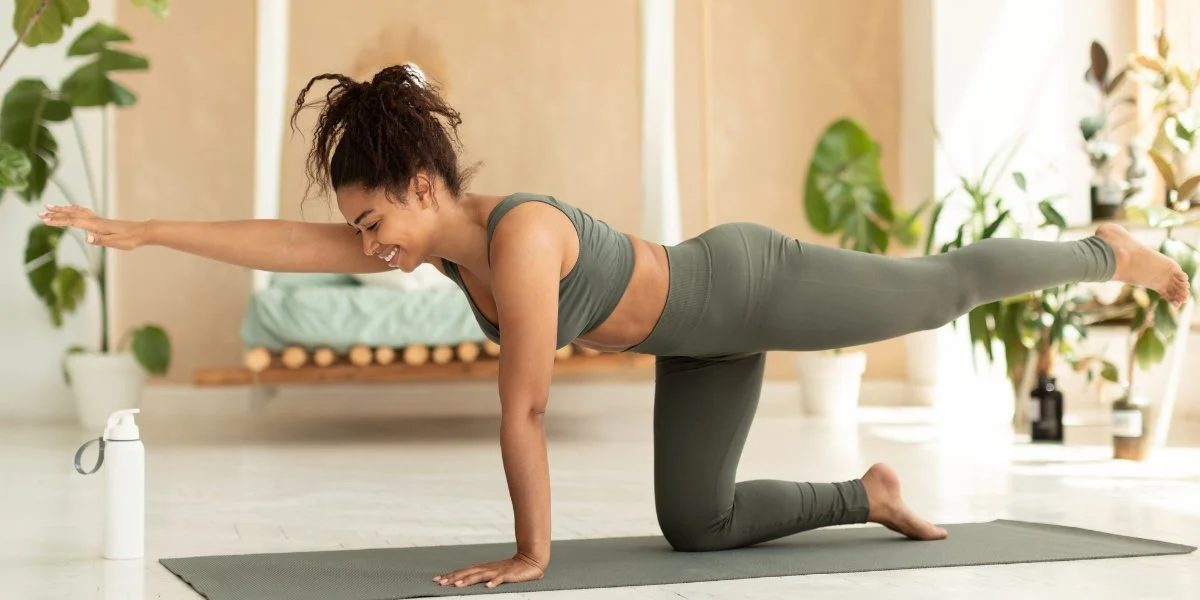
Begin on hands and knees with even weight. Reach one leg back without shifting the pelvis. Add the opposite arm only if the trunk stays steady. Keep the neck long and the ribs controlled.
This movement teaches the pelvic floor to support changing load. It also challenges the deep core and back body. Watch for the hips rotating or the belly dropping.
Those changes often mean the range is too large. Stay smaller until the body feels balanced.
- Even weight through both hands and knees.
- The hips staying level as the limbs move.
- A range of motion you can control without shifting.
#6) Standing Footwork With Breath Control
Stand with feet grounded and knees softly bent. Bend and straighten the legs with steady breathing. Keep the ribs over the pelvis. Let the feet press evenly into the floor.
Standing footwork brings pelvic floor training into real life. The body must manage pressure against gravity. One foot may grip, or one knee may drift inward.
Those patterns often appear during stairs and walking. Controlled repetitions help the legs and pelvis share effort.
- Even pressure through both feet.
- The ribs staying stacked over the pelvis.
- Breathing that remains steady as the legs move.
#7) Glute Bridge With Adductor Activation
Lie on your back with knees bent. Place a small ball or cushion between the thighs. Exhale as you lift into a bridge. Gently hug the prop without clenching the inner thighs.
This variation connects the inner thighs, glutes, and pelvic floor. The squeeze should feel light and coordinated. Too much effort can create gripping through the pelvis. Keep the movement smooth and breathable. T
The goal is integrated support, not maximum force.
- A gentle squeeze rather than maximum effort.
- Glutes and inner thighs working together.
- Movement that stays smooth and breathable.
#8) Seated Mermaid Breathing
Sit tall with the legs folded comfortably. Place one hand on the ribs and one hand on the lower abdomen. Inhale into the side ribs. Exhale slowly and feel the trunk soften inward.
Mermaid breathing helps restore mobility around the ribs and waist. That space can make pressure easier to manage. Many people hold tension through the upper abdomen. Others lift the shoulders instead of expanding the ribs.
A slow pace helps the breath move without strain.
- Expansion through the side ribs during the inhale.
- Relaxed shoulders and jaw.
- A slow exhale without forcing the breath.
Closing Thoughts: Better Pelvic Floor Function Starts With Better Movement Coordination
Pelvic floor training works best when it becomes part of movement. The body needs strength, but it also needs timing, coordination, and the ability to release when appropriate. Breath-holding, gripping, and pushing harder often create more tension without improving function.
The pelvic floor does not work in isolation. The breath, hips, deep abdominals, and spine all influence how the body creates support. That is why isolated squeezing is rarely the full answer. Movement gives the pelvic floor context.
The most useful Pilates moves strengthen pelvic floor function by improving the body's response to changing demands. They teach the body to coordinate pressure, create support, and release unnecessary tension. That matters during exercise, but also during daily life. Lifting bags, climbing stairs, getting up from the floor, and standing tall all depend on steady, coordinated support.
Better coordination creates quieter, more effective movement. For many people, that is where Pilates becomes especially useful and practical.
Get Started Today
Transform your fitness with Private 1x1 Pilates in NYC. At The Pilates Circuit, we deliver personalized one-on-one training designed around your body, your goals, and your progression. Whether you're improving posture, building strength, or enhancing mobility, every session is structured to drive measurable results.
Book an Intro Session to experience how targeted training can make a difference. Train with us at our Chelsea Private Pilates Studio or NoMad Private Pilates Studio.
Prefer to view your options first? Visit our Pricing page to compare private sessions, packages, and memberships before booking.
Frequently Asked Questions
-
Helpful options include pelvic curls, toe taps, modified dead bugs, and side-lying leg work. Standing footwork and quadruped reaches can also build coordination.
The best choice depends on control, symptoms, and movement quality. Avoid any version that creates heaviness or downward pressure.
-
Yes, Pilates can support better core stability through coordinated movement. The pelvic floor works with the diaphragm and deep abdominal system.
Many of the same principles show up in deep core exercises for women, where stability comes from coordination rather than bracing harder.
When breathing and pressure improve, the trunk often feels steadier. Cleveland Clinic also connects pelvic floor muscles with core stability.
-
Frequency depends on your body, symptoms, and training history. Many people benefit from short, consistent practice.
The American College of Obstetricians and Gynecologists (ACOG) says pelvic floor exercises can begin in the immediate postpartum period when medically safe. Choose quality over volume, and stop if pressure feels wrong.
